Allegation raises questions about court security practice and dignity
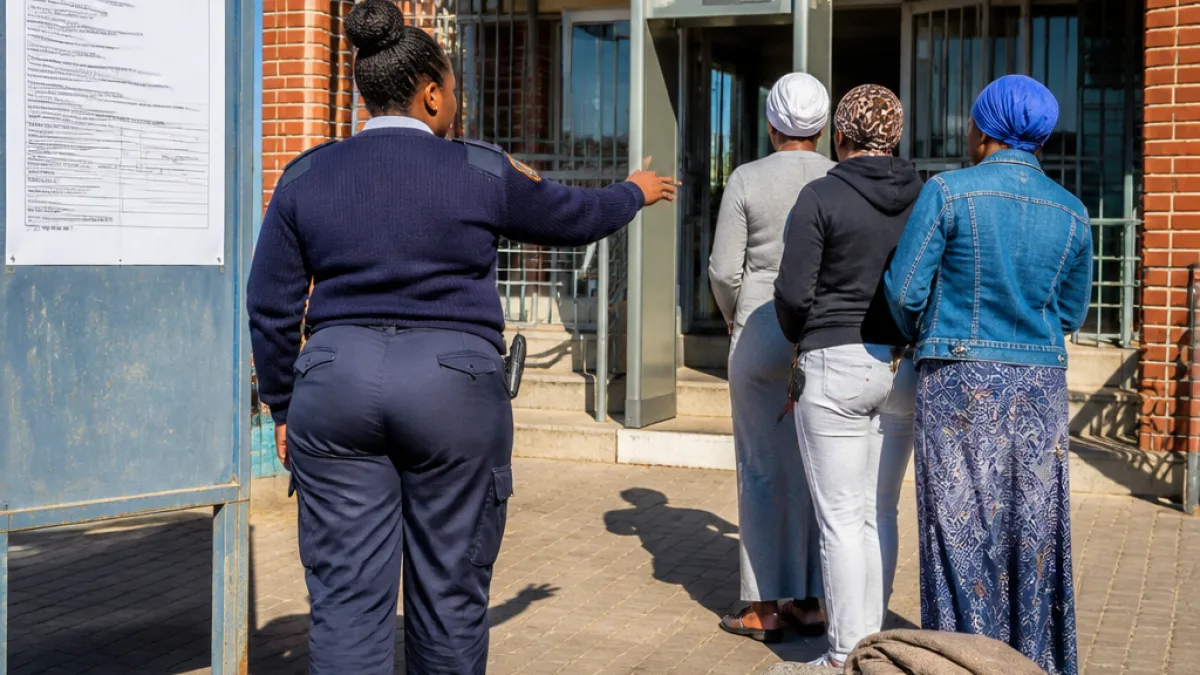
A woman from Khayelitsha has called for an investigation after she alleges a female security official at the Khayelitsha Magistrate’s Court made her remove clothing in a public area during a search on 17 August. The court has denied that members of the public are subject to strip-searches and said it has noted the complaint, inviting the woman to lodge a formal grievance.
The complainant, named in reporting as Minki Ngxozela, said she attended court to be present for the appearance of her sister’s son. She told reporters she was initially searched and admitted into the building but was later called back and subjected to a second search.
“I objected to being undressed in a public area and believed I should have been taken to a private room or another secluded area if a more thorough search was necessary,”
Ngxozela said the security guard questioned her about what she was wearing underneath her clothes and then ordered her to strip in an area where passers-by could see. She described the episode as humiliating and said the security door to the area remained open while people moved in and out.
She told reporters the guard removed a piece of cloth she used as a panty liner and laughed afterwards. Ngxozela said the incident was particularly painful because it occurred during Women’s Month and she wants action to prevent others from being subjected to what she described as a degrading ordeal.
In response, the Department of Justice and Constitutional Development, via Metro 1 Court Manager Clive J Fortuin, said the court had noted the complaint and emphasised that security personnel do not strip-search members of the public. The department reiterated that users in high-risk areas undergo security checks because of the risk of harmful items being brought into court premises.
Immediate issues and wider implications
The case raises practical and constitutional questions about how security screening is conducted at courts and the safeguards in place to protect the dignity and privacy of court users. Key concerns include:
- Whether there is a clear, published procedure for secondary searches that requires privacy or a guarded room when an intimate search is necessary.
- Training and accountability measures for security staff tasked with public searches in court precincts.
- Mechanisms for lodging and investigating complaints promptly, and for communicating outcomes to the complainant.
| Item | Detail |
|---|---|
| Date of alleged incident | 17 August |
| Complainant | Minki Ngxozela |
| Respondent | Metro 1 Court Manager Clive J Fortuin / Department of Justice |
South Africa's courts are public institutions charged both with providing access to justice and maintaining safety for staff, judicial officers and the public. Searches at court entrances are routine in many jurisdictions to prevent weapons and contraband from entering courtrooms. However, such security measures must be balanced against the rights to dignity and privacy protected by the Constitution.
Legal and human-rights practitioners have long argued that where more intrusive searches are necessary, there should be protocols to ensure privacy and the presence of same-sex or independent witnesses, and clear avenues for redress when those protocols are not followed.
The Department of Justice did not provide further detail in the initial response beyond saying the court does not strip-search members of the public and that it had noted the complaint. The court has invited Ngxozela to lodge a formal complaint so that an investigation can be opened.
For many Khayelitsha residents who regularly visit the magistrate’s court — whether as accused, witnesses or relatives — the episode will sharpen concerns about how security is implemented inside court precincts and how complaints are handled. The next steps are likely to determine if the matter is treated as an operational lapse requiring training and disciplinary action, or if it prompts a review of security procedures and complaint handling at the court.
Ngxozela said she wants accountability and justice for the humiliation she experienced. The Department of Justice’s invitation to lodge a formal complaint is the procedural route to achieve that. It remains to be seen how quickly the department will investigate and what remedies, if any, it will offer should it find misconduct.