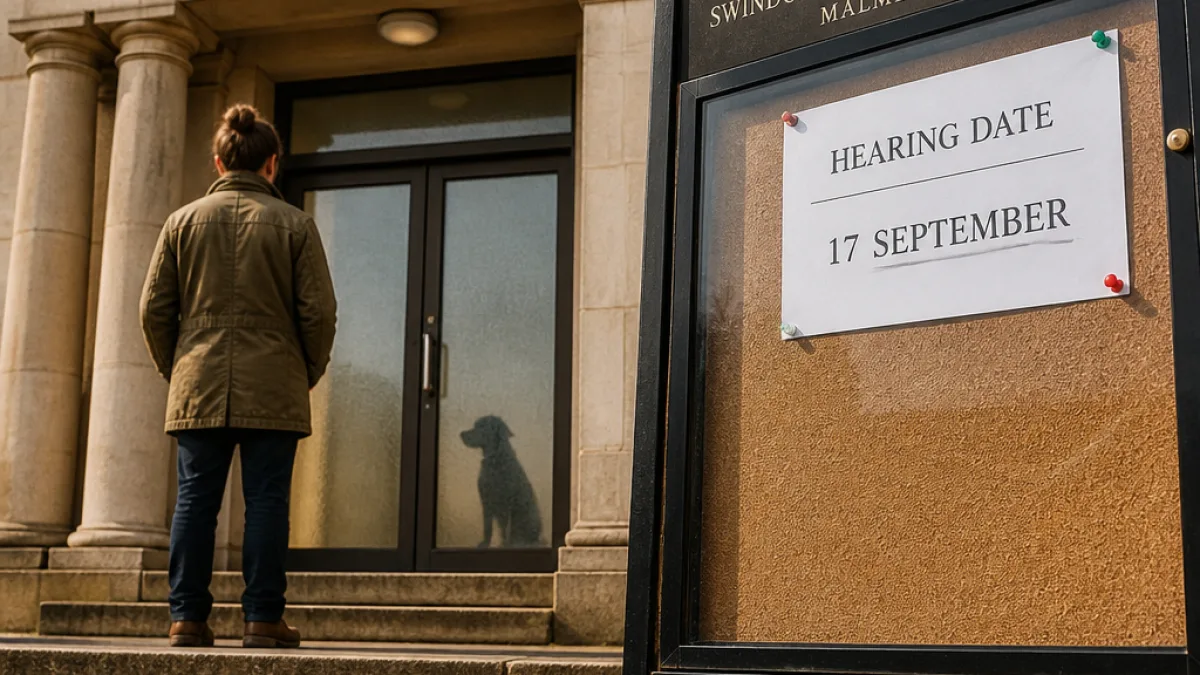
A case reported in the United Kingdom involving a woman from near Malmesbury has been listed for trial after she was accused of keeping a dog described as a Pit Bull Terrier-type, court records show. The matter, scheduled for hearing at Swindon Magistrates Court on 16 September, has been adjourned after the defendant entered a not-guilty plea and was granted unconditional bail.
What the court papers say
According to reporting of the hearing, the defendant is named as Rosa Tennant, 33, of The Hill, Little Somerford. She is accused of having custody of a dog of a type prohibited under UK legislation on 2 May this year. Tennant appeared in Swindon Magistrates Court on 25 June, where she pleaded not guilty to the single charge and was released on unconditional bail ahead of the September trial.
- Alleged offence date: 2 May (reported)
- Court appearance: 25 June, Swindon Magistrates Court
- Trial date: Wednesday, 16 September
- Bail status: Unconditional bail
How the law treats banned dog types in the UK
The case is notable because UK law bans ownership of dogs of certain types, and the legal test turns on the animal’s appearance rather than on pedigrees or registered breed names. The list of types prohibited in the UK includes the Pit Bull Terrier and several others.
| Dog type | Legal position (UK) |
|---|---|
| Pit Bull Terrier | Banned |
| Japanese Tosa | Banned |
| Dogo Argentino | Banned |
| Fila Brasileiro | Banned |
| XL Bully | Banned |
Under the UK regime it is an offence not only to own a dog of a banned type but also to sell, abandon, give away or breed from such an animal. Whether a dog falls within the prohibition is assessed by its physical characteristics rather than by a breeder’s labels or kennel-club registration.
Why this matters locally
For residents of Malmesbury in the Western Cape, the immediate policing or legal implications are limited: the matter is a UK prosecution and does not change South African law. Nevertheless, the case underlines two practical points that have cross‑jurisdictional resonance.
- First, how a jurisdiction defines and enforces rules about dangerous or banned dog types can turn on technical tests and visual assessments rather than on an animal’s registered name.
- Second, owners anywhere should be aware that legal responsibilities extend beyond a single animal’s behaviour: laws can restrict ownership, transfer, sale and breeding of animals deemed a public-safety risk.
Local animal-welfare groups and municipal by-law units often deal with confined but similar problems: bites, roaming dogs or disputes over ownership. While South African municipalities set and enforce their own by‑laws, the UK case highlights how legal frameworks can influence outcomes for owners and communities alike.
The defendant’s not-guilty plea means the facts alleged will be tested at trial. The court will need to consider the evidence about the dog’s appearance and whether it falls within the statutory description of a banned type. The hearing on 16 September will therefore determine whether the prosecution can establish the legal threshold required under the UK prohibition.
"Whether a dog is a banned type depends on its appearance rather than its breed or name," the reporting noted.
Residents with concerns about dangerous animals should continue to rely on local avenues: report incidents to SAPS where applicable, contact local municipal animal control services or approach accredited animal‑welfare organisations for guidance. The Malmesbury name appearing in international reporting is a reminder that animal law and public safety attract attention across borders, even when the practical consequences remain local.