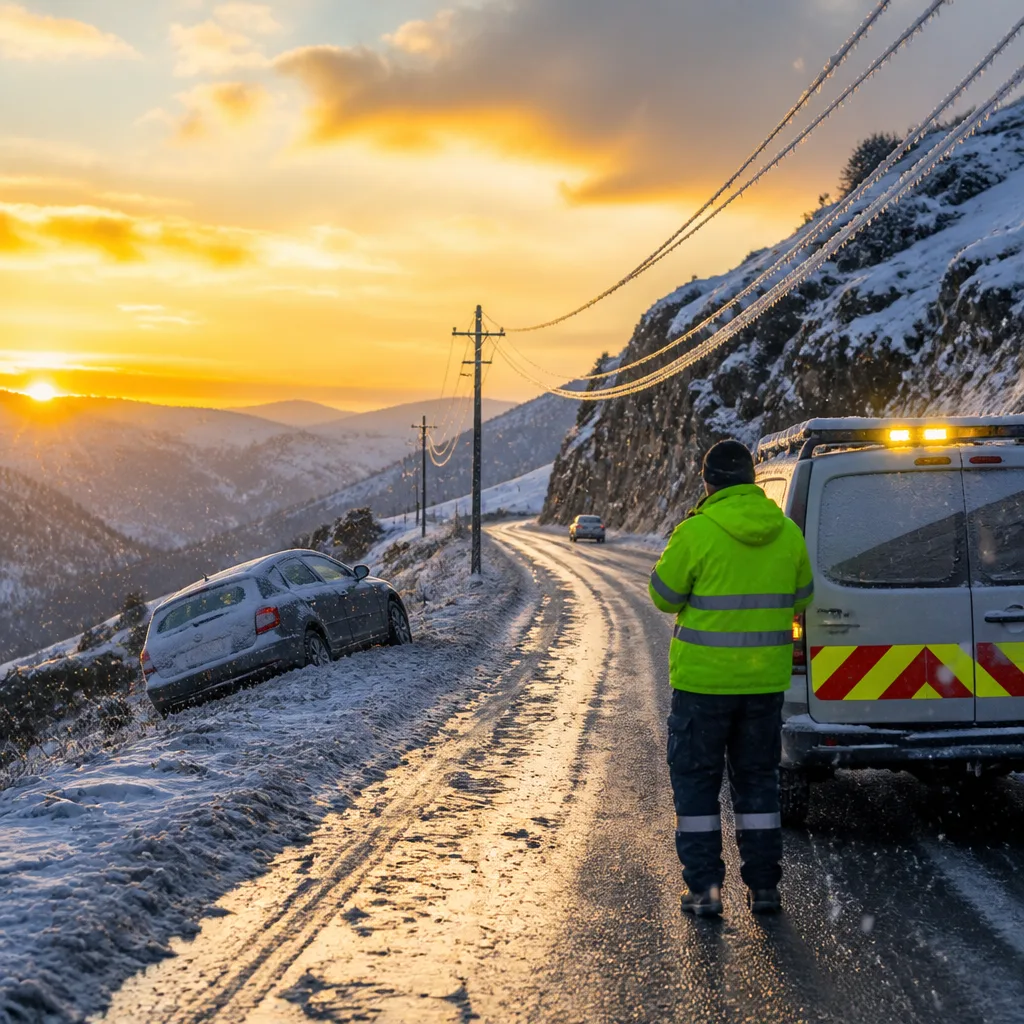
What you must do now: postpone non‑essential travel where snow, ice or heavy rain are reported; drive slowly, keep lights on and allow extra stopping distance on wet or icy roads; conserve electricity where possible to ease pressure on the grid during peak hours.
Cold front affecting several provinces
A strong cold front on 11 August 2026 has delivered heavy snow to parts of the Eastern Cape and KwaZulu‑Natal, while mountain areas of the Western Cape have also recorded snowfall. The weather system has left Gauteng with frigid, wet conditions and widespread electricity outages in Johannesburg.
The Eastern Cape is experiencing heavy snow, strong winds and rain, with travel and services disrupted in a number of areas. Barkly East was specifically reported as seeing heavy snowfall. In the Western Cape, snow fell in parts of the Mont Rochelle Nature Reserve and the Franschhoek Pass, while valley floors saw light rain and temperatures around 7–9 0C, with wet roads posing a hazard to motorists.
Gauteng: freezing conditions and power strain
Johannesburg and surrounding areas woke to very cold, wet conditions. City Power reported it was managing in excess of 2,000 outages across the metro, with new faults continuing to be reported. Lenasia had the highest backlog of faults, followed by Hursthill and Randburg. Suburbs listed without power included Northcliff, Fairland, Linden, Sophiatown and Parkwood.
| Area | Reported issue |
|---|---|
| City Power (Johannesburg) | Over 2,000 outages; repairs slowed by rain |
| Mont Rochelle / Franschhoek Pass (WC) | Snow in mountain areas; valley floors wet, 7–9 0C |
| Barkly East (EC) | Heavy snowfall; travel disruption |
City Power warned that increased use of heaters, geysers and stoves during the cold snap had placed extra strain on the grid and that rain was slowing down repair work. Residents were urged to lighten their electrical load, particularly during peak hours.
Roads and travel: N3 and other routes affected
Snow and icy conditions have slowed traffic on major routes in affected provinces. The N3 toll route through KwaZulu‑Natal was singled out as a particular concern by road operators.
“The entirety of the N3 toll route is a concern,” said Thania Dhoogra, chief operating officer of N3 Toll Concession.
Despite adverse conditions, the N3 remained open but travellers were urged to exercise caution. Motorists should expect slower moving traffic, possible temporary closures where snow or ice make conditions unsafe, and localised flooding in areas of heavy rain.
Practical safety advice
- Postpone non‑essential travel in areas reporting heavy snow, ice or strong winds.
- If you must travel: reduce speed, keep headlights on, allow double the normal stopping distance and watch for icy patches on bridges and high passes.
- Carry warm clothing, a fully charged phone, a torch and basic emergency supplies when travelling in rural or highland areas.
- Limit electricity use during peak periods to help the grid; avoid running multiple high‑load appliances at the same time.
- Follow directions from SANRAL, municipal emergency services and SAWS warnings — roads may be closed without much notice.
These conditions are dynamic; the cold front is producing different effects in different regions — heavy snow and travel disruption in parts of the Eastern Cape and KwaZulu‑Natal, mountain snow and wet valleys in the Western Cape, and intense cold with electrical strain in Gauteng. Monitor updates from the South African Weather Service and local authorities for the latest warnings and road conditions.
Where to get help: contact your local metro or municipal emergency services for immediate assistance; consult SANRAL or provincial road authorities for route status; follow City Power updates if you are in Johannesburg and experiencing outages.
Stay warm, keep safe on the roads and conserve electricity where possible while repair teams work to restore services.