
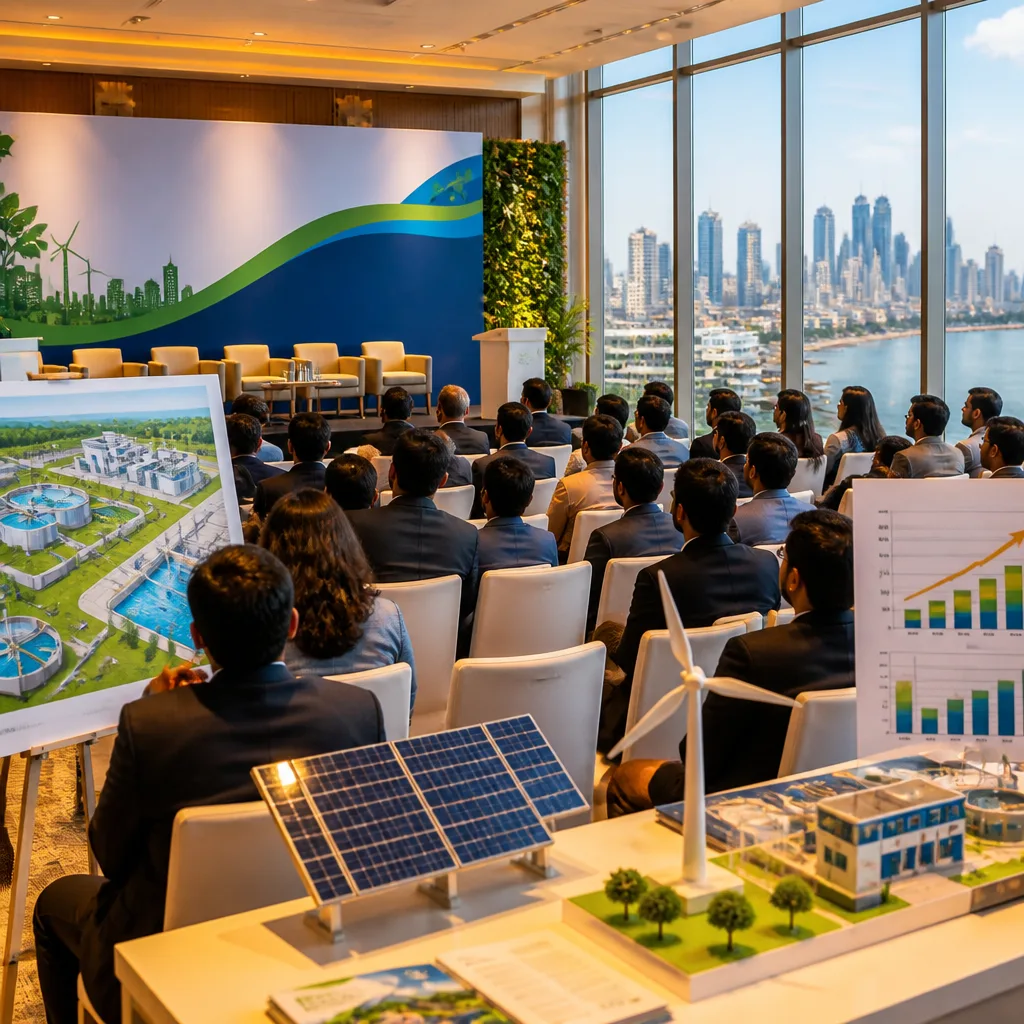
Mumbai, September 25: A two-day, invitation-only Environment & Energy Conclave hosted by JM Financial Services (JMFS) in Mumbai brought together leading Indian companies across the sustainability value chain, highlighting growing investor focus on the nation’s long-term energy transition and environmental infrastructure needs.
Sector breadth and investor intent
The event, held at JMFS’s corporate office in Prabhadevi, convened firms operating in key segments such as water treatment, recycling, renewable energy and environment/energy engineering. Participant names reported by the organiser included CMR Green, Clean Max Enviro, Juniper Green Energy, Enviro Infra, Welspun Enterprise, Antony Waste Handling and Borosil Renewable.
Organisers framed the conclave as a platform for clients to gain sector insights, test investment theses and identify growth strategies as India pivots toward more sustainable infrastructure and low-carbon energy sources. The meeting underscored the role of regulatory push, urbanisation trends and tightening sustainability requirements as drivers of capital allocation in the coming decades.
"India's environment and energy transition has emerged as a core pillar of the country's capex and investment story," said Krishna Rao, Managing Director, Equity Broking at JM Financial Services, emphasising policy support and improving economics as key enablers.
Speakers and messages
Senior executives from JMFS emphasised the multi-year nature of the opportunity. Abhijeet Bora, Senior Vice President, Equity Broking at JM Financial Services, characterised environment and energy transition as "a decadal theme for India," noting that capital expenditure backed by regulation offers visibility to investors amid global uncertainty.
- Policy support: The conclave highlighted how regulation is creating predictable demand for environmental infrastructure and transition-related technologies.
- Segment focus: Water treatment, circular economy and renewables were cited as priority areas for capital deployment.
- Investor services: JMFS positioned the event as providing clients with research, context and access to companies leading the transition.
Implications for markets and infrastructure
By assembling stakeholders from across the sustainability value chain, the conclave aimed to translate strategic themes into investible ideas for clients. The presence of companies active in waste handling, water treatment and renewable power reflects where private capital and project developers are already concentrating efforts to meet regulatory and urban demand.
Speakers tied the investment case to three broad forces: regulatory tightening that mandates cleaner operations and infrastructure; rapid urbanisation that increases demand for water and waste services; and improving economics for renewables and circular technologies that shorten payback periods for investors. The organisers argued these elements together create a rare combination of structural growth visibility and supportive returns.
| Segment | Representative companies at conclave | Investment focus |
|---|---|---|
| Water treatment | CMR Green, Enviro Infra | Urban and industrial wastewater solutions |
| Recycling / Waste | Antony Waste Handling, Clean Max Enviro | Solid waste management and resource recovery |
| Renewables | Juniper Green Energy, Borosil Renewable | Utility-scale and distributed renewable energy |
| Environment / Energy engineering | Welspun Enterprise | Project engineering, EPC and system integration |
What this means for investors and policy
For investors, the conclave signalled both opportunity and the need for due diligence. Organisers emphasised that identifying businesses with scalable models, resilient balance sheets and the ability to navigate regulatory regimes will be critical. The sessions were intended to give clients forward-looking context and direct access to company leaders and sector specialists.
From a policy perspective, industry engagement events such as this one reflect how capital markets and corporate actors are aligning with national objectives for cleaner energy and infrastructure. While the conclave reiterated the promise of a sustained investment cycle, the realisation of those opportunities will depend on consistent enforcement of regulations, streamlined project approvals and bankable offtake arrangements for large-scale infrastructure projects.
The conclave showcases an increasing tendency among financial advisers and asset managers to convene concentrated forums where investors can scrutinise thematic opportunities across environmental and energy sectors. Whether that interest translates into faster deployment of capital on the ground will be a key metric to watch in the months ahead.












