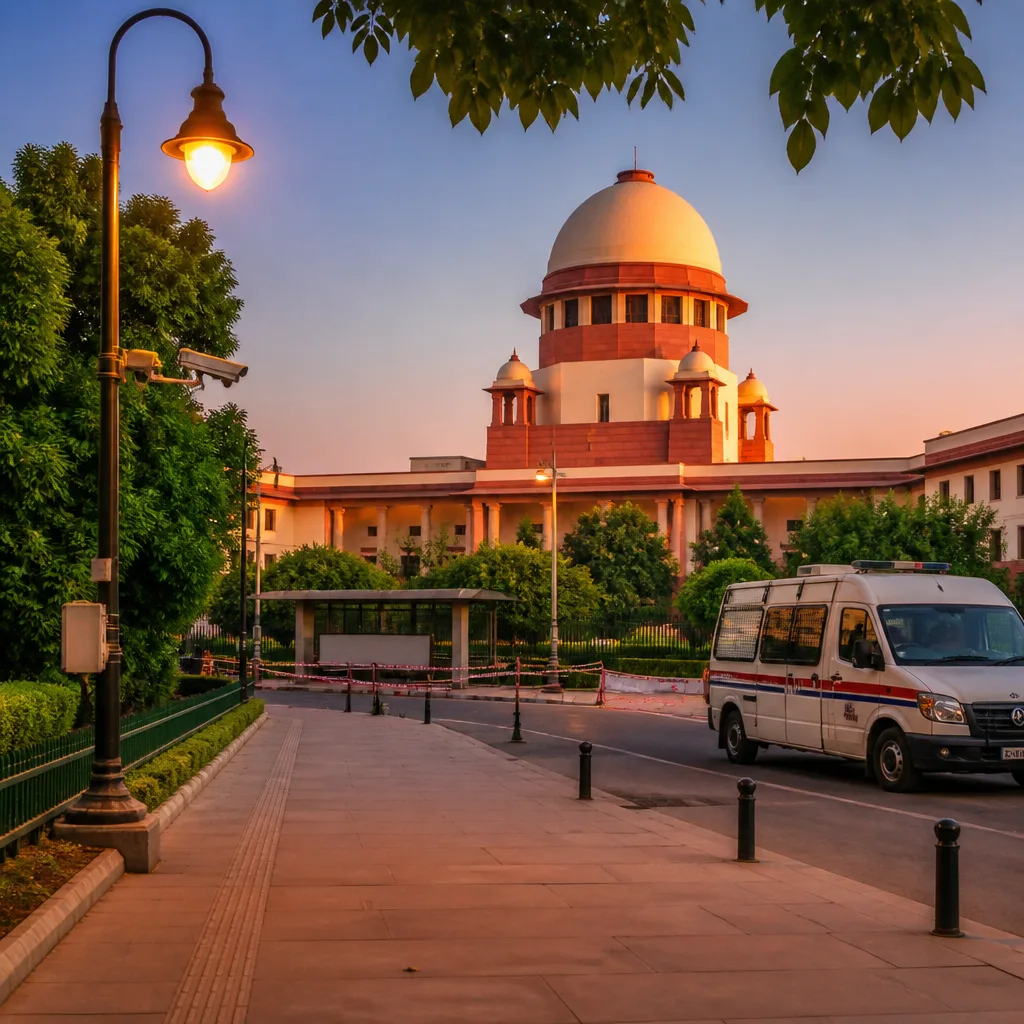
The Supreme Court on Monday pressed for accountability following a string of recent rape cases in the national capital and adjacent districts, saying the incidents point to a "failure of law enforcement", local media reported.
Top court seeks systemic fixes, administration to file petition
The court observed that public spaces such as parks and buses could not be allowed to become "high-risk" zones due to poor lighting, inadequate surveillance and lack of basic facilities, according to legal news website Live Law. It directed its own administration to file a public interest petition so the matter can be pursued on behalf of the public, reported Bar and Bench.
"These incidents reflect a failure of law enforcement"; public spaces should not become "high-risk" zones, the court said.
The comments came amid heightened public concern after recent incidents in the city and surrounding areas. Hundreds of students protested in Delhi last week demanding improved safety measures for women after a teenager said she was allegedly gang-raped by three men in a city park. Earlier this month, a 17-year-old girl was allegedly gang-raped on a moving bus by its driver and conductor, local media reported.
Police response and political reaction
Delhi Police has said it has increased "visible policing" and intensified patrolling across the city, while the Delhi Chief Minister acknowledged lapses and vowed to improve security on television last week, the reports said. The Supreme Court’s move signals judicial willingness to monitor or drive systemic reforms beyond immediate investigations.
- Supreme Court action: Directed court administration to file a public interest petition on accountability.
- Recent incidents: Alleged gang-rape in a park; alleged gang-rape on a moving bus involving driver and conductor.
- Police measures: Increased visible policing and intensified patrolling reported by Delhi Police.
The court emphasised that basic urban infrastructure and policing arrangements — lighting, CCTV, patrolling and other safeguards in public transport and open spaces — must not be allowed to lapse to the detriment of women’s safety, Live Law reported.
Scope of the problem
Sexual violence remains a major challenge across India: the National Crime Records Bureau records suggest that more than 80 rapes are reported to police every day, the Reuters dispatch noted. The Supreme Court’s intervention places the issue under direct judicial scrutiny and may prompt a coordinated administrative response at city and state levels.
| Indicator | Figure | Source |
|---|---|---|
| Average rapes reported per day | More than 80 | National Crime Records Bureau (reported) |
The decision to convert the court administration into an applicant through a public interest petition is an escalation intended to secure judicial oversight of remedial steps and hold agencies accountable, the legal reports said. How the petition will be framed and what relief or directions the court ultimately issues will be watched closely by rights groups, policing experts and city administrators.
Legal commentators noted that the Supreme Court's remarks could lead to orders that establish clearer accountability mechanisms for municipal bodies, police forces and transport authorities charged with ensuring safety in public spaces. The court’s direction also underscores judicial impatience with recurring reports of violence against women that suggest systemic lapses rather than isolated failures.
Reporting by Sakshi Dayal; Editing by YP Rajesh and Sonali Paul was cited in the Reuters dispatch on which this report is based.