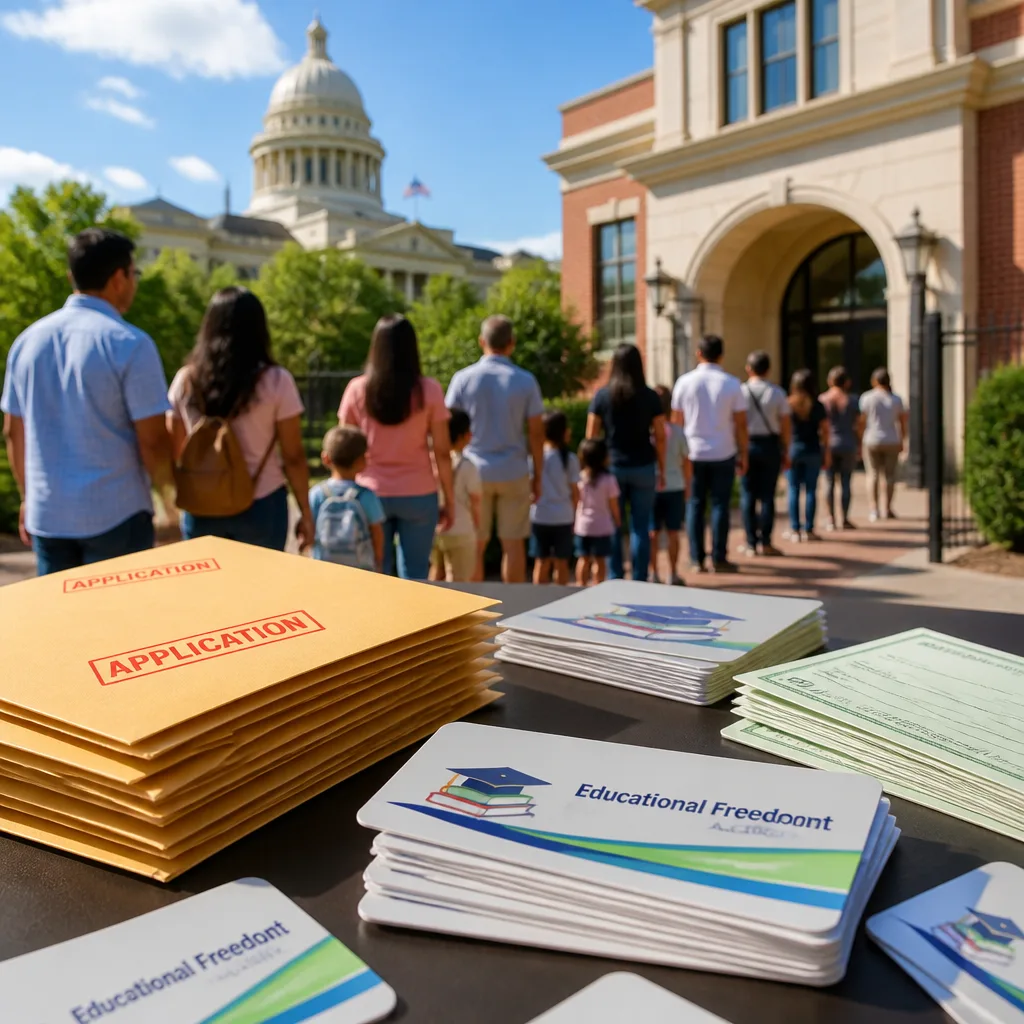
Little Rock, Arkansas — A new annual report from the University of Arkansas Department of Education Reform shows that 74 per cent of students who received Educational Freedom Accounts (EFAs) in the 2025-26 school year were not enrolled in a public school the year before, signalling a large share of programme funds serving students already outside the public system.
What the report found
The report, released on a Friday in October 2026, analysed participant data after the LEARNS Act expanded eligibility and opened the scheme to all Arkansas students for 2025-26. Key findings include:
- 44,524 students received an EFA in 2025-26, compared with 14,256 in 2024-25 when eligibility had been limited and participation capped.
- Of the 2025-26 recipients, only about one-quarter had been enrolled in a public school the previous year; the remaining 74% were already in private schools, were homeschooled or were first-time kindergarten entrants.
- The typical EFA payment was reported as approximately ₹ equivalent of US$6,994 (the report lists the state cost as $6,994 for 2025-26); most awards equalised to about 90% of the state's per-student foundation funding before administrative fees.
- Approval continued to grow: the report states that more than 55,000 students had received approval for the 2026-27 school year.
Policy background and response
The EFA programme, commonly referred to as a voucher system, was created by the LEARNS Act — a sweeping K–12 overhaul championed by Governor Sarah Huckabee Sanders and enacted by the Republican-controlled Arkansas Legislature in 2023. The legislation broadened eligibility and increased the state's financial support for alternative education providers.
“The facts make it clear: LEARNS works,” Governor Sarah Huckabee Sanders said in an emailed statement, adding that the programme and other investments are raising achievement across grades and subjects.
The University of Arkansas report highlights a marked shift in the composition of recipients after universal access. In 2024-25, when the scheme was restricted to certain groups, only 12 per cent of EFA recipients had come directly from public schools the previous year. That share rose to roughly 25 per cent in 2025-26, but the majority of funds continued to support non-public entrants.
Fiscal and system implications
Analysts and educators following voucher and choice programmes note two immediate consequences from such data: one, rapid growth in approvals can place additional pressure on the state budget as per-pupil payments follow students out of public schools; two, a high share of already non-public students receiving EFAs raises questions about whether the programme's expansion is primarily serving newly transitioning students or augmenting existing private and homeschool arrangements.
The report gives specific per-student cost figures for 2025-26, which policymakers will use to estimate ongoing fiscal commitments. It also documents an ongoing increase in approvals for 2026-27, which suggests higher budgetary requirements in subsequent years unless funding formulas are adjusted.
What parents and stakeholders should note
For families and school leaders monitoring the programme, the report underlines several practical points:
- Eligibility broadened substantially from 2024-25 to 2025-26 under the LEARNS Act.
- Funding per approved student in 2025-26 was set at roughly 90 per cent of the state's foundation funding before fees; the reported state cost per account was $6,994.
- Approvals continued to rise into 2026-27, with more than 55,000 students approved by the time of the report.
The University of Arkansas Department of Education Reform report is the primary source for the figures and trends reported here. Officials and observers will watch subsequent reports and state budget proposals to assess the longer-term impact of the LEARNS Act on public school funding and student distribution.
| School year | Approved EFA students | % from public schools previous year |
|---|---|---|
| 2024-25 | 14,256 | 12% |
| 2025-26 | 44,524 | ~25% |
| 2026-27 | 55,000+ (approved) | Not specified |
Note to readers: Parents and educators seeking the original report should consult the University of Arkansas Department of Education Reform website for the full dataset and methodology.