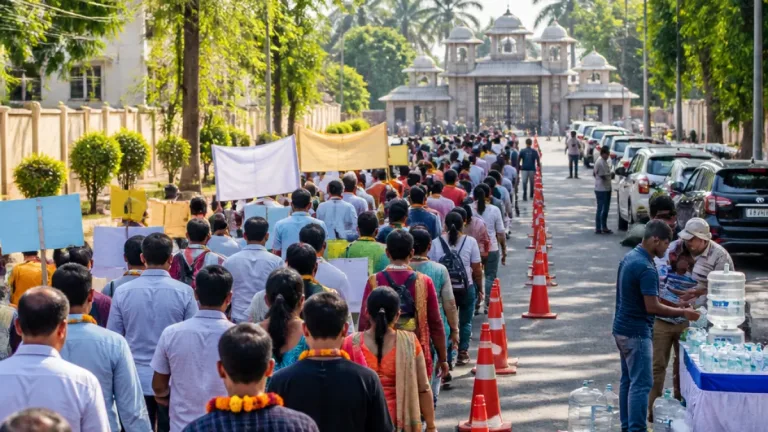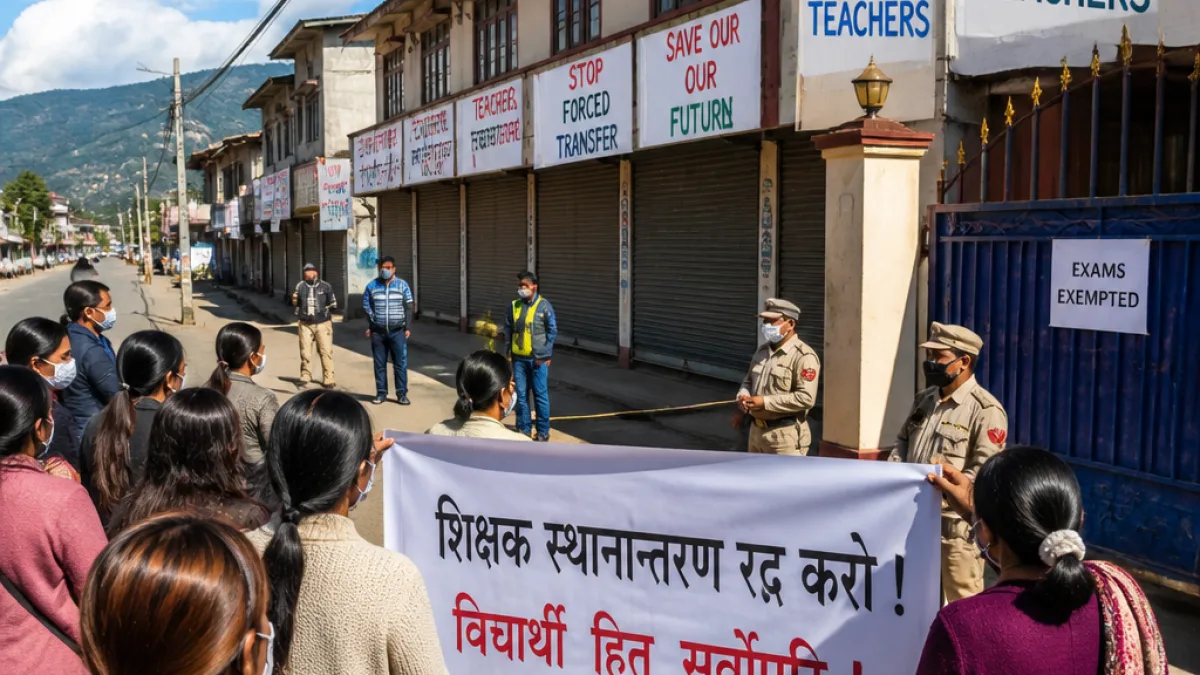
PASIGHAT, East Siang: A 12-hour bandh called by the Bogong Banggo Yameng Kebang (BBYK) and eight youth and student organisations passed off peacefully across East Siang district on October 7, with demonstrators pressing the state Education Department to review its teacher transfer and rationalisation exercise.
Demands and scope of the shutdown
The joint front demanded the cancellation of the transfer orders for 63 teachers within the district, immediate filling of 69 vacant teaching posts, and a minimum of 30 days to complete intra-district rationalisation so that school-wise and subject-wise requirements can be properly assessed. The bandh was observed from 5 am to 5 pm.
Organising groups said essential services, medical emergencies and students sitting examinations were excluded from the shutdown. There were no reports of violence or disruption to emergency services during the period.
Concerns raised about staff strength and student impact
The protesters argued East Siang already faces a shortage of teachers and transferring 63 personnel without a transparent school-level needs assessment could weaken academic delivery in several institutions. Particular attention was drawn to staffing at IGJ Higher Secondary School, Pasighat, D Ering Memorial Government Higher Secondary School, Pasighat, and Government Higher Secondary School, Mebo, which the groups said require additional sanctioned posts.
The joint front also sought protective measures for teachers who have not completed the prescribed three-year minimum tenure at a posting and urged the department to consider genuine medical, pregnancy-related and other compelling circumstances when issuing orders.
“We will hold an emergency meeting after the bandh to review developments and decide on the next course of action,”
BBYK president Advocate Magyar Lego made the remark as the shutdown ended and the organisations prepared to assess whether their concerns had been addressed.
Background to the protest
The joint front had earlier postponed the bandh after receiving an invitation for talks with authorities, but later reinstated the shutdown, saying outstanding issues had not been resolved. The groups have framed their action as a measure to protect the academic interests of students in the district.
Representatives of the protest organisers emphasised that transfers must account for detailed school-level inventories of subject-wise staff requirements, and that sudden removal of teachers could leave critical gaps, especially in higher secondary classes and specialised subjects.
What the protesters want
- Immediate cancellation of transfer orders for 63 teachers.
- Filling of 69 vacant teaching posts across the district.
- At least 30 days allotted for intra-district rationalisation to allow proper assessment.
- Protection for teachers who have not completed three-year minimum tenure and consideration of medical/pregnancy grounds.
| Item | Number |
|---|---|
| Teachers whose transfers are contested | 63 |
| Vacant teaching posts sought to be filled | 69 |
| Minimum days requested for rationalisation | 30 |
As of this report, there has been no public statement from the Education Department on whether it will accede to the specific demands or reopen the transfer lists for review. The protest groups said they will deliberate outcomes of the bandh in an emergency meeting and decide on further action if their concerns are not addressed.
Local education stakeholders and parents have expressed anxiety that prolonged disputes over staffing and transfers could affect academic continuity. Teachers' unions and departmental officials often cite the need for rationalisation to optimise resource allocation, but local groups contend that such exercises must be sensitive to ground realities and avoid undermining schools already facing shortages.
The peaceful conduct of the bandh, and the organisers' accommodation of essential services and examinations, indicates an attempt to balance protest with community needs. Observers in Pasighat said the next steps will hinge on whether the department engages with the detailed list of grievances and offers a transparent timeline for addressing vacancies and reassessing transfer orders.