
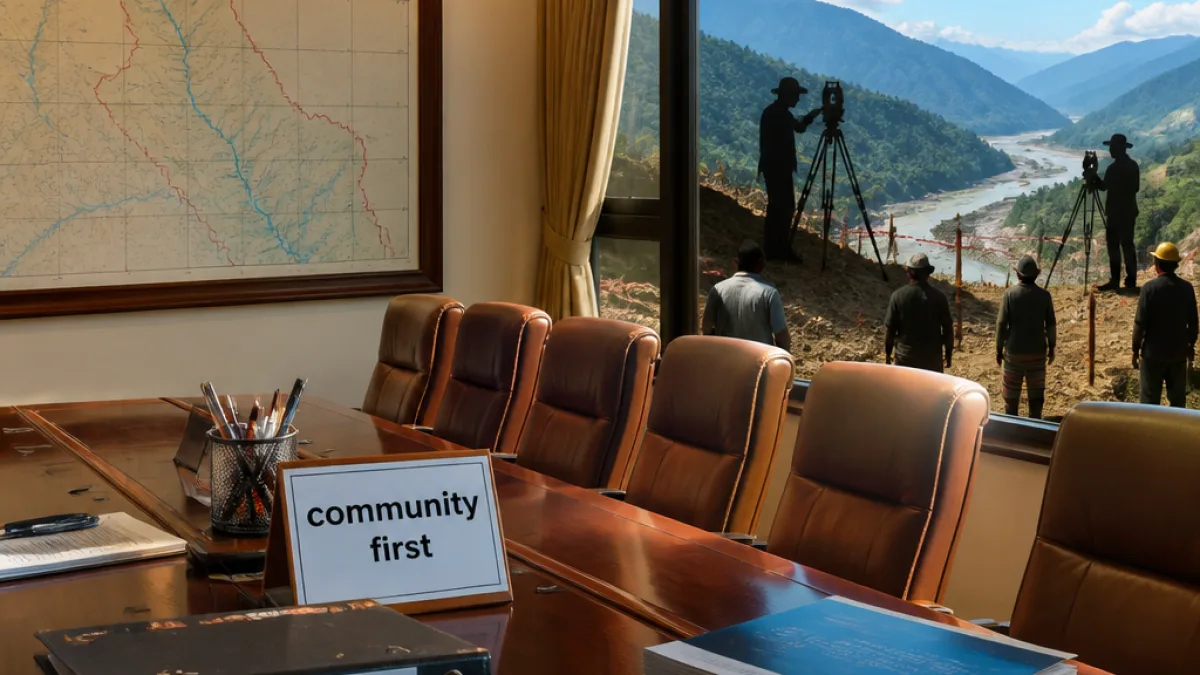
Itanagar: The Arunachal Pradesh cabinet on Wednesday approved the constitution of an empowered high-level committee to oversee and coordinate activities related to the pre-feasibility report (PFR) survey for the proposed Siang Upper Multipurpose Project (SUMP), a sprawling hydropower and storage scheme envisaged to produce 11,000 megawatts (MW).
Committee, composition and mandate
The panel will be chaired by Rural Development and Panchayati Raj minister Ojing Tasing. It will include the Chief Minister’s adviser and Yingkiong-Tuting MLA Alo Libang and Geku-Mariyang legislator Oni Panyang as members. The cabinet statement said the body is expected to guide and coordinate survey-related work and facilitate sustained engagement with people in Siang and Upper Siang districts.
"Survey activities will be carried out in a transparent, peaceful and people-centric manner," the cabinet said.
The brief released after the meeting reaffirmed that the state’s development agenda would proceed while respecting local traditions and community interests. It said the voices, welfare and aspirations of families likely to be affected by the project would remain central to the process.
Why the state is pushing the project
Both the Centre and the Arunachal government have framed the Siang Upper project as a strategic asset for the region, stressing its role in power generation, flood moderation and water security. Authorities have also highlighted potential inflows of investment and employment that could accompany construction and allied activity if the project proceeds beyond the pre-feasibility stage.
Local resistance and concerns
Despite official emphasis on benefits, the project has encountered sustained opposition from sections of the local population. Grassroots groups such as the Siang Indigenous Farmers’ Forum (SIFF) and other community organisations have voiced objections on several grounds, including the prospect of displacement, loss of ancestral lands and livelihoods, and environmental damage.
The cabinet record acknowledged these concerns and said it had taken note of complaints about what it described as “misinformation and disinformation” being circulated by what officials termed vested interests. It underlined the need for meaningful, sustained dialogue to ensure that survey work is conducted peacefully.
Practical tasks and next steps
The empowered committee’s immediate responsibilities, as set out by the cabinet, include:
- Coordinating all PFR survey activities in Siang and Upper Siang districts;
- Facilitating engagement and consultations with potentially affected communities;
- Ensuring survey operations remain transparent and community-focused;
- Addressing issues raised by residents and flagging those requiring higher-level intervention.
The cabinet did not provide a timeline for the PFR survey or the committee’s reporting schedule. It also did not specify whether independent social and environmental impact assessments would run concurrently with the PFR stage, information that local stakeholders have repeatedly sought.
Project snapshot
| Project element | Detail |
|---|---|
| Name | Siang Upper Multipurpose Project (SUMP) |
| Capacity | 11,000 MW |
| Primary stated objectives | Power generation, flood moderation, water security, investment and employment |
| Main areas affected | Siang and Upper Siang districts |
Broader political and social implications
For the state government, the formation of the committee signals an attempt to institutionalise community outreach at an early technical stage of project appraisal. Political leaders in Arunachal have in the past stressed the balancing act between harnessing hydro-resources and protecting indigenous customary rights. The choice of local legislators as committee members suggests an effort to bridge administrative action with constituency-level concerns.
However, opponents say process design—how consultations are conducted, who is recognised as a stakeholder and the transparency of resettlement and rehabilitation frameworks—will determine whether tensions dissipate or escalate. Several community organisations have previously demanded clear guarantees on land rights, compensation, and independent environmental review before any intrusive survey work proceeds.
The new empowered committee will thus face the immediate task of translating the cabinet’s stated commitment to a "people-centric" approach into concrete, documented procedures that address both technical survey requirements and the socio-environmental anxieties of residents in the two districts.













