Ritual at Vijay Nagar home follows street protest over election issues
A purification ritual using Ganga water was performed on Tuesday at the ancestral house of Chief Election Commissioner Gyanesh Kumar in the Vijay Nagar area of Agra, days after a protest by Congress workers outside the premises, PTI reported.
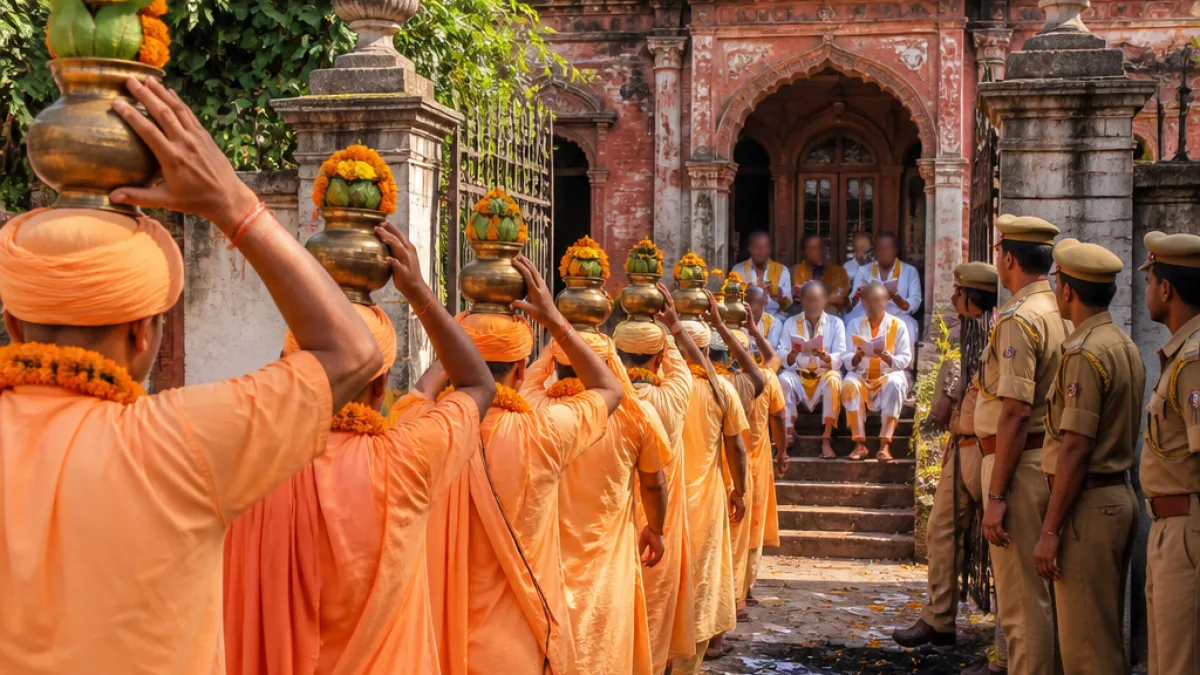
Local residents and family members said a Kalash Yatra — a procession carrying a sacred pot of river water — was taken to the house, followed by a recitation of the Sundarkand, a chapter from the Ramayana. Kumar's mother, Satyawati Gupta, told reporters the protest on September 28 had left the compound "very dirty" and that objectionable words were scrawled on the door.
"That is why we brought a Kalash Yatra with Ganga water from the temple and, after reciting the Sundarkand, purified the house," said Satyawati Gupta, according to PTI.
The purification ceremony prompted an immediate reaction from the local Congress leadership. Agra Congress city president Amit Singh criticised the move and suggested that a "yajna for wisdom" would have been a more appropriate response. He accused the ritual of reflecting a "mindset of untouchability" and linked it to claims that Dalit and other backward-class protesters had touched the house during the earlier demonstration.
- The September 28 protest by Congress workers targeted perceived issues in the functioning of the Election Commission, according to local accounts.
- Protesters allegedly blackened the main gate and walls and wrote slogans including "Gyanesh Gaddar" and "Chor" on the property.
- Police arrested six Congress workers in connection with the disturbance; they were later granted bail on October 4.
Police action and legal steps
Police registered cases alleging disorderly conduct and related offences after the protest. PTI reporting said the six arrested workers were remanded to judicial custody and subsequently released on bail on October 4. Local police sources confirmed cases were filed under provisions dealing with alleged public disorder and criminal mischief.
| Event | Date |
|---|---|
| Congress protest outside ancestral home | September 28 |
| Arrests of six workers | Following the protest (dates of arrest not specified) |
| Release on bail | October 4 |
| Ganga purification (Kalash Yatra and Sundarkand) | October 6 |
The episode has layered implications for Agra's civic and political climate. The ancestral residence is a private property but occupies a public place in political conversation because of the occupant's constitutional role. The Congress protest was framed by demonstrators as an expression of grievance over election-related matters; the family saw the demonstration as an affront that required religious rites to remove perceived impurity.
Local leaders and activists across the political spectrum interpret such incidents differently: for some, public demonstrations — even when loud or symbolic — are legitimate means of holding institutions to account; for others, targeting private residences crosses a civic boundary. The actions by both protesters and the household now figure in local debate about protest tactics, communal sensitivity and the policing of political dissent.
Agra's police have so far maintained that the cases were lodged on grounds of alleged unlawful conduct during the demonstration. No fresh FIRs related specifically to the purification ritual were reported in initial PTI dispatches.
For residents, the episode underlines how national-level institutions and local politics intersect in Agra. The city has a history of highly charged political activity around civic and religious sites, and incidents like this may shape public discourse in the run-up to future demonstrations or official actions.
PTI reporting formed the basis of this account.