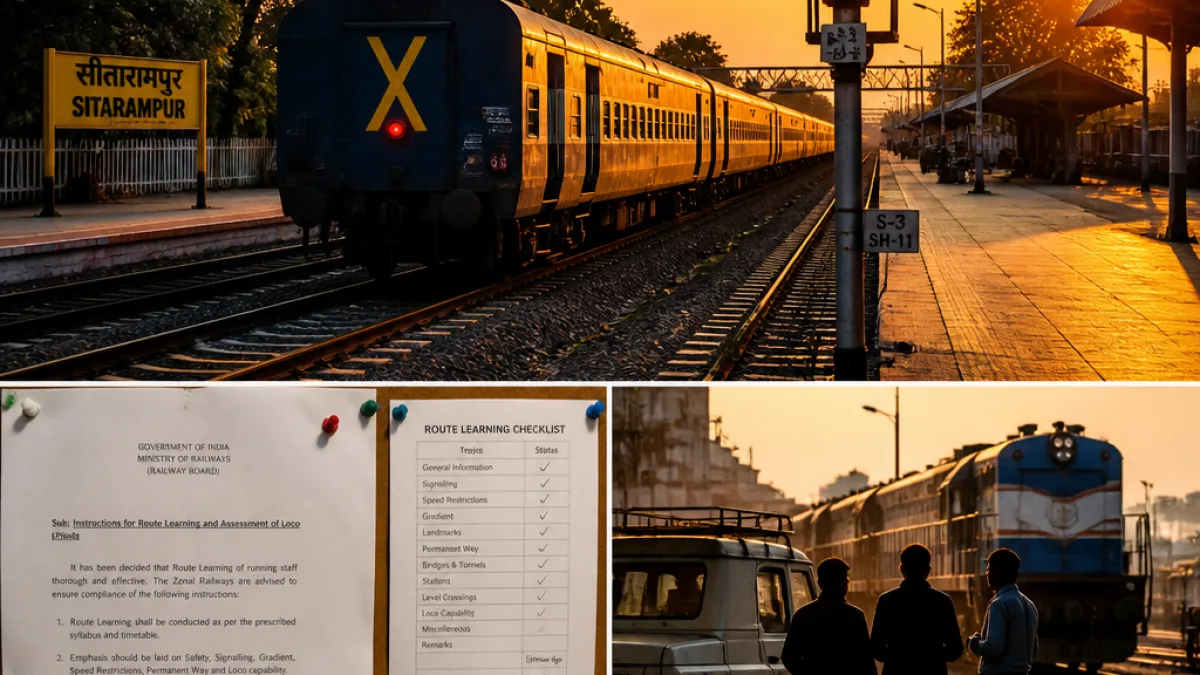
Asansol — The Railway Board has directed all zones to ensure loco pilots undergo proper route learning before being deployed on any section, after a passenger train overshot a red signal at Sitarampur station in the Asansol Division of Eastern Railway on July 29, 2026. The instruction, issued in a written communication dated August 24, 2026, follows findings in the probe into the incident that the running crew lacked adequate route learning.
Board cites SPAD and gaps in Crew Management
The Board said the decision was taken after the SPAD (Signal Passing At Danger) at Sitarampur was discussed at a meeting on August 5, 2026. According to the communication reported from New Delhi on September 29, the Crew Management System (CMS) already contains information that can be used to detect and record violations where crew are rostered without requisite route learning.
Railway norms require that a crew member undertake adequate route learning by travelling with the regular crew on that route before deployment. The probe into the Sitarampur overshoot found this procedure had not been followed for the crew on the train involved. The Board emphasised the need to book crew only after confirming due route learning and instructed zones to take strict action for violations.
"Booking of crew with due route learning is important. Strict action needs to be taken for this violation," the Railway Board said in the written communication dated August 24, 2026.
Alternatives to deploying under‑trained crew
To tackle situations of crew shortage without compromising safety, the Board laid down alternatives and classifications for handling roster gaps. Among the instructions:
- Rajdhani/Shatabdi/Duronto trains should not be run by Loco Pilots (Goods) under any circumstances; regular links should be adjusted instead.
- Mail/Express and diverted Mail/Express trains should ideally be worked by Loco Pilots (Mail/Passenger); where unavailable, divisions must prepare screened panels of Loco Pilots (Goods) holding A‑Grade certificates to be considered for deployment.
- The CMS should be used to record violations; if a suitable category for such breaches does not exist, the system should be modified to create one.
Operational and safety implications for Asansol routes
Asansol is a key junction on Eastern Railway, handling a mix of high‑speed passenger services and heavy freight. The Board’s directions aim to remove a recurrent operational shortcut — deploying crew without sufficient route familiarisation — which it found has contributed to multiple overshoots in the past. By insisting on documented route learning and by tightening CMS usage, the Board intends to bring roster practices into closer compliance with safety protocols.
Railway officials were also instructed to consider withdrawal of regular loco pilots from scheduled links, when necessary, rather than deploying under‑trained staff on premium services. The communication underlined screening and certificate requirements for any Goods loco pilots being considered for Mail/Passenger duties.
| Item | Board instruction |
|---|---|
| Route learning | Mandatory before deployment; must travel with regular crew |
| CMS usage | Record violations; modify CMS categories if needed |
| Premium trains | No Goods loco pilots on Rajdhani/Shatabdi/Duronto |
Local commuters and daily travellers who use services through Sitarampur and Asansol Junction may experience temporary roster adjustments while zones implement the Board’s directives. Divisional authorities typically need time to rework links, screen panels and update CMS entries, and such operational changes could produce short‑term service alterations.
The Board’s communication also underscores a broader administrative emphasis on closing procedural loopholes rather than relying solely on punitive measures after incidents occur. Using the CMS to pre‑empt roster violations aims to enable proactive checks at the divisional and zonal level.
Asansol residents and railway users will be watching how quickly Eastern Railway implements the new instructions and whether stricter crew booking and CMS monitoring reduce signal overshoots and other safety incidents on the busy Asansol corridor.