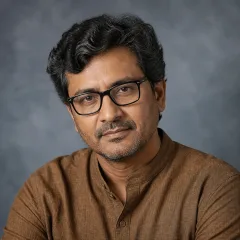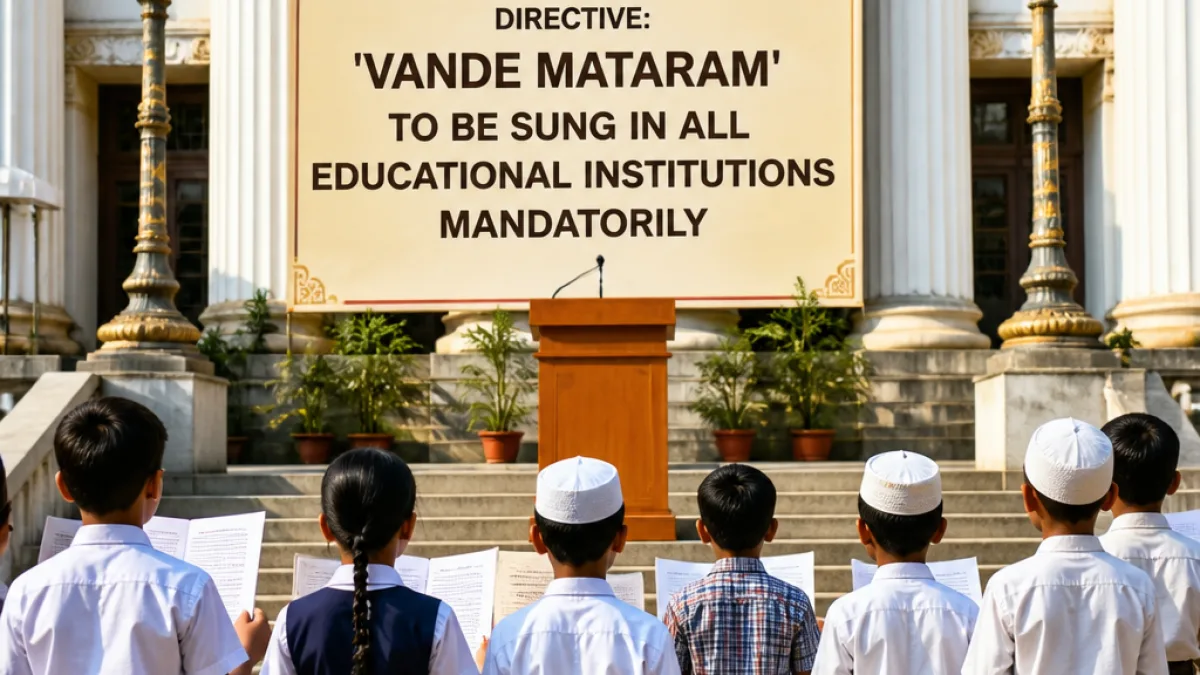
Kolkata: West Bengal Chief Minister Suvendu Adhikari on Saturday said his government has made the singing of the national song ‘Vande Mataram’ mandatory in state schools and in registered madrasas.
Administration’s directive and the political context
Addressing a programme at the National Library in Kolkata, Adhikari linked the move to a broader claim that the previous Trinamool Congress (TMC) government had allowed “infiltrators” into the state and thereby changed its demography. He said the new, “nationalist” dispensation will secure the state’s borders and ensure that “every infiltrator will be pushed back”.
“Rest assured… With a nationalist government that gives primacy to retaining the ‘Sanatani’ tradition at the helm, the state’s borders will be secured and every infiltrator will be pushed back,” he said.
Adhikari specifically told the gathering that his regime has made the singing of the national song compulsory not only in state schools but also in registered madrasas. He used the occasion to criticise the earlier administration led by Mamata Banerjee on several counts related to cultural expressions and public commemorations.
Allegations about past government's stance
The Chief Minister alleged the previous TMC government did not permit the BJP and other Hindutva organisations to observe December 6 as 'Shaurya Diwas', a day some groups mark to recall the 1992 demolition of the Babri Masjid in Ayodhya. He also accused the then Chief Minister of deploying government machinery to hold a rally against the consecration of the Ram Temple in Ayodhya in January 2024, while the nation was celebrating the temple’s consecration.
Those assertions were made during Adhikari’s speech and have been reported in the state capital. The Chief Minister’s remarks frame the compulsory singing policy as part of a cultural and political orientation his government seeks to promote.
Practical scope and immediate implications
The announcement refers to registered madrasas and state-run schools. At this stage, the government has declared the requirement publicly; the official circular or administrative order detailing implementation, monitoring or penalties for non-compliance has not been cited in the report.
- Where it applies: State schools and registered madrasas, according to the Chief Minister.
- Policy rationale offered: To underscore a nationalist and 'Sanatani' cultural orientation, as stated by the Chief Minister.
- Allegations against predecessor: Accused of allowing demographic change through infiltration and of denying certain commemorations.
Political resonance in Bengal
West Bengal has a charged political landscape where cultural symbols and educational policy often intersect with partisan narratives. The Chief Minister’s emphasis on the national song and references to demographic change and border security are likely to add to political debate across the state’s parties and civil society groups.
How the directive will be operationalised at the ground level — especially in diverse communities and in institutions that are sensitive about religious identity — remains to be clarified by the administration. The statement, as reported, does not include details on enforcement mechanisms, timelines for compliance or consultations with madrasa managements and school authorities.
What is on record
| Element | As reported |
|---|---|
| Mandate | Mandatory singing of 'Vande Mataram' in state schools and registered madrasas |
| Announced by | Chief Minister Suvendu Adhikari |
| Venue | National Library, Kolkata |
| Allegations against previous govt | Allowed infiltrators; changed demography; blocked Shaurya Diwas celebrations |
Adhikari’s remarks were reported from Kolkata and form part of the public record of his government’s cultural and educational priorities. The statement is likely to draw responses from opposition parties, educational bodies and community organisations as further details and formal orders emerge.
For now, the announcement establishes the state government’s stated intent to make the national song a compulsory element in routines at state schools and registered madrasas, and situates that move within a broader political narrative about culture, identity and security in West Bengal.