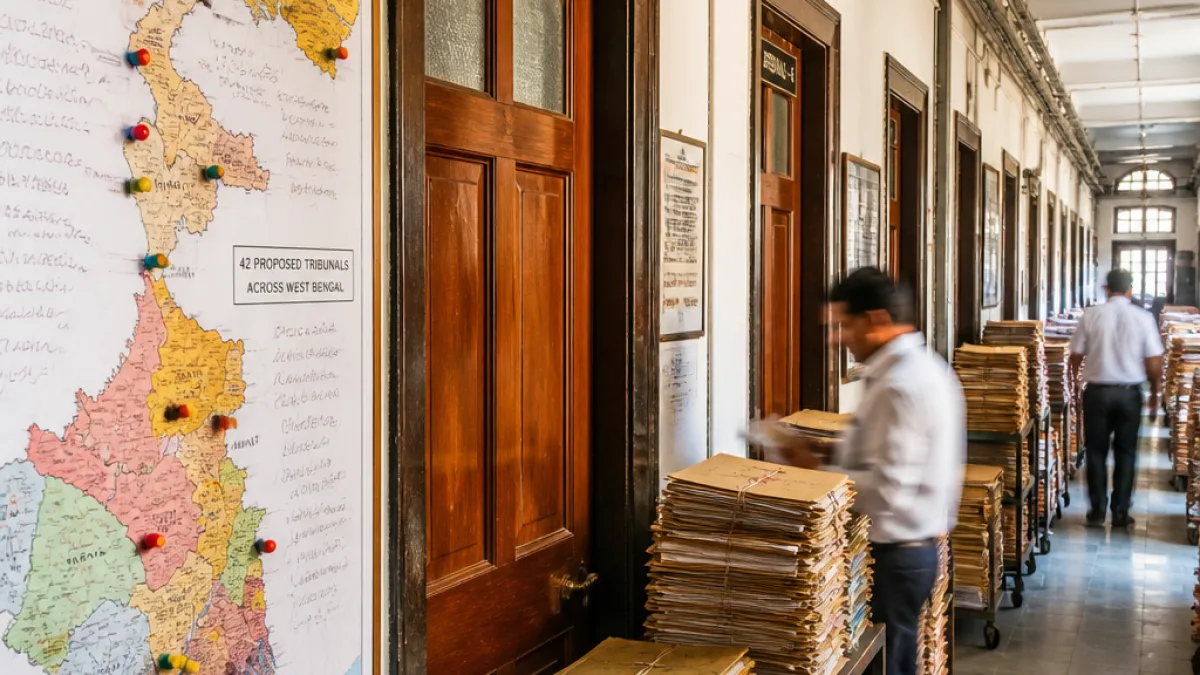
Kolkata: The Election Commission (EC) has told the Supreme Court that a vast backlog of appeals arising from the Special Intensive Revision (SIR) of electoral rolls in West Bengal remains unresolved, and has proposed a substantial expansion of the tribunal mechanism to deal with the caseload.
Scale of the backlog
In an affidavit filed before the apex court, the EC said a total of 38.31 lakh appeals have been lodged against inclusions and exclusions from the rolls following the SIR exercise in West Bengal. Of these appeals, the poll panel reported that more than 37 lakh remain pending before existing tribunals.
The EC’s data breaks down the appeals into two broad categories:
- 22.21 lakh appeals filed by electors whose names were deleted during the SIR seeking reinstatement; and
- 16.10 lakh appeals contesting the inclusion of names in the rolls.
Current tribunal strength and the EC’s proposal
At present, the EC said, 19 tribunals are handling these cases. The Commission warned that at the current disposal rate the backlog could take more than a decade to clear, and therefore suggested increasing the number of appellate tribunals to 42 — one for each of West Bengal’s parliamentary constituencies — to streamline and expedite adjudication.
The affidavit highlights the urgency of the expansion given the numbers involved and the implications for voters seeking redressal of enrolment disputes.
Decisions so far and outcomes
The EC told the court that tribunals have decided 1,26,194 appeals so far. Of those disposed of, 1,13,943 appellants were restored to the electoral rolls after orders in their favour.
"More than 90 per cent of the appeals decided so far have resulted in the names being restored," the Election Commission said in its affidavit.
The high proportion of successful appeals among decided cases is highlighted by the EC to underline the potential disenfranchisement arising from pending deletions.
On claims regarding electoral impact
The EC also addressed claims that deletions resulting from the SIR had influenced outcomes in the recent West Bengal Assembly elections. According to the affidavit, the Commission disputed such assertions and said that comparisons which cited deletion numbers against victory margins had overlooked several entry categories recorded during the SIR process — specifically those marked as "absent, shifted, dead and duplicate".
Practical implications and next steps
If the Supreme Court accepts the EC’s proposal, the tribunal count in the state would more than double. The Commission argues this would permit faster adjudication and reduce the lengthy waiting periods that currently impede many appellants seeking reinstatement or removal of names.
Beyond tribunal strength, the affidavit signals a need for procedural and administrative measures to streamline case disposal across the state’s 42 parliamentary constituencies. The EC has invited judicial and administrative consideration by placing the facts and figures before the court.
| Item | Number |
|---|---|
| Total SIR appeals filed | 38.31 lakh |
| Pending appeals | More than 37 lakh |
| Appeals by deleted electors seeking inclusion | 22.21 lakh |
| Appeals challenging inclusions | 16.10 lakh |
| Tribunals currently hearing cases | 19 |
| Tribunals proposed by EC | 42 |
| Appeals decided so far | 1,26,194 |
| Persons restored to rolls after decisions | 1,13,943 |
For voters in Bengal, an expanded tribunal network could mean quicker redressal of enrolment disputes that affect the right to vote. The EC’s affidavit has placed the issue before the Supreme Court, which will determine whether and how to direct an enlargement of the tribunal system or other remedial measures.
The figures provided by the EC form a central part of the legal record on SIR-related electoral grievances in West Bengal and are likely to be examined in detail by the court as well as by political stakeholders and civil society engaged in voter rights.