Retired SAIL employees in Durgapur press for permanent titles after lease expiry
Hundreds of retired employees who built homes on land provided by the Steel Authority of India Limited (SAIL) at Durgapur’s City Centre remain in legal and emotional limbo after the cooperative township's lease expired in May 2026. The dispute over the renewal and conversion of lease deeds has prompted intervention by the local MLA, who took the matter to the Union Ministry of Steel in Delhi.
Durgapur Paschim MLA Lakshman Chandra Ghorui said he met Minister of State for Steel Bhupathiraju S Varma in New Delhi, and was told that the issue had not previously been raised with the ministry. Ghorui described the matter as a "bizarre renewal issue" relating to the cooperative township on 150 acres, which has remained unresolved for over 35 years, producing uncertainty over the ownership of what he termed "hundreds of valid households."
“The bizarre renewal issue of lease deeds of the cooperative township on 150 acres remains unaddressed for over 35 years, leading to uncertainty over the ownership of hundreds of valid households,” said Lakshman Chandra Ghorui.
What residents say: inheritance, memories and legal constraints
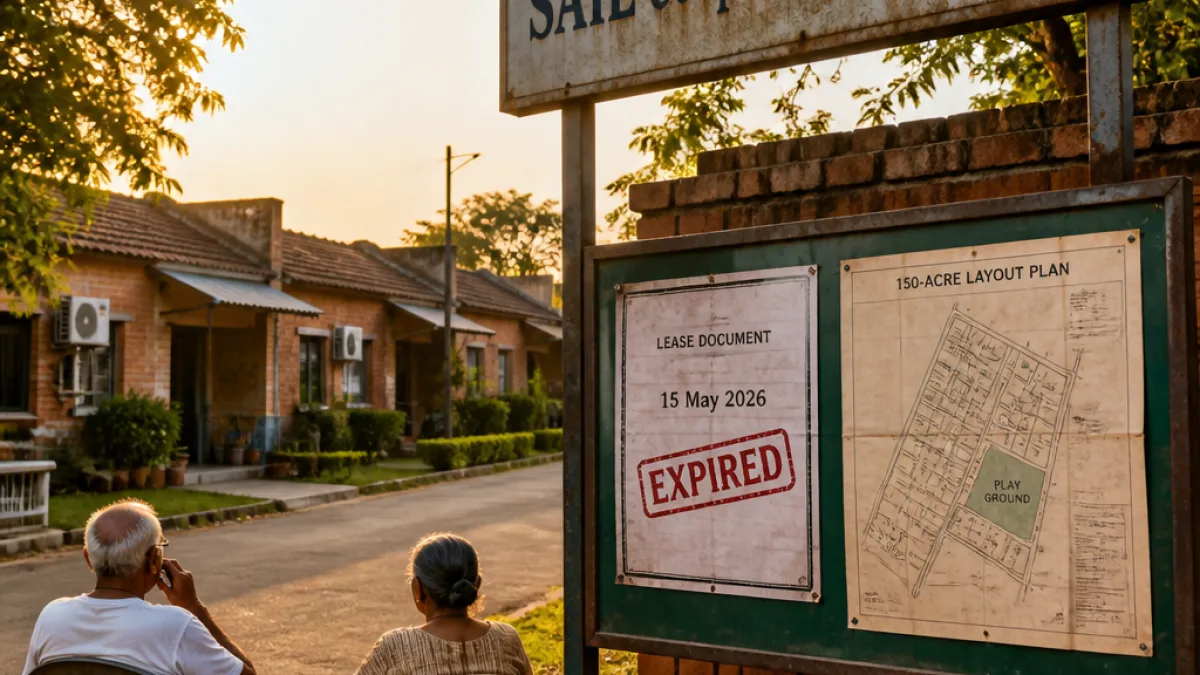
About 1,875 retired SAIL employees constructed dwelling units between the 1990s and early 2000s under the umbrella of the SAIL Cooperative, which functions as the parent body for 62 housing societies. Residents and cooperative office-bearers said the expiry of the lease on 15 May 2026 has created anxiety not only about ownership but also about the right of legal heirs to retain properties.
Several settlers recalled the emotional attachments that tie families to the houses: the neem tree planted in 1994, marks of grandchildren’s growth on walls, verandas where morning tea is taken. Parimal Das, secretary of one cooperative, told reporters these personal markers are now threatened if freehold conversion is not permitted.
A resident, Gautam Saha, highlighted inheritance concerns: “My father was a lessee, but I am not. I am worried about the fate of my two sons — whether they would be allowed to continue staying in their grandfather’s house!”
Historical background and contractual terms
Records and resident accounts indicate that in the 1984–85 financial year, SAIL transferred the land to Durgapur Steel Plant for relinquishment among cooperatives at a charge of ₹25,000 per acre. In 1994, the Durgapur Steel Plant leased the land to cooperative members for a period of 33 years, which concluded this May.
During the conditional handover, SAIL reportedly barred transfer of land titles in favour of legal heirs of the employees, a restriction that now compounds uncertainty following the lease’s termination.
| Item | Detail |
|---|---|
| Area | 150 acres |
| Number of retirees affected | 1,875 |
| Housing societies | 62 |
| Original lease term | 33 years (ended 15 May 2026) |
| Charge at transfer (1984–85) | ₹25,000 per acre |
Administrative and legal ramifications
The immediate issues before residents and authorities include whether SAIL or Durgapur Steel Plant will permit conversion to freehold, whether lease renewals will be granted on similar terms, and how the bar on transfer to legal heirs will be addressed. The stand taken by the Union Ministry of Steel could determine whether long-standing lessees and their descendants retain residential security or face protracted litigation.
- Residents seek clarity on freehold conversion or lease renewal so that legal heirs can inherit homes.
- Cooperative leaders say the conditional handover’s restriction on title transfer to heirs is a central grievance.
- Local MLA has raised the matter with the Union Ministry of Steel; the ministry’s response will shape next steps.
For Durgapur — a city shaped by its steel township heritage and the lives of generations tied to central industries — the dispute underscores tensions between industrial land management practices of earlier decades and contemporary expectations of property rights and inheritance. The next developments, whether administrative intervention, a policy decision from the ministry, or legal action by cooperatives, are likely to have wide repercussions for retired employees and their families who have lived in these homes for decades.