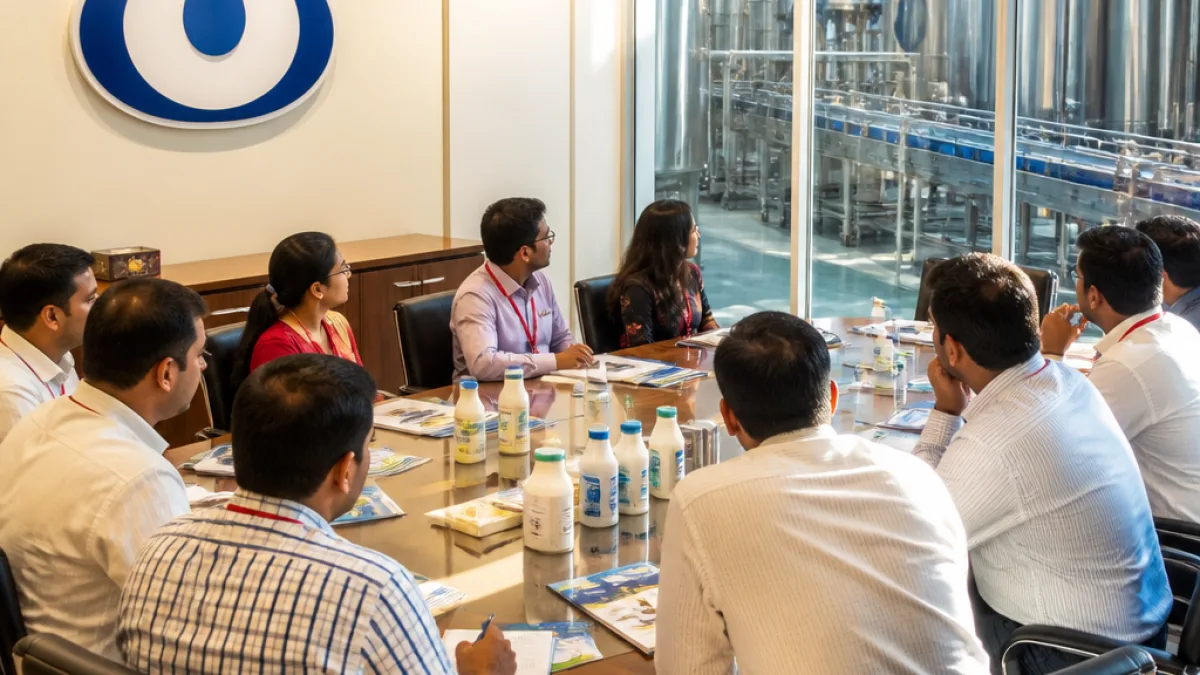
A nine‑member media delegation from Arunachal Pradesh visited Gujarat this week to study the cooperative dairy model at Amul and related supply‑chain and research institutions, media reports said. The visit included tours of milk processing, butter and milk‑powder units in Anand and a chocolate plant in Mogar, and a meeting with Amul MD Amit Vyas in which the possibility of establishing an Amul plant in Arunachal Pradesh was discussed.
Practical study of Amul’s evolution
At Amul’s Anand facilities the delegation learned about the cooperative’s evolution over its 75‑year history from a farmers’ cooperative to a nationally and internationally recognised dairy brand. The visit exposed members to processing operations across key product lines — liquid milk, butter and milk powder — and to the management practices that underpin Amul’s farmer procurement and value‑addition systems, according to the reports.
Meetings and further briefings
During the tour the journalists held discussions with Amul management, including Amit Vyas, on the feasibility of developing a dairy processing unit in Arunachal Pradesh. The discussions reportedly focused on the state’s livestock potential and the role a plant could play in improving rural livelihoods by creating a local market for milk and supporting backward and forward linkages.
The delegation also visited Gati Shakti Vishwavidyalaya, where officials provided briefings on logistics, multimodal connectivity, research and innovation relevant to supply chains. The programme concluded with a cultural visit to the IGNCA’s Raja Ravi Varma Art Studio, where Arupa Lahiry outlined aspects of India’s artistic traditions.
- Principal visits: Amul (Anand), Amul chocolate plant (Mogar), Gati Shakti Vishwavidyalaya, IGNCA Raja Ravi Varma Art Studio.
- Main discussion point: Possibility of setting up an Amul processing plant in Arunachal Pradesh.
- Delegation size: Nine members from Arunachal Pradesh media.
What an Amul plant could mean for Arunachal
While no commitment to establish a plant was announced during the visit, local stakeholders and observers see such a move as potentially significant. A processing unit could provide a structured market for milk producers in remote and hilly districts, reduce post‑harvest losses, and enable value‑added production closer to the source. It could also require parallel investments in cold‑chain logistics, animal husbandry services and farmer training to ensure year‑round, quality milk supply.
Officials at Gati Shakti Vishwavidyalaya emphasised logistics and multimodal connectivity as central to any plan that links Arunachal’s hinterland producers with processing centres. Improved transport links, coordinated freight movement and cold‑chain infrastructure are typically cited by logistics experts as prerequisites for reliable dairy supply chains in geographically challenging regions.
Knowledge transfer and capacity building
The delegation’s itinerary — combining factory tours with research and cultural briefings — reflected a dual aim: to study technical aspects of dairy processing and to understand broader institutional supports such as logistics research and cultural outreach. Exposure visits like this are often used to inform feasibility studies and to identify technical partners for pilot projects.
| Location | Focus of visit |
|---|---|
| Anand (Amul) | Milk processing, butter and milk‑powder facilities; meeting with Amul MD |
| Mogar | Chocolate plant visit |
| Gati Shakti Vishwavidyalaya | Briefing on logistics, multimodal connectivity, research and innovation |
| IGNCA Raja Ravi Varma Art Studio | Session on India’s artistic traditions |
Next steps and local implications
According to the reports, the talks with Amul were exploratory. Any move to create a processing plant in Arunachal would require follow‑up actions including a formal feasibility assessment, identification of suitable sites, supply‑chain mapping and discussions on cooperative partnerships or other investment structures. If pursued, the initiative would also need to address technical support for animal husbandry, seasonal supply variability and logistical constraints posed by the region’s terrain.
For policy makers and rural stakeholders in Arunachal Pradesh, the delegation’s study tour offers a reference model for combining cooperative business practices with logistics planning and capacity building. The short‑term outcome is greater familiarity with Amul’s systems; the longer‑term outcome will depend on subsequent feasibility work and commitments from both Amul and state agencies.