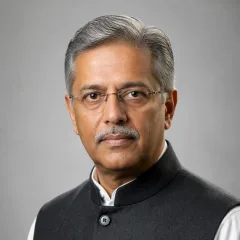
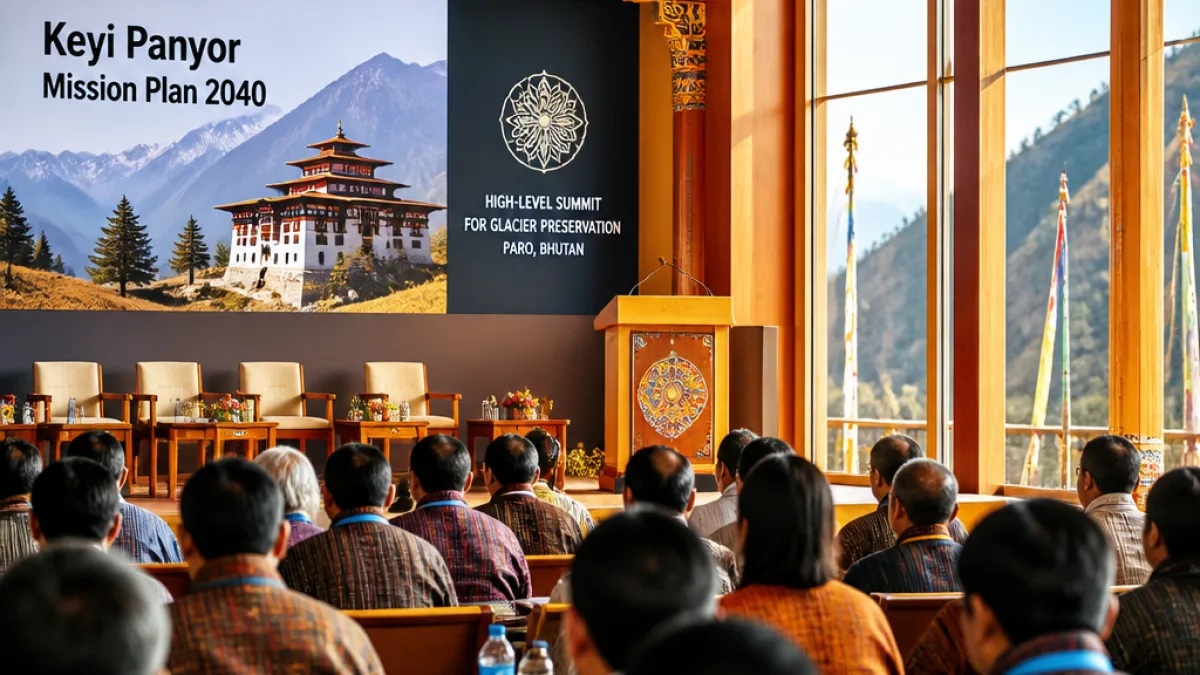
Paro, Bhutan: Arunachal Pradesh legislator Toko Tatung, who represents Yachuli, addressed delegates at the opening plenary of the Global Conscious Food Systems Summit 2026 on Tuesday, setting out a long-range development vision for Keyi Panyor district and underlining the role of indigenous knowledge in sustainable rural livelihoods.
Long-term plan beyond electoral cycles
Tatung presented the Keyi Panyor Mission Plan 2040 (KPMP 2040), a strategic framework unveiled on 15 August 2026, that he said is designed to transcend conventional five-year political planning horizons. According to an official statement, he argued the district requires a multi-decade perspective to align conservation, agriculture and human development goals.
The summit is jointly hosted by the Royal Government of Bhutan, the Conscious Food Systems Alliance (CoFSA) and the United Nations Development Programme (UNDP). Delegates included policymakers, scientists and Indigenous representatives from 65 countries, the organisers said.
Combining traditional knowledge with science
At a panel titled "Rising to the Moment: Igniting Consciousness to Address the Polycrisis", Tatung urged collaboration among farmers, researchers and local communities to design resilient food systems. He highlighted ongoing initiatives intended to marry traditional ecological practices with modern scientific methods as central to the KPMP 2040.
"I do not want Keyi Panyor to become a smaller copy of Delhi or Singapore. I want Keyi Panyor to become the best possible Keyi Panyor," Tatung said at the summit.
The MLA noted work with research and civil-society partners to promote agroecology and natural farming approaches in the district.
Bio-Happy District and partnerships
According to the statement, Keyi Panyor is being positioned as India's first 'Bio-Happy District' in collaboration with the MS Swaminathan Research Foundation (MSSRF). The initiative aims to link biodiversity conservation with local wellbeing and livelihood enhancement, Tatung said.
He also outlined grassroots components of the mission, citing a Comprehensive Action Plan for Education (CAPE) and work with the Participatory Action Research Coalition of India (PARCI) to advance participatory agroecology research.
- KPMP 2040: A long-range blueprint unveiled on 15 August 2026 to guide socioeconomic and environmental development in Keyi Panyor.
- Bio-Happy District: A pilot concept linking biodiversity and human wellbeing, developed with MSSRF.
- Education and research: CAPE and PARCI partnerships to support local learning and farmer-led research.
International platform and local stakes
Tatung's participation made him the first legislator from Arunachal Pradesh to take part in this international forum, the official release said. The Global Conscious Food Systems Summit provided a platform for regions to present context-specific models for sustainable food systems, and for Indigenous voices to be heard alongside scientists and policymakers.
In his remarks, the MLA stressed that development for Keyi Panyor should be rooted in local identity and ecological realities rather than emulating urban templates. He emphasised livelihoods, culture and ecosystem integrity as simultaneous priorities rather than competing objectives.
Summit hosts and focus
| Host/Partner | Role |
|---|---|
| Royal Government of Bhutan | Host country |
| Conscious Food Systems Alliance (CoFSA) | Co-organiser |
| United Nations Development Programme (UNDP) | Co-organiser and technical partner |
Organisers said representatives from 65 nations attended, bringing together Indigenous leaders, scientists and decision-makers to address interlinked global challenges affecting food systems.
What this means for Arunachal
By presenting KPMP 2040 on an international stage, the MLA sought to attract technical collaboration and visibility for locally driven approaches to agriculture, education and conservation. If partnerships with institutions such as MSSRF and PARCI deepen, Keyi Panyor could receive expertise in agroecological methods, biodiversity monitoring and participatory research — measures the plan identifies as necessary for sustainable rural development.
Devendra Kulkarni's approach: This report confines itself to verified statements from the official summit release and Tatung's presentation. No additional claims about funding, timelines beyond the published 2040 horizon, or implementation outcomes are made here without corroboration from relevant authorities.