Itanagar: Chief Minister Pema Khandu on Saturday unveiled the Arunachal Human Capital & Economic Transformation Vision 2036 and the Arun MSME Mission, a combined roadmap aimed at making the state's youth more skilled, entrepreneurial and globally competitive by 2036, officials said.
Goals and numeric targets
The state government has set explicit numerical objectives for the programme. According to the announcement, the Vision 2036 and the MSME Mission together seek to:
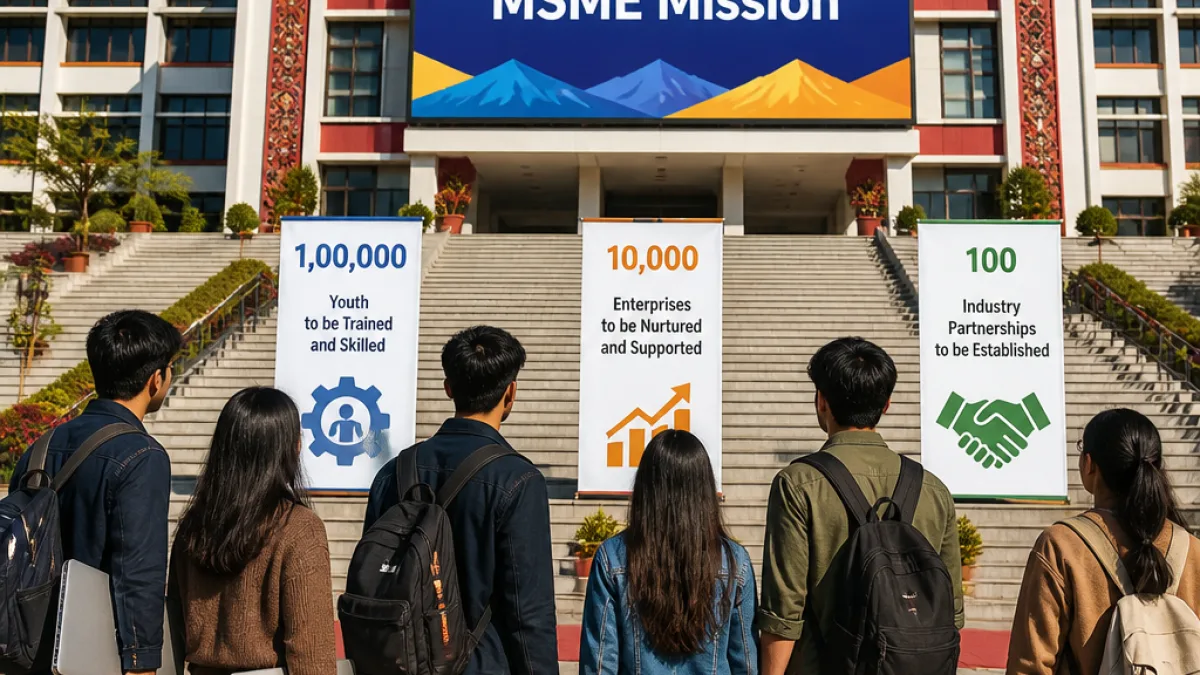
- Train 1 lakh youth in various skill programmes;
- Support 10,000 entrepreneurs;
- Facilitate 10,000 apprenticeships;
- Enable 10,000 overseas placements;
- Establish 100 industry partnerships;
- Transform all 10 Industrial Training Institutes (ITIs) into modern skill hubs and centres of excellence.
“The journey towards 2036 is aimed at building an economy powered by talent, opportunity and global recognition,” the chief minister said, framing the plan as a long-term shift toward a skills- and enterprise-driven growth model.
MSME focus and annual support
The Arun MSME Mission is intended to nurture entrepreneurship across the state. Mr Khandu said the mission will assist micro, small and medium enterprises through revival efforts, capacity upgradation, market linkages and export support.
Under the mission, the state expects to provide active support to 500 MSMEs every year for revival and capacity enhancement, the announcement said. The chief minister described this as a means to translate the rising entrepreneurial aspirations of youth into viable businesses and jobs.
Skill infrastructure and industry linkages
Transforming existing technical training infrastructure is a central element of the vision. All 10 government ITIs in the state are to be upgraded into modern skill hubs and centres of excellence, a move the chief minister said would strengthen the foundation for vocational training and industry-aligned skills.
Mr Khandu emphasised the need to align training with emerging employment opportunities by forging partnerships with industries, saying that such linkages would make the workforce more employable both within India and overseas.
What the government says it will deliver
| Objective | Target |
|---|---|
| Youth trained | 1 lakh |
| Entrepreneurs supported | 10,000 |
| Apprenticeships | 10,000 |
| Overseas placements | 10,000 |
| Industry partnerships | 100 |
| ITIs to be upgraded | 10 |
Context and implications
The announcement comes as many young people in the state seek not just salaried employment but avenues for self-employment and overseas work, the chief minister observed. The package combines supply-side measures—upgrading institutes and training large numbers of youth—with demand-side interventions such as market linkages and export assistance for MSMEs.
Officials framed the strategy as an attempt to create a “future-ready workforce” and to boost locally generated employment. By aiming for overseas placements, the plan also signals the state’s intent to prepare workers for international labour markets.
“Today’s youth is not only looking for a job, but also looking for employment,” Mr Khandu said, underlining the entrepreneurial aspirations the government intends to support.
Implementation questions
The announcement set targets but provided limited detail on financing, phasing and the administrative mechanisms that will convert the targets into outcomes. Key implementation questions include the source of funding for ITI upgrades, timelines for the 1 lakh training slots, the curriculum standardisation with industry partners and modalities for overseas placement facilitation.
Officials said partnerships with industry would be pursued to align training with market needs, but the specific industries and partner organisations were not named in the initial statement.
Next steps
The state will need to publish a detailed implementation plan specifying budgets, timelines and agency responsibilities if the Vision 2036 targets are to be met. Officials have indicated that the MSME Mission will include measures for revival, capacity enhancement and export assistance, and that ITI modernisation is a priority.
For now, the announcement sets an ambitious policy direction for Arunachal Pradesh’s economic and human capital strategy through 2036, placing skills development and MSME growth at the centre of its youth employment agenda.