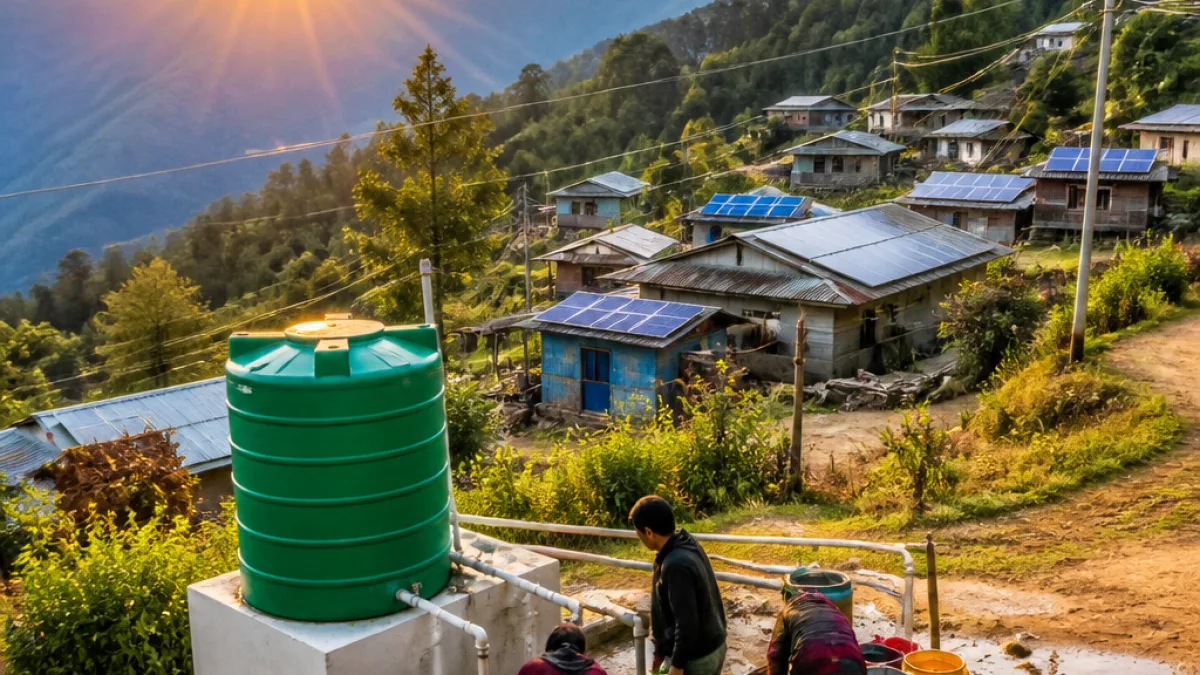
Arunachal Pradesh has achieved 100 per cent home electrification and 100 per cent tap water connectivity, Chief Minister Pema Khandu said on Saturday, asserting substantial expansion of basic services across the state over the past decade.
Numbers show decade of growth
In a post on the social platform X, the Chief Minister set out the comparative figures for 2016 and 2026. He said about 1.48 lakh households had electricity in 2016, representing roughly 49 per cent of households at that time. By 2026, that number had risen to 3.02 lakh, which he described as complete household electrification.
On drinking water, Khandu noted an even steeper rise. He said only 22,796 households had functional tap water connections in 2016 — about 9.9 per cent coverage — while by 2026 the figure had increased to 2,28,566 households, which he termed full coverage and an increase of 903 per cent.
“Ten years later, the picture has completely changed. Today, 3.02 lakh homes have electricity. That is 100 per cent home electrification,”
Government stance and next steps
The Chief Minister said his government would continue to work to ensure the benefits of state and central schemes reach every household. He framed the results as major improvements in two basic needs — electricity and drinking water — over the past decade.
No details were provided in the post about the programmes, funding sources, implementing agencies or timelines for achieving the coverage. The announcement did not specify whether figures refer to household connections verified by physical inspection, administrative tallies, or a combination of data sources.
What the data in the announcement shows
| Year | Households with electricity | Share (approx.) | Households with tap water | Share (approx.) |
|---|---|---|---|---|
| 2016 | 1.48 lakh | 49% | 22,796 | 9.9% |
| 2026 | 3.02 lakh | 100% | 2,28,566 | 100% |
Implications for residents and administration
If the figures are sustained, universal household connections for electricity and tap water would mark a significant shift in access to essential services across Arunachal Pradesh. Universal electrification can affect livelihoods, education and healthcare delivery, while tap water connectivity is central to public health and sanitation.
Operational questions remain about the quality and reliability of services. For electricity, issues such as hours of supply, feeder stability, billing and last-mile infrastructure will determine how effectively households benefit from formal connections. For water, parameters such as source sustainability, water quality testing, pressure and continuity of supply are critical.
The Chief Minister’s post did not enumerate specific monitoring mechanisms or independent verification plans. Details on maintenance arrangements, recurring cost responsibilities, and institutional oversight will be important for the long-term success of universal coverage.
Background context
Over the past decade, state and central programmes have prioritised rural electrification and water supply. Arunachal Pradesh — a state with difficult terrain and dispersed settlements — has repeatedly identified last-mile infrastructure as a major challenge. The newly reported figures, if validated, would indicate progress in overcoming logistical and financial hurdles in providing household services.
- Electricity: From 1.48 lakh households in 2016 to 3.02 lakh in 2026, claimed as 100% coverage.
- Tap water: From 22,796 households in 2016 to 2,28,566 in 2026, claimed as 100% coverage (a reported 903% increase).
- Next steps: Government says it will continue to ensure scheme benefits reach every household; operational details were not provided.
Further information from state departments and independent assessments would be required to corroborate the administrative figures and to chart measures for sustaining service quality.