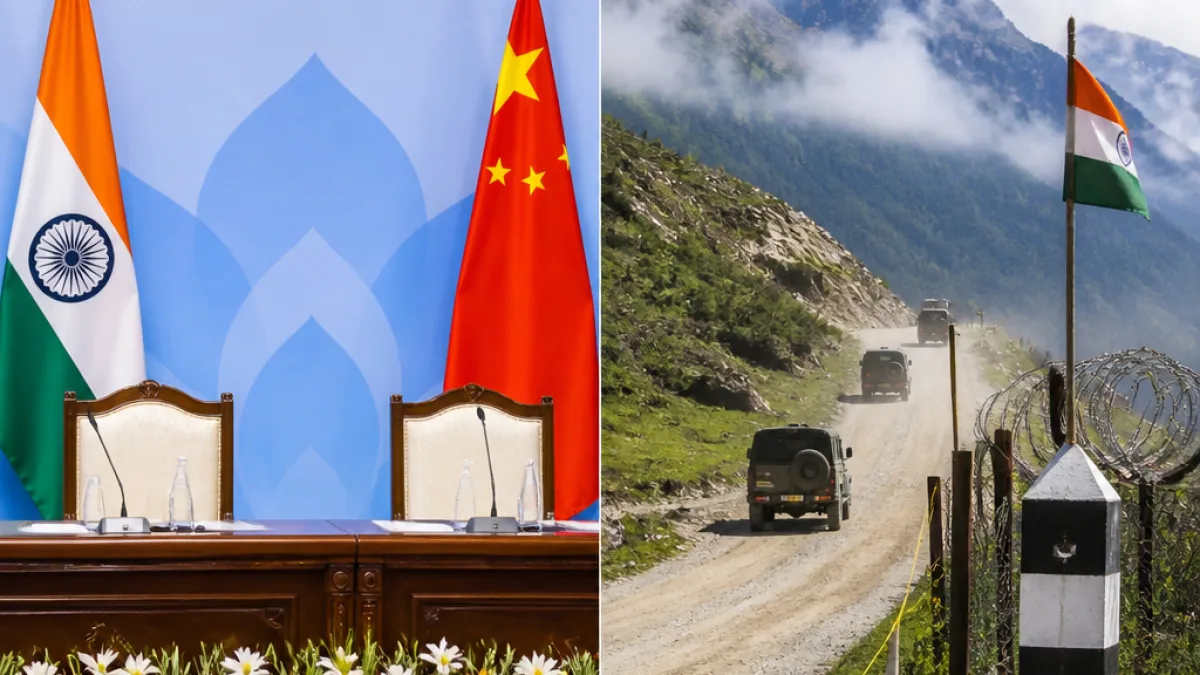
New Delhi: The summit-level meeting between Prime Minister Narendra Modi and Chinese President Xi Jinping at the BRICS leaders’ gathering has reinforced New Delhi’s stance that any thaw in bilateral ties must rest on stable conditions along the India–China border — a demand that places the country’s northeastern frontier at the centre of future diplomacy.
BRICS summit and the New Delhi Declaration
The BRICS leaders’ meeting produced the New Delhi Declaration, which the summit described as a consensus achievement amid wider geopolitical fragmentation. Paragraph 5 of the declaration commended India’s 2026 chairship for a “practical, actionable, inclusive, development‑oriented and people‑centered approach”, highlighting themes of resilience, innovation, cooperation and sustainability.
“Paragraph 5 of the New Delhi Declaration commends India’s 2026 Chairship for its ‘practical, actionable, inclusive, development‑oriented and people‑centered approach’.”
Analysts following the summit noted that despite tensions within BRICS — including rivalries and conflicts elsewhere — the grouping produced a united statement reiterating commitments to dialogue and multilateral engagement.
Modi‑Xi meeting: cautious signal, conditional reset
President Xi’s visit to New Delhi, his first in seven years, drew the most attention. According to official lines emerging from the summit, the two leaders discussed expanded economic ties, connectivity and people‑to‑people exchanges. At the same time, Prime Minister Modi emphasised that a long‑term normalisation would be conditional on maintaining peace and tranquillity along the border.
The emphasis on border stability makes the Northeast — where India shares a direct frontier with China — a litmus test for whether the bilateral relationship can be transformed from cautious engagement into sustained cooperation.
Why the Northeast matters
The Northeast holds strategic, economic and human significance in the India–China relationship. It is not only a direct border theatre but also the gateway for regional connectivity and development initiatives in India. If the two sides intend greater economic engagement and connectivity, the practicalities of implementing projects, movement across border regions and confidence‑building will have to be addressed on the ground in the Northeast.
- Security: Sustained reduction in face‑offs and confidence‑building measures will be necessary to permit deeper engagement.
- Development: Any connectivity or economic initiatives will require local administration and stakeholders to feel secure.
- People‑to‑people ties: Expanded exchanges will depend on demonstrable stability along the frontier.
From Galwan to a test in the hills
The memory of the 2020 Galwan clash remains a benchmark in New Delhi’s calculation. The meeting in New Delhi made clear that the path to a wider bilateral reset remains conditional; the administration has repeatedly linked improved relations to verifiable tranquillity on the border.
That linkage means local dynamics in the Northeast will likely shape the pace and substance of any India‑China rapprochement. Confidence‑building at the tactical level — patrol protocols, disengagement arrangements and transparent communications — will be closely watched by policymakers.
What to expect next
Observers should expect a mix of diplomatic signalling and incremental, ground‑level measures. New Delhi may pursue:
- Targeted diplomatic engagements to sustain the summit momentum.
- Continued operational focus on border management to prevent escalatory incidents.
- Measured steps on trade and connectivity that can proceed without compromising security imperatives.
| Element | Implication for the Northeast |
|---|---|
| Border stability | Essential precondition for deeper engagement |
| Connectivity initiatives | Will require local security assurances |
| People‑to‑people exchanges | Dependent on confidence‑building and predictable protocols |
As India chairs BRICS with an emphasis on pragmatic, people‑centred cooperation, the bilateral meeting underlined that symbolism at summits must translate into measurable reductions in tensions on the ground. For residents, administrations and security planners in the Northeast, the coming months will be a period of careful observation: the summit reset can only be judged by what happens along the frontier.