
District directive aims to curb adulteration and boost transparency
The Bhavnagar district administration has issued a mandatory order requiring food establishments to install closed-circuit television (CCTV) systems in kitchens and food storage areas within 30 days, officials said on Tuesday. The move, signed by District Magistrate Manish Kumar Bansal, applies to licensed food businesses across both urban and rural parts of the district and forms part of a broader effort to strengthen hygiene practices and consumer confidence.
The order covers entities regulated under the Food Safety and Standards (Licensing and Registration of Food Businesses) Regulations, 2011, with specific emphasis on places where kitchen operations are not visible to customers. Listed establishments include hotels, restaurants, resorts, clubs, canteens, dining halls, cafes, fast-food outlets and cloud kitchens. The administration said the measure seeks to reduce instances of food adulteration, monitor staff hygiene and prevent illegal or anti-social activities in preparation and storage areas.
Technical specifications and display requirement
Authorities have detailed technical requirements for the surveillance systems. Cameras must provide clear, high-resolution colour footage with accurate date-and-time stamps and be positioned to eliminate blind spots. Operators are required to maintain camera visibility by cleaning lenses regularly, particularly in areas prone to steam or grease, and night-vision cameras are recommended for poorly lit storage spaces.
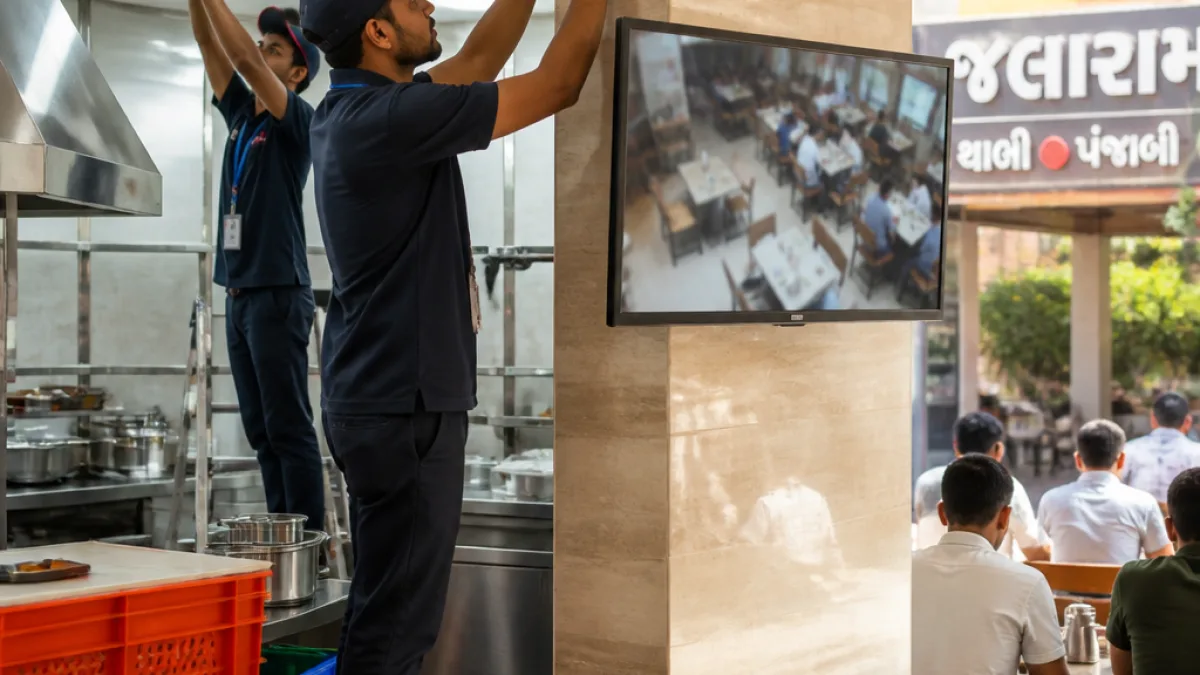
Under the administration’s ‘Open Kitchen’ initiative, food business operators must display live kitchen CCTV feeds on television screens in dining or waiting areas so customers can view food-preparation practices. The directive also specifies that cameras be installed at key points to monitor supply handling, cooking, staff hygiene and waste disposal.
- Who is covered: Hotels, restaurants, resorts, clubs, canteens, dining halls, cafes, fast-food outlets and cloud kitchens.
- Timeframe: Installation within 30 days of the order.
- Technical must-haves: High-resolution colour cameras, accurate date/time stamps, full coverage without blind spots; regular lens cleaning; night-vision where needed.
| Area to be covered | Purpose |
|---|---|
| Raw material storage | Monitor handling of grains, vegetables, and non-vegetarian items; prevent use of stale or contaminated ingredients |
| Cooking platforms | Observe food-preparation practices and staff hygiene |
| Entry/exit points | Track movement of staff and goods |
| Dishwashing and waste-disposal areas | Check cleaning, waste management and potential contamination risks |
Implications for businesses and consumers
Local business owners and trade bodies say the order will add to compliance costs, particularly for smaller establishments and cloud kitchens operating on narrow margins. While the administration has not specified financial assistance, the clear technical parameters will help businesses plan budgets and procurement. For larger hotels and franchise chains that already operate under surveillance and have standard operating procedures, the transition is expected to be straightforward.
From a consumer perspective, the move is likely to increase confidence in food hygiene and transparency. Visible, live feeds in dining areas could act as a deterrent against unsafe practices and provide customers a form of immediate verification of food-preparation standards. Public-health officials have long advocated observational measures to complement periodic inspections and lab tests; the administration frames this order as a tool to support ongoing enforcement rather than to replace routine sampling or licensing protocols.
The administration emphasised that cameras should not have blind spots and must preserve accurate time-stamping to maintain evidentiary value. It also asked food business operators to ensure regular maintenance and secure storage of recorded footage in line with applicable privacy and data-retention norms, the order said.
Implementation and enforcement details — including penalties for non-compliance, periodic audits of footage and protocols for handling consumer complaints arising from the recordings — were not specified in the public summary of the order. The district administration indicated that the directive forms part of a phased strategy to strengthen food-safety oversight and that further operational guidance would be issued to local licensing and inspection authorities.
Regulatory changes of this nature could affect the operational calculus for Bhavnagar’s hospitality and food-service sector, which serves both local residents and a steady flow of traders, tourists and industrial visitors. Businesses will now need to factor in equipment procurement, installation, regular maintenance and potential upgrades when planning their short-term compliance budgets.