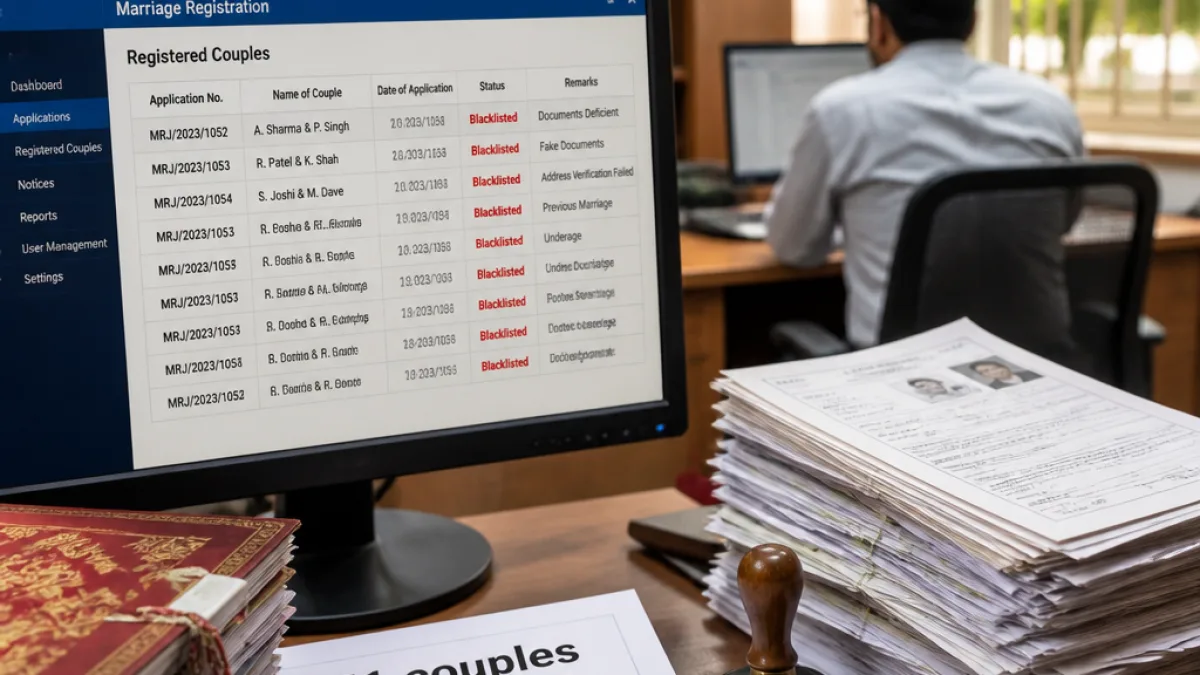
Online system reveals scale of underage marriages in Rajkot
The introduction of online marriage registration by the Rajkot Municipal Corporation has exposed a substantial number of underage unions, with the civic body's Marriage Registration Department blacklisting 151 couples who were found to have married while below the legal age during the period from January 2025 to August 2026, reports said.
According to the reporting, the municipal online portal — modelled on existing digital services for birth and death registration — recorded a rise in take-up after launch. Between March and August 2026, the portal logged 415 marriage registrations. As the online process required applicants to submit supporting documents and details of the place and form of marriage, it also brought to light a number of marriages that pre-dated the applications and involved partners who had not reached the prescribed marriageable age.
"The Marriage Registration Department has blacklisted all these couples."
Monthly registration trend and the underage cases
Monthly data reported for registrations on the new portal indicate steady usage growth. The number of online marriage registrations recorded per month between March and August 2026 were:
- March 2026: 50 registrations
- April 2026: 75 registrations
- May 2026: 72 registrations
- June 2026: 72 registrations
- July 2026: 61 registrations
- August 2026: 85 registrations
Of these and earlier cases, the civic authority identified 151 couples who had married while still underage between January 2025 and August 2026. The records also noted that 90 couples had similarly married below the legal age in 2024. All the underage couples identified by the registration process have been placed on a blacklist maintained by the Marriage Registration Department, which — according to the report — will prevent them from registering their marriages in future through the civic portal.
Administrative procedure and social context
Municipal rules require applicants to provide documentation specifying the place of marriage and parental consent where relevant. The report noted that many applicants seek a marriage certificate after customary or traditional ceremonies, or after elopement and subsequent solemnisation at temples or courts. The online process — by mandating clearer documentary evidence — appears to have made age discrepancies easier to detect in a number of instances.
While the blacklist is an administrative measure aimed at preventing registration of underage marriages, the identification of such a large number of cases raises questions for local governance and child-protection agencies about awareness, enforcement and follow-up. The data underline the continuing challenge of underage unions in the city despite legal prohibitions and awareness campaigns conducted at state and national levels.
| Period | Registrations (online) | Underage marriages identified |
|---|---|---|
| March–August 2026 | 415 | 151 (Jan 2025–Aug 2026) |
| 2024 | — | 90 |
Officials and child-welfare stakeholders in Rajkot will need to consider how the registration mechanism can be used not only to document unions but also to trigger protective interventions for minors and to verify documents at the point of application. The online portal's capacity to flag discrepancies could be strengthened through cross-checks with other civil registers and targeted outreach to communities where underage marriage remains prevalent.
As Rajkot expands digital civic services, the pattern revealed by the marriage registry underscores the dual role of e-governance: improving access and transparency while also exposing social practices that require administrative and policy responses. The municipal corporation's blacklisting action is a first administrative step; further follow-up by legal and welfare agencies will determine the practical implications for enforcement and prevention in the city.