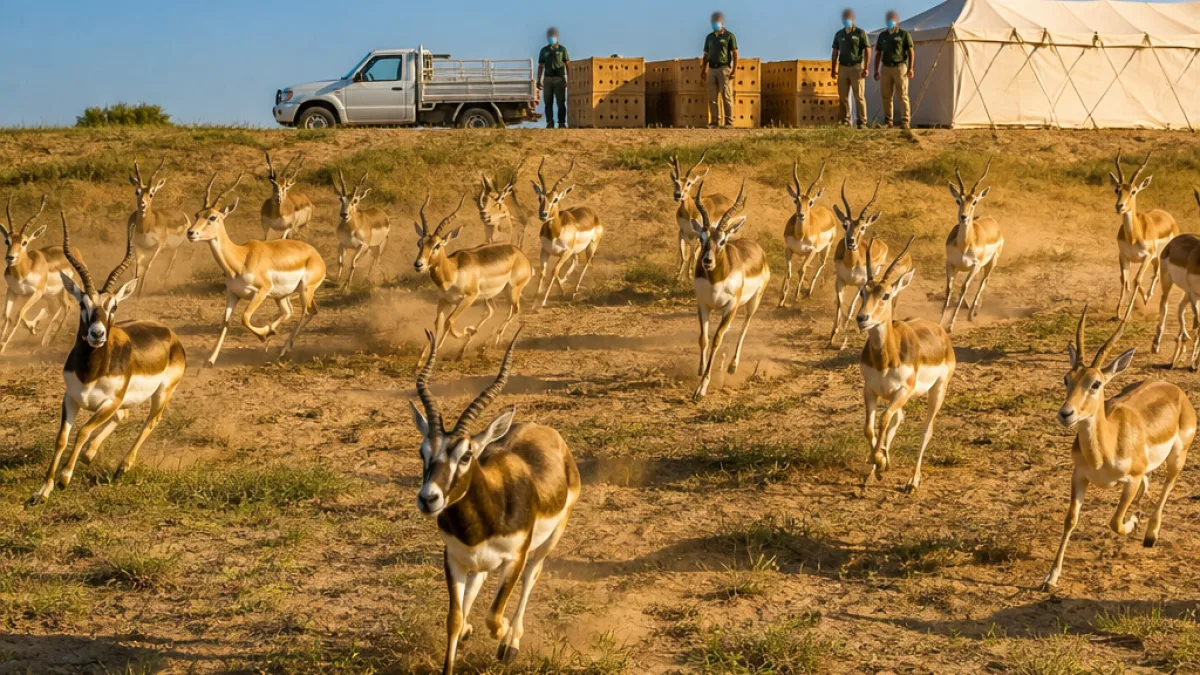
The Gujarat Forest Department, with technical support from the Greens Zoological Rescue and Rehabilitation Centre (GZRRC), Vantara, released 20 blackbucks into the Banni grasslands on Sunday as part of a conservation drive to bolster native herbivores and restore the grassland ecosystem.
Translocation, approvals and health safeguards
The group of blackbucks comprised five males and 15 females and was transferred from Vantara in Jamnagar after obtaining necessary clearances from the Chief Wildlife Warden, Gujarat, and the Central Zoo Authority. Officials said the animals underwent veterinary examinations, health screening, quarantine and disease surveillance before being transported and released in accordance with prescribed wildlife translocation protocols.
The move was timed to coincide with India's 80th Independence Day. Forest department officials described the release as part of a broader effort to recover the ecological character and biodiversity of Banni, one of India's largest grassland landscapes.
Ecological aims and historical context
Officials emphasised that the objective goes beyond simply increasing numbers of a single species. The stated aim is to help rebuild the grassland's native herbivore assemblage — historically composed of blackbuck, chinkara, nilgai and wild boar — to re-establish ecological processes that sustain the landscape.
"Restoring native wildlife is fundamental to restoring healthy landscapes," Gujarat Chief Wildlife Warden Dr Jaipal Singh, IFS, said, describing the release as an important step in efforts to recover Banni's ecological character and biodiversity.
Conservation scientists and managers often cite the role of native herbivores in maintaining grassland structure, controlling invasive vegetation and supporting predator-prey dynamics. Reintroductions and translocations, when carried out with veterinary oversight and long-term monitoring, form one component of landscape recovery strategies.
Operational details and monitoring
According to official accounts, the translocated blackbucks passed through quarantine, disease surveillance and veterinary checks before release. The procedure aligns with national protocols that seek to minimise risks of disease transmission and stress to animals during movement.
- Number released: 20 blackbucks (5 males, 15 females)
- Origin: Vantara (Greens Zoological Rescue and Rehabilitation Centre), Jamnagar
- Approvals: Chief Wildlife Warden, Gujarat; Central Zoo Authority
- Health measures: veterinary examination, quarantine, disease surveillance
Officials did not provide immediate details on soft-release methods, post-release monitoring protocols, telemetry or longer-term population targets. Successful re-establishment in a variable grassland such as Banni typically requires ongoing habitat management and community engagement.
Local and regional implications
Banni, in the Rann of Kachchh region, is a unique seasonal and saline-influenced grassland that supports pastoral livelihoods, migratory birds and a range of terrestrial fauna. Restoring native herbivore assemblages is likely to affect grazing dynamics, human–wildlife interactions and the wider ecological balance.
From an administrative perspective, the involvement of Vantara and the Central Zoo Authority indicates coordination between state conservation agencies and institutional partners. The state forest department's statement frames the release as part of a scientifically managed restoration trajectory rather than an isolated event.
Next steps and monitoring needs
Long-term success will depend on population monitoring, disease surveillance and habitat management. Tracking survival, reproduction and movement patterns is essential to assess whether the translocated cohort is integrating and contributing to population recovery.
| Item | Detail |
|---|---|
| Species | Blackbuck |
| Number released | 20 (5 males, 15 females) |
| Source | Vantara (GZRRC), Jamnagar |
| Clearances | Chief Wildlife Warden, Gujarat; Central Zoo Authority |
| Health measures | Veterinary exams, quarantine, disease surveillance |
Forest department officials said the release is one step in a broader conservation agenda for Banni. Given the grassland's ecological sensitivity and the socio-economic dependence of local communities on pastoral resources, authorities will need to balance wildlife recovery with grazing management and community livelihoods in the weeks and months ahead.
Further updates on monitoring results, additional translocations or complementary habitat interventions were not provided in the initial release. The department's emphasis remains on scientific management and sustained effort to recover the grassland's biodiversity.