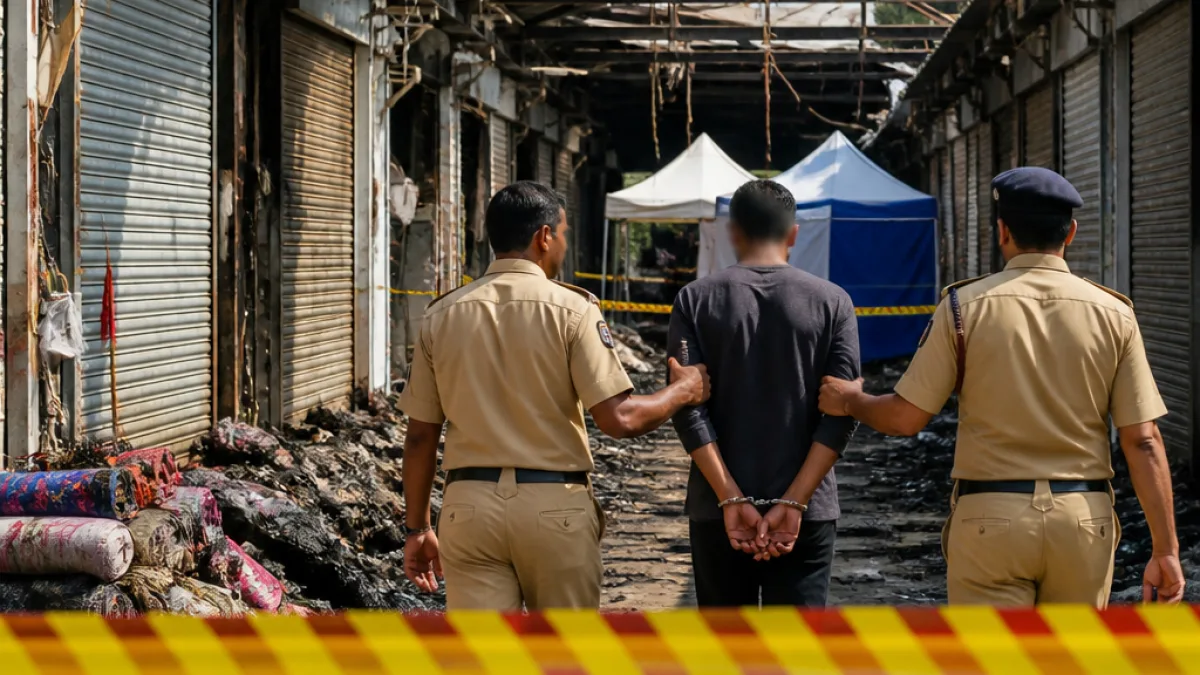
The Surat Crime Branch on Tuesday arrested Vinod Pandit Savale, a 33-year-old former accountant, in connection with the massive fire that gutted portions of the Shyam Sangini Market in Saroli. Police say Savale set the market ablaze over a salary dispute and alleged humiliation by his employers, resulting in extensive damage to textile stock and disruption of market activity.
Allegation, motive and arrest
According to the police investigation reported by ETV Bharat, Savale had worked as an accountant for two firms — Jackorp India and Jagdamba Textile — at Shyam Sangini Market after joining in April on a monthly salary of ₹30,000. Police said he left the job following repeated reprimands from the owner, Hanuman Dwarkaprasad Javar, and the chief accountant, Sumit, and that approximately ₹10,000 of his salary remained unpaid.
During interrogation, investigators allege Savale purchased petrol for about ₹150 from a fuel station near Devadh village and hid the bottle in a school bag before allegedly setting portions of the market on fire.
"He decided to set the market ablaze to teach his former employer a lesson," police said, according to the report.
Scale of damage and immediate effects
Police and market sources reported that the blaze spread to the sixth floor where textile stock estimated at over ₹24 crore was stored. In addition to the direct loss of goods on the affected floor, water used by firefighters to control the inferno damaged merchandise on lower floors. As a safety measure the market was sealed, affecting the operations of more than 200 traders.
- Arrest: Vinod Pandit Savale, 33, resident of Dindoli area
- Alleged unpaid salary: ~₹10,000
- Estimated textile loss: > ₹24 crore
- Number of traders affected: > 200
- Petrol purchased for allegedly setting fire: ₹150
Economic and trade implications
Shyam Sangini Market is a multi-storey commercial complex in Saroli that houses textile businesses forming part of Surat's extensive trade network. The reported destruction of stock valued at more than ₹24 crore threatens cash flow for wholesalers and retailers who depend on timely dispatches and inventory turnover. The temporary sealing of the market compounds short-term liquidity pressures for traders, many of whom operate on thin margins and rely on daily transactions to service suppliers and labour.
Beyond direct losses to shopkeepers, ancillary service providers — transporters, packaging suppliers and labourers — are likely to feel secondary impacts while the market remains sealed. Given Surat’s importance in textiles and related exports, any prolonged disruption in key wholesale hubs can ripple through distribution chains within the city and to interstate buyers.
| Item | Reported figure |
|---|---|
| Unpaid salary alleged | ~₹10,000 |
| Monthly salary while employed | ₹30,000 |
| Petrol purchase | ₹150 |
| Estimated textile stock loss | Over ₹24 crore |
| Traders affected | More than 200 |
Investigators have sealed the market for safety reasons while a forensic and criminal probe continues. The arrest is likely to be followed by legal proceedings; police sources said enquiries are ongoing into how the fire spread and whether any additional persons were involved.
The incident highlights vulnerabilities in commercial security and the potential for individual grievances to cause wide economic harm in densely populated trading hubs. Market traders and local trade associations may seek compensation mechanisms or expedited insurance settlements to mitigate losses and resume operations.
Further details on the criminal case, FIR registration and any subsequent charges were not available in the initial report; authorities are conducting forensic examinations and questioning to establish a comprehensive sequence of events.