There is a singular thrill to encountering a tiger in the wild: a flash of orange through the undergrowth, reflective eyes peering from long grass, or a large cat crossing a forest track with indifferent grace. India, which hosts 58 tiger reserves in 18 states, offers numerous places where wildlife enthusiasts can seek that moment. Yet a tiger sighting is never certain and depends on season, time of day, terrain — and the tiger’s mood.
Popular reserves for tiger safaris
Some reserves have earned particular reputations among travellers and photographers for the frequency and quality of tiger encounters. The following destinations are widely visited for tiger safaris and showcase varied landscapes, from dry forests and ruins to dense central-Indian woodlands and bamboo-lined valleys.
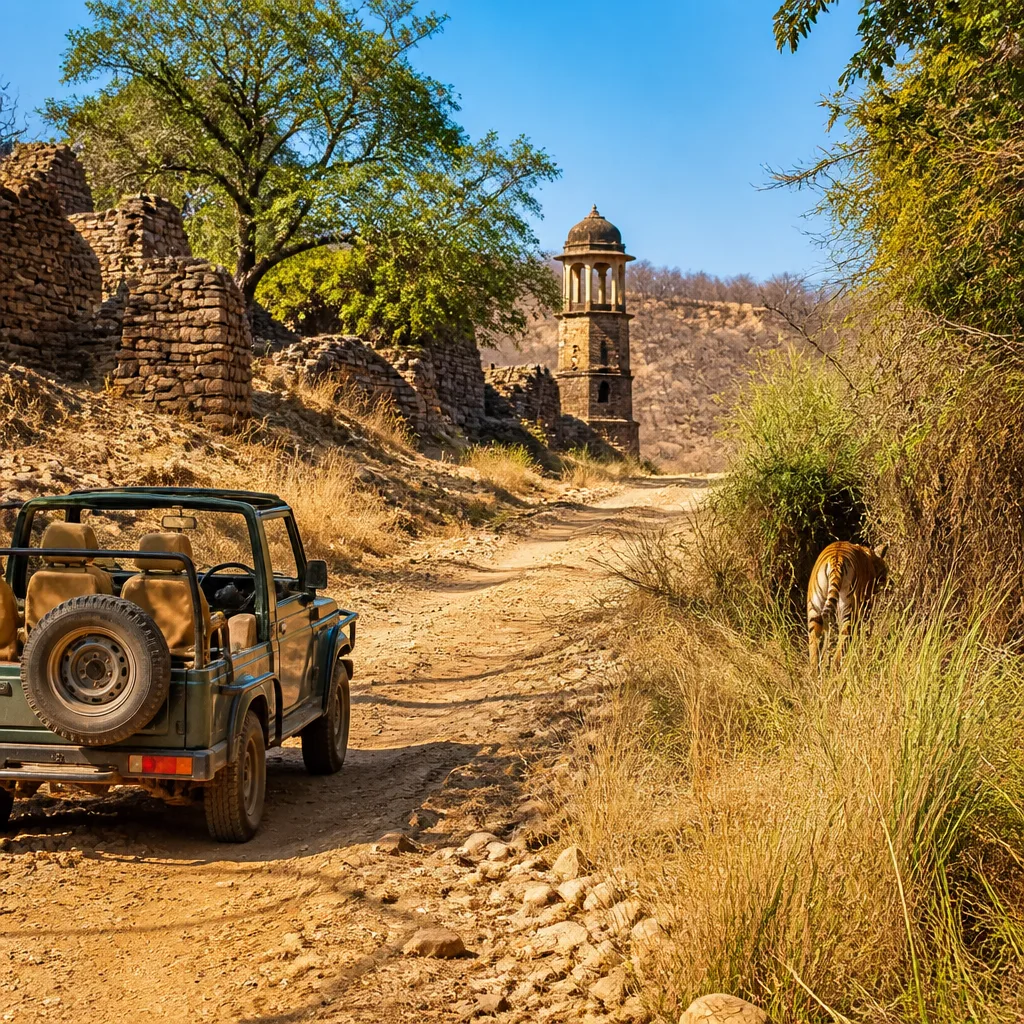
- Ranthambore (Rajasthan) — Famous for dramatic scenery where ruins and lakes punctuate dry forest, Ranthambore offers a distinctive backdrop for tiger viewing, with the historic Ranthambore Fort watching over the landscape.
- Bandhavgarh (Madhya Pradesh) — Known across India as a classic tiger destination, Bandhavgarh’s mix of forests, grasslands and rocky outcrops has made it a preferred choice for those whose primary aim is to spot tigers.
- Kanha (Madhya Pradesh) — Kanha pairs the possibility of tiger sightings with sweeping meadows, dense forest and a rich complement of other wildlife; the reserve is also noted for its barasingha population and varied terrain.
- Tadoba-Andhari (Maharashtra) — Tadoba’s combination of forest, bamboo patches and water bodies has helped it emerge as one of Maharashtra’s most visited tiger-safari destinations.
What to expect on a tiger safari
Visitors should approach tiger safaris with patience and preparation. Sightings are influenced by multiple variables: seasonal movement of animals, time of day (early morning and late afternoon are typically better), the landscape of the reserve and how intensively an area is monitored. A tiger that is secure within a heavily protected population can become vulnerable when it crosses less-monitored corridors or human-dominated landscapes, underscoring the fragility of connectivity between protected areas.
Beyond the anticipation of a sighting, reserves offer different visual and sensory experiences. Ranthambore’s dry scrub and ancient masonry create a cinematic setting; Bandhavgarh’s rocky outcrops and open patches afford excellent vantage points; Kanha’s interspersed meadows bring a quieter, pastoral quality; and Tadoba’s wetlands and bamboo stands provide a lush, humid backdrop.
| Reserve | State | Known for |
|---|---|---|
| Ranthambore | Rajasthan | Historic ruins, dry forests, high tiger visibility |
| Bandhavgarh | Madhya Pradesh | Rocky terrain, frequent tiger sightings |
| Kanha | Madhya Pradesh | Meadows, diverse wildlife, barasingha |
| Tadoba-Andhari | Maharashtra | Bamboo patches, water bodies, growing popularity |
Practical tips for travellers
- Plan safaris for early morning or late afternoon when tiger activity tends to be higher.
- Recognise that sightings are not guaranteed; consider the visit as an opportunity to enjoy broader wildlife and landscape experiences.
- Respect park rules and the limits of protected areas — both for safety and to support conservation efforts that keep tigers viable in the long term.
For nature lovers and photographers, India’s network of reserves offers distinct seasonal colours and moods. Whether it is the arid grandeur of Ranthambore or the evergreen depth of Tadoba’s bamboo corridors, each park presents the chance for an unforgettable encounter — and a reminder of the care required to keep these majestic cats on the landscape for future generations.