Traditional rhythms, tighter controls: procession follows a more muted route
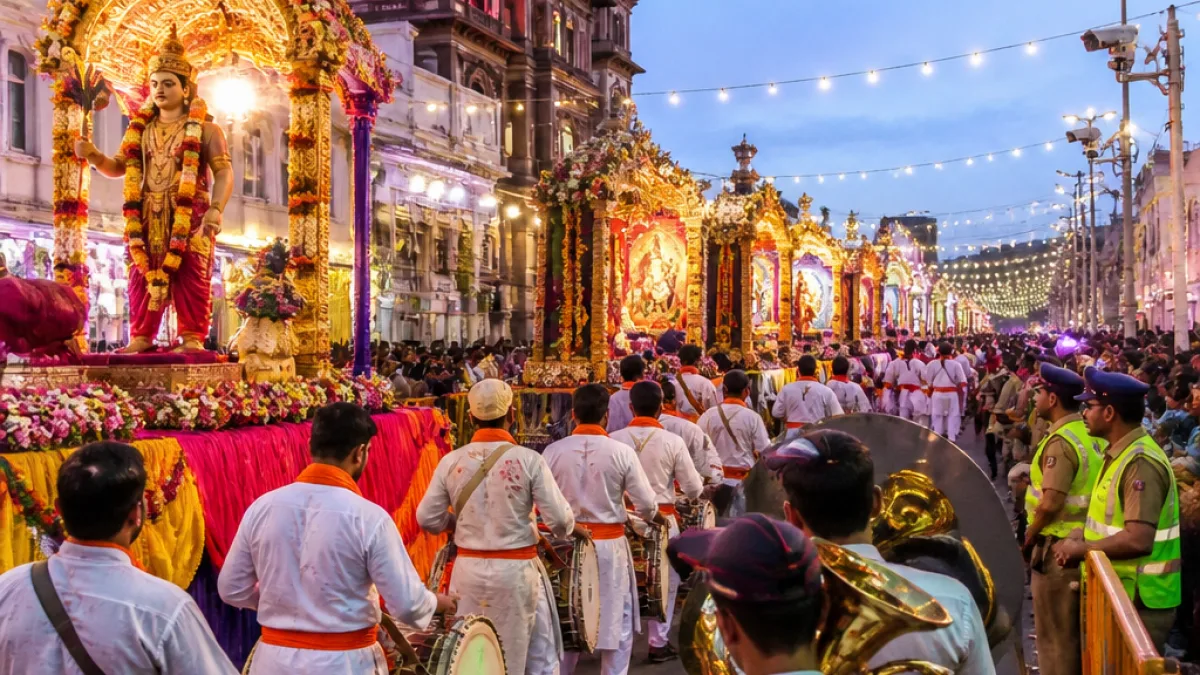
Indore’s long-established Anant Chaturdashi tableau procession unfolded late Friday with a notable change in sound and stricter management of performances. For the first time in years, organisers and local administration barred DJs from the procession, replacing recorded high-volume music with dhols and live bands, allowing the traditional drum beats to be heard across stretches of the route.
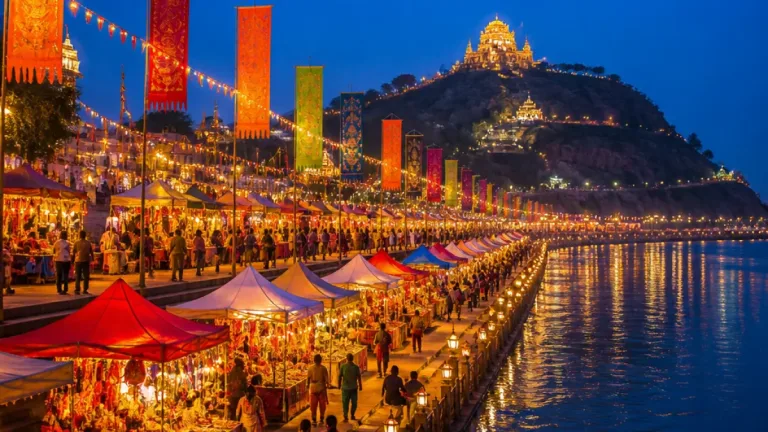
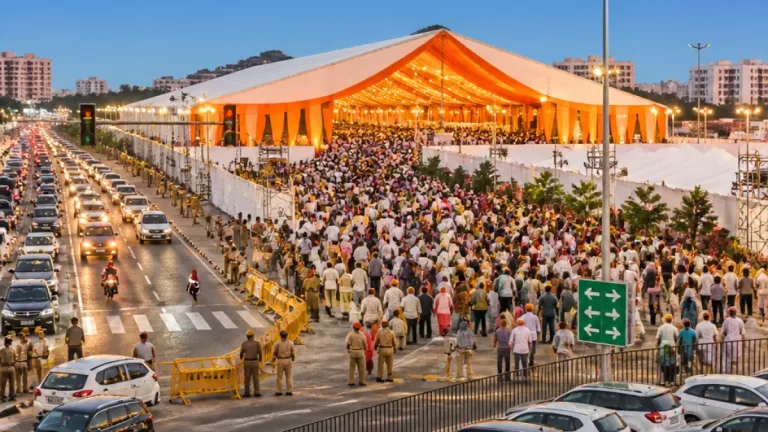
The procession began at around 6 pm and wound through mill areas and DRP Line before traversing Devi Ahilya Marg, MG Road, Krishnapura, Nandlalpura, Jawahar Marg, Narsingh Bazaar, Sitlamata Bazaar, Gorakund and Khajuri Bazaar, reaching Rajwada and then returning towards the mill premises, reported local coverage. Thousands of residents lined the streets, with children on shoulders and families watching behind barricades.
Scale of the event and administrative measures
The event featured 22 tableaux and more than 50 akhadas that performed traditional displays along the parade route. The district collector performed the puja for the Khajrana Ganesh tableau, which led the procession, according to the report.
| Detail | Figure |
|---|---|
| Tableaux | 22 |
| Akhadas | 50+ |
| Route length (approx) | 9+ km |
| Start time | 6 pm |
Authorities closely monitored the procession’s pace and enforced performance time limits at judging platforms. Volunteers and police were tasked with ensuring groups kept moving, and a system of penalties was announced for teams exceeding the allotted time.
"Negative marking and point deductions for performances exceeding the prescribed time."
Safety, surveillance and crowd management
A comprehensive security operation accompanied the procession. Police deployed drones, CCTV and face-recognition cameras at crowded and sensitive locations, while vehicles accompanying the tableaux underwent mechanical checks. Drivers were subjected to breathalyser tests as part of road-safety precautions.
Sharp and dangerous weapons were prohibited; participants could carry swords only symbolically. Police retained the authority to seize hockey sticks and other potentially hazardous items, the report said. Authorities also arranged facilities for lost children, elderly people and persons with disabilities, and provided medical assistance along the route.
Impact and local reaction
The absence of high-volume DJ music altered the ambience of the procession: traditional instruments and live performances were more audible, and several stretches saw clearer acoustic continuity. The change aligns with growing civic concerns about noise pollution during large public events and with efforts to preserve heritage performance styles.
For residents, the procession’s route and heavy security meant temporary traffic diversions and restricted vehicular movement in central areas during the night. Businesses along the route experienced increased footfall, while market areas around Narsingh Bazaar, Sitlamata Bazaar and Khajuri Bazaar reported higher evening crowds.
Organisers and the administration appear to have prioritised safety, preservation of tradition and orderly movement of performers. Continued emphasis on time-bound performances, weapon restrictions and surveillance may set a template for future editions of the city’s century-old celebration.
- Procession featured 22 tableaux and 50+ akhadas across a 9+ km route.
- Security measures included drones, CCTV and face-recognition; vehicles underwent safety checks.
- Organisers replaced DJs with dhols and live bands to reduce noise and foreground traditional music.