TBM Narmada launches Indore Metro's first underground drive
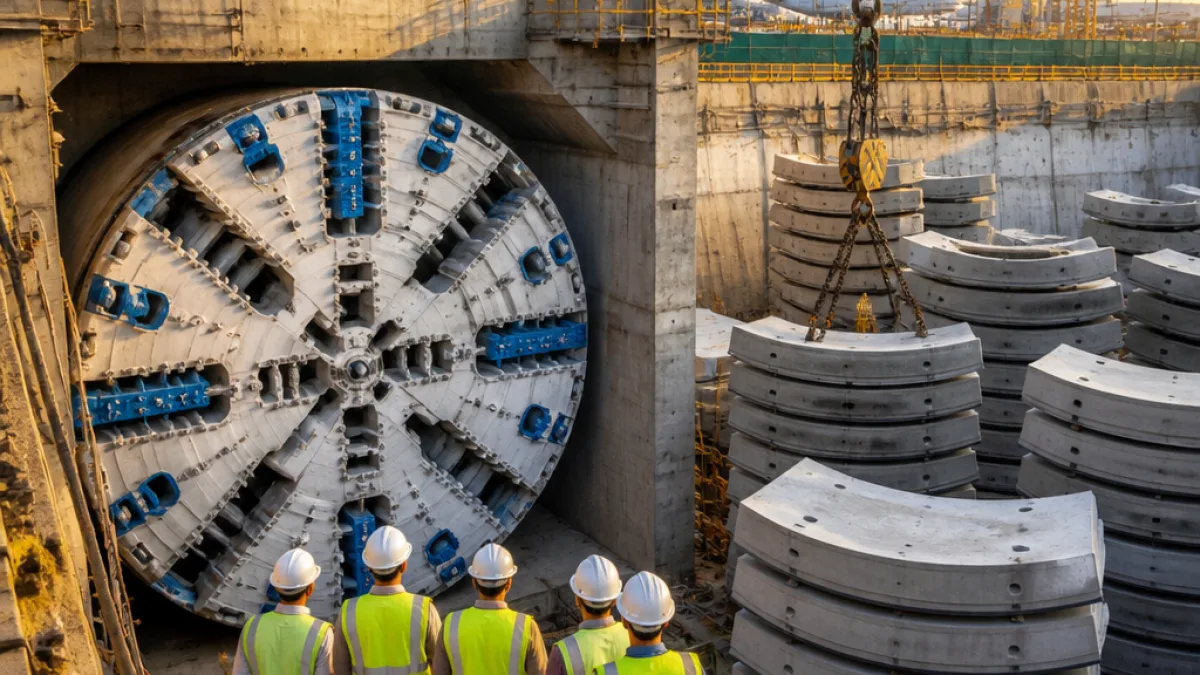
Indore's metro project entered a new construction phase on Wednesday as Tunnel Boring Machine (TBM) Narmada began the city's first underground tunnelling operation, starting from Airport Station and heading towards the Bada Ganpati area. The machine will operate at a depth of nearly 20 metres below ground and will install precast concrete rings to form the tunnel lining as it advances.
The TBM uses Earth Pressure Balance (EPB) Mix Shield technology, a method designed to control excavation and maintain face stability during tunnel drives in soft ground conditions. According to reports, the machine completed its Factory Acceptance Test in Thailand on 25 April 2026 before being transported to Indore, where engineers assembled it at the launch site.
"Safety, construction quality and technical standards must remain the priority throughout the tunnelling work," said S Krishna Chaitanya, managing director of Madhya Pradesh Metro Rail Corporation Limited (MPMRCL), according to a report.
The start of tunnelling marks the first time a TBM has been deployed for underground metro construction in Indore, signalling a shift from elevated construction to more complex subsurface works. The development will extend the metro's reach while reducing the visible footprint of tracks in congested central areas.
- TBM launch point: Airport Station
- Tunnelling direction: Towards Bada Ganpati
- Tunnelling depth: Nearly 20 metres
- Technology: EPB Mix Shield
The deployment of TBM Narmada involves substantial logistic and technical coordination, from transporting and assembling the machine to ensuring subsurface safety measures for nearby structures and utilities. The EPB Mix Shield system allows continuous installation of precast concrete segments immediately behind the cutter head, limiting ground settlement when operated correctly.
| Specification | Detail |
|---|---|
| Cutting wheel diameter | 6.65 metres |
| Total machine length | About 102 metres |
| Technology | EPB Mix Shield |
| Launch point | Airport Station |
| Testing | FAT in Thailand, 25 April 2026 |
Construction of underground sections brings particular challenges in a city like Indore, where dense built-up areas, heritage structures and existing utilities require careful monitoring. The use of a TBM reduces excavation footprints compared with cut-and-cover methods, which can be disruptive to traffic and local businesses. However, the precision demanded by TBM operations places emphasis on geotechnical surveys, real-time instrumentation and coordination with municipal agencies.
For residents and commuters, the underground phase should eventually translate into faster, weather-independent travel through central corridors and reduced surface congestion. For local planners, the underground drive helps preserve street-level urban fabric while delivering mass rapid transit capacity. MPMRCL's statement, as quoted in reports, underscores the agency's focus on maintaining safety and quality standards during this technically demanding phase.
Engineers will monitor the tunnelling progress closely as Narmada advances and installs precast segments. The machine's specifications indicate it is equipped to undertake a sustained drive, but the pace of tunnelling will depend on ground conditions, utility diversions and adherence to safety protocols. The commencement of TBM operations is a visible milestone in Indore's broader metro programme and will be watched by commuters, traders and urban planners alike as work proceeds toward integrating underground stations in the city core.