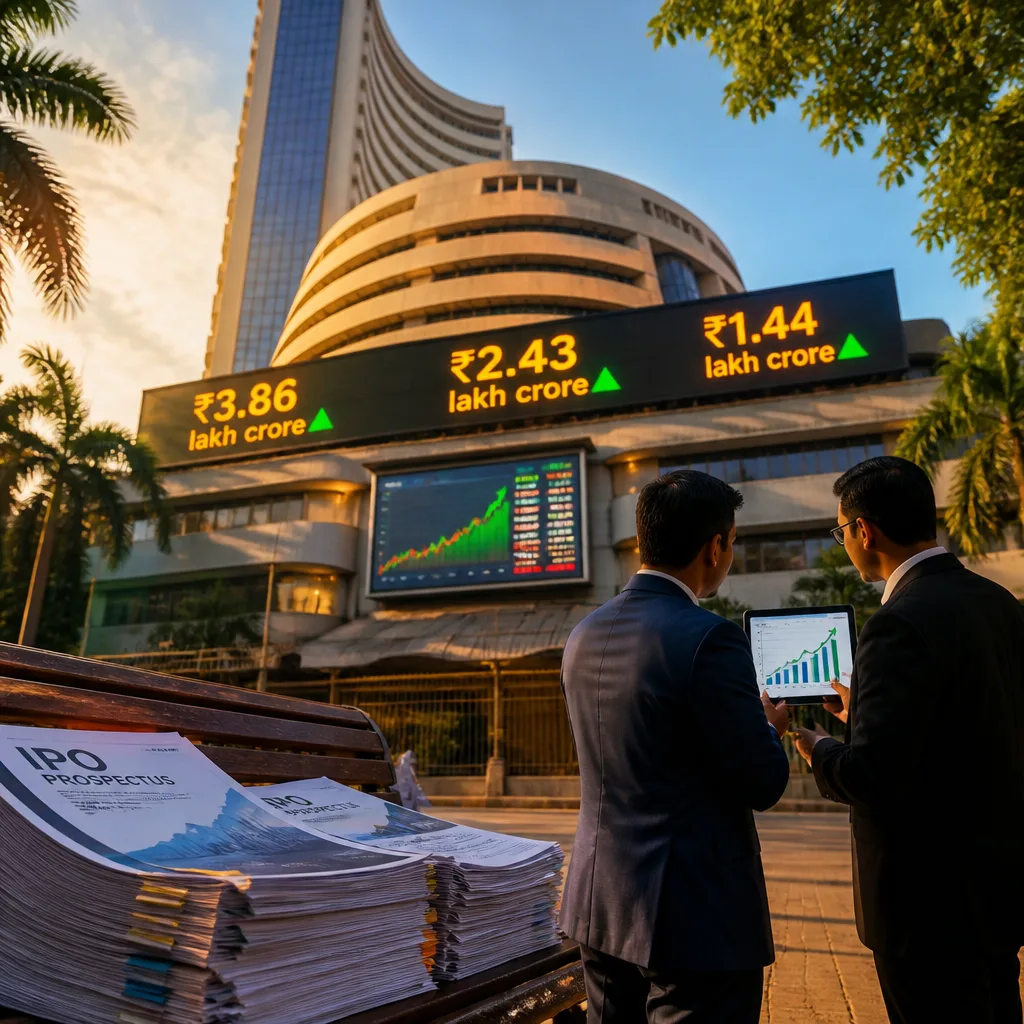
India’s mainboard IPO pipeline has expanded to ₹3.86 lakh crore as of September 2026, with roughly 130 companies having already secured SEBI clearance, according to a mid‑term white paper by the Association of Investment Bankers of India (AIBI).
What the numbers show
The total pipeline of ₹3.86 lakh crore is about 3.5 times the ₹1.10 lakh crore raised so far this year through 84 mainboard listings, the AIBI said. Of the total, approximately ₹2.43 lakh crore comes from firms that have obtained SEBI approval, while about ₹1.44 lakh crore is tied to companies that have filed DRHPs and are awaiting regulatory clearance.
| Category | Amount (₹) |
|---|---|
| SEBI‑approved companies | ₹2.43 lakh crore |
| Awaiting approval (filed DRHPs) | ₹1.44 lakh crore |
| Total pipeline | ₹3.86 lakh crore |
Scale and context
The AIBI paper notes that the primary market is shifting from episodic fundraising to a more consistent channel for corporate capital needs. Cumulative mainboard fundraising between 2016 and 2026 year‑to‑date stands at ₹8.36 lakh crore. Annual mobilisation rose from ₹26,494 crore in 2016 to ₹1.76 lakh crore in 2025, while the number of mainboard IPOs climbed from 26 in 2016 to 103 in 2025.
“India’s primary market has moved well beyond an episodic fundraising cycle,” said Mahavir Lunawat, Chairman, AIBI, according to the paper.
As of the most recent count in the AIBI note, about 130 companies have received SEBI approval and a further 75 or so have DRHPs on file. The current pipeline therefore represents a mix of near‑term listings (approved) and those still in regulatory or documentation stages.
What it means for investors and companies
For corporates, the enlarged pipeline implies easier access to longer‑term equity capital at scale, enabling expansion, deleveraging or shareholder realisations without relying solely on bank credit or private placements. For institutional investors, including Qualified Institutional Buyers (QIBs) and high‑net‑worth individuals (HNIs), the breadth of choice can improve allocation opportunities across sectors and stages.
- Retail investors will have more offerings but must assess valuations and business prospects rather than assuming listings will be profitable.
- QIB participation remains pivotal for large issues; the pipeline’s convertibility into actual mobilisation depends on market conditions at the time of each offer.
- Regulatory approvals are a bottleneck for some offers; about one‑third of the pipeline is yet to be cleared by SEBI.
While the expanded pipeline signals a deeper capital market, conversion from pipeline to completed issues will hinge on macroeconomic factors, interest rates, global liquidity and investor appetite for new equity. The AIBI highlighted that a growing pipeline reflects structural change rather than a temporary surge, as both participation and annual fundraising have climbed over the last decade.
Risks and constraints
The sheer size of the pipeline does not guarantee timely listings or favourable pricing. If multiple large offers come to market in a narrow window, pricing pressure could rise and allocations to retail and HNI segments could vary. Moreover, market volatility or tightening global liquidity could delay some DRHPs or cause companies to revise offer sizes.
Regulators and market intermediaries will be watching whether issuers use raised capital productively — on growth, capex and balance‑sheet strengthening — rather than for short‑term payouts. For savers and investors, the immediate implication is a wider set of choices, but with the usual caveats on valuation, company fundamentals and market timing.
Bottom line: A pipeline of ₹3.86 lakh crore underlines that India’s primary market is maturing into a sustained fundraising conduit, but actual outcomes will depend on how many of these approved and pending issues reach the market and at what valuations.