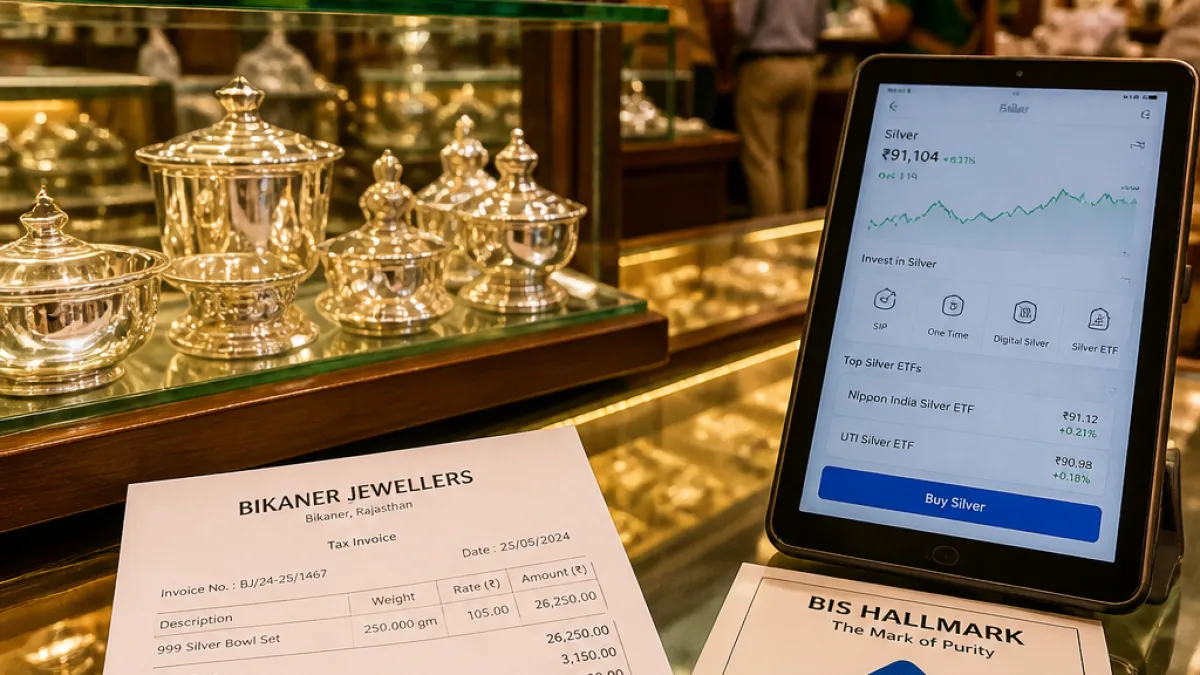
Bikaner — As city households, jewellers and small investors consider buying silver, clarity about purity marks, final pricing and the growing number of non-physical alternatives has become essential. Silver’s retail price is a benchmark figure; the amount a purchaser pays at a shop or on a platform includes additional components that materially change the cost.
How purity is measured and what common grades mean
Silver purity is indicated using fineness, a three‑digit number showing how many parts in 1,000 are pure silver. Common categories include:
- Fine silver (999) — about 99.9% silver, the closest to pure silver available to consumers.
- Britannia silver (958) — roughly 95.8% silver, historically established as a higher standard than sterling in Britain.
- Sterling silver (925) — contains 92.5% silver and is the most common grade for jewellery and household items.
- Coin silver (900) — approximately 90% silver, named for its traditional use in coinage.
Knowing the fineness figure is important because the base rate — whether quoted per kilogram or per 10 grams — applies to a specific purity. Lower fineness means a lower amount of pure silver per unit weight, which should be reflected in price.
Why shop prices differ from quoted silver rates
Consumers in Bikaner who compare online daily quotations with showroom tags often see higher local prices. That gap stems from predictable additions:
- Making charges — these vary by design, labour intensity and the jeweller’s policy.
- Goods and Services Tax — typically added on the final calculation; many retail calculations include 3% GST on silver items.
- Stone deductions — where jewellery is studded with stones, the gross weight may include non‑silver components; jewellers commonly deduct stone weight when computing net silver weight for pricing.
In short, final showroom price = base silver price + making charges + GST (and where applicable, deductions for stones). Buyers should request a written breakup of these elements before making payment.
Authenticity: hallmarking and identification
To guard against adulteration, check for the BIS hallmark and the purity grade stamp such as 925 or 999. For silver items, hallmarking remains an important verification. While some articles may carry unique identification codes, the BIS logo and a declared fineness are the primary, widely accepted indicators of authenticity.
Customers should insist on a clear purity mark and a bill showing the weight, fineness and the full price breakup, including making charges and GST.
Non‑physical silver options and regulatory cautions
Investors who prefer not to handle physical metal have alternatives. These include:
- Digital silver — platforms let investors buy and hold silver without taking delivery.
- Silver ETFs and silver mutual fund of funds — traded on exchanges and structured to track silver prices.
However, market participants should note regulatory differences. The Securities and Exchange Board of India (SEBI) does not regulate all digital silver products, and that creates potential concerns over transparency, pricing and investor protection. Exchange‑listed instruments such as ETFs carry the regulatory oversight associated with capital markets, while many online digital offerings operate outside SEBI’s direct supervision.
Practical advice for Bikaner buyers
For households and small investors in Bikaner considering a silver purchase, practical steps include:
- Requesting an itemised invoice showing gross weight, net silver weight, fineness, making charges and GST.
- Confirming the presence of the BIS hallmark and the purity number stamped on the piece.
- Comparing offers from multiple established jewellers for making charges and buyback policies.
- Considering regulated exchange options like silver ETFs if storage and purity are concerns.
Understanding these elements helps buyers in Bikaner make informed choices whether purchasing for use, gifting or investment. With jewellers and platforms increasingly providing itemised bills and clearer descriptions, consumers are better equipped than before — provided they seek the necessary documentation and avoid offers that omit basic details on fineness and full pricing.
| Aspect | What to check |
|---|---|
| Purity | Fineness stamp (e.g., 999, 958, 925, 900) |
| Price components | Base rate + making charges + GST; stone deductions where applicable |
| Alternatives | Digital silver (check regulation), Silver ETFs (exchange‑traded) |
Clear documentation and awareness of the calculation used by the seller remain the best protections for buyers in Bikaner’s markets and jewellery shops.