Electric buses begin operations in Bikaner
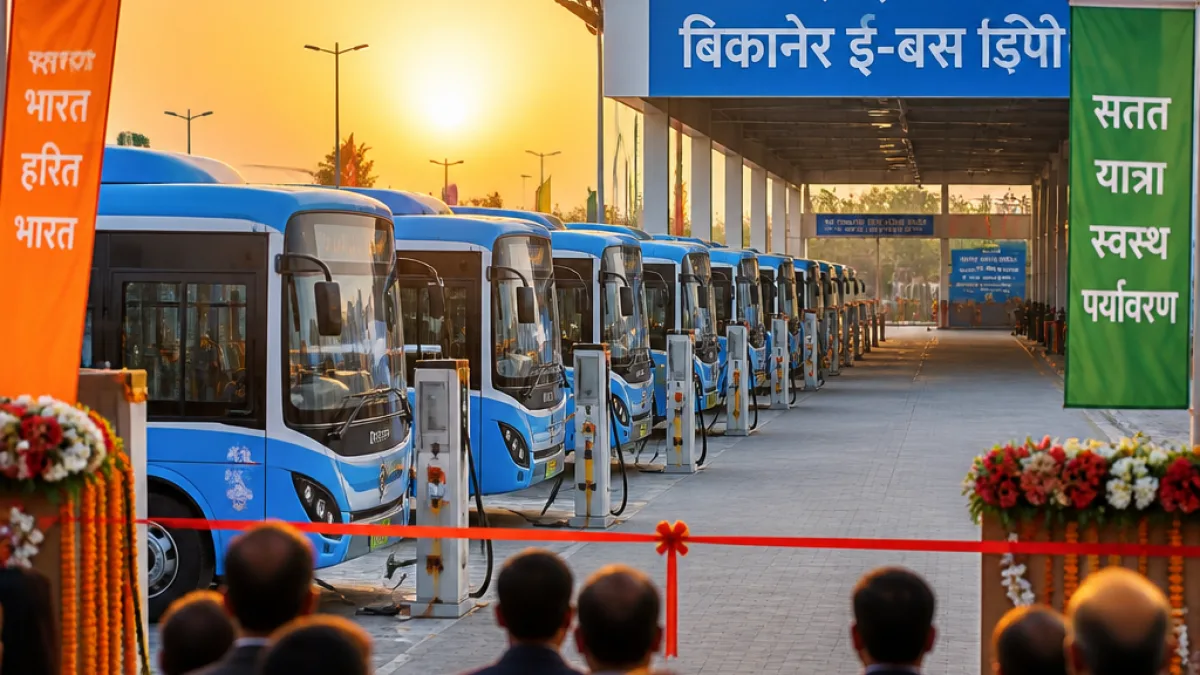
Bikaner took a step towards modern, low‑emission public transport on Wednesday as Rajasthan Chief Minister Bhajan Lal Sharma inaugurated the new PM e‑Bus depot and flagged off electric bus operations run by Chartered Speed Limited. The rollout is intended to expand access to dependable, comfortable public transport while supporting the state’s broader vision for cleaner mobility.
The launch marks the commencement of electric bus services in the city and is presented as a move to strengthen Bikaner's urban mobility ecosystem. According to the company, the initiative aims to make daily commuting more convenient for residents and to reduce the environmental impact associated with conventional diesel buses.
“The launch of the PM e‑Bus service in Bikaner marks another step forward in Rajasthan’s journey towards cleaner and more efficient public transportation,” said Sanyam Gandhi, Whole‑Time Director, Chartered Speed Limited.
What the service brings to the city
Company statements say the PM e‑Bus service will offer improved connectivity, better passenger amenities and enhanced accessibility across routes operated within the city. Chartered Speed Limited highlighted its commitment to translating the transition to electric mobility into tangible improvements in everyday travel for citizens, and to supporting the state government’s vision for a reliable, future‑ready transport ecosystem.
- Operational expansion: The Bikaner depot adds to Chartered Speed’s existing operations in Rajasthan.
- Existing fleet in state: The firm has already deployed 47 electric buses across Jaipur and Bhilwara, and recently inaugurated an additional 16 electric buses in Jaipur, according to the company.
- Policy alignment: The initiative aligns with Rajasthan’s stated objectives for cleaner, greener mobility and reduced emissions from public transport.
Local impact and considerations
For Bikaner residents, the immediate benefits are likely to be improved ride comfort and quieter operation compared with diesel buses, along with potential reductions in local air and noise pollution. The depot’s commissioning also signals investment in urban infrastructure that may support longer‑term route planning, last‑mile connectivity and modal integration with existing transport networks.
Operational success will depend on several practical factors: charging infrastructure capacity at the depot, scheduling and route design to meet commuter demand, driver training for electric vehicle operations, and maintenance planning for the new fleet. The company and state authorities have said they will work together on implementation, though specific details on the number of buses allocated to Bikaner routes, fare structure or exact route maps were not disclosed in the company release.
| Parameter | Detail (as reported) |
|---|---|
| Inaugurated by | Rajasthan Chief Minister Bhajan Lal Sharma |
| Operator | Chartered Speed Limited |
| Existing Rajasthan deployments | 47 buses across Jaipur and Bhilwara; additional 16 buses recently inaugurated in Jaipur |
| Primary aims | Cleaner mobility, improved passenger amenities, dependable connectivity |
Outlook
Introducing electric buses in Bikaner is a visible piece of Rajasthan’s transition to sustainable public transport. If effectively integrated into the city’s transport planning, the PM e‑Bus service could ease commutes and lower emissions in the urban core. Authorities and Chartered Speed will need to publish operational details such as route maps, frequency and fares to enable commuters to plan travel and to evaluate the scheme’s impact on daily mobility.
The company framed the new depot as part of an expanding electric mobility footprint in the state. Its statement reiterated a commitment to support the government’s efforts to establish a cleaner and more reliable transport network.
As Bikaner’s streets adapt to the quiet hum of electric buses, residents and planners will watch for measurable gains in accessibility, air quality and commuter convenience over the coming months.