JAIPUR: The Rajasthan government has imposed stringent restrictions on entry, photography and recording inside government school premises during school hours, directing principals to permit outsiders only after prior written approval and to maintain a visitor register, officials said on Monday.
New directives and school-level responsibilities
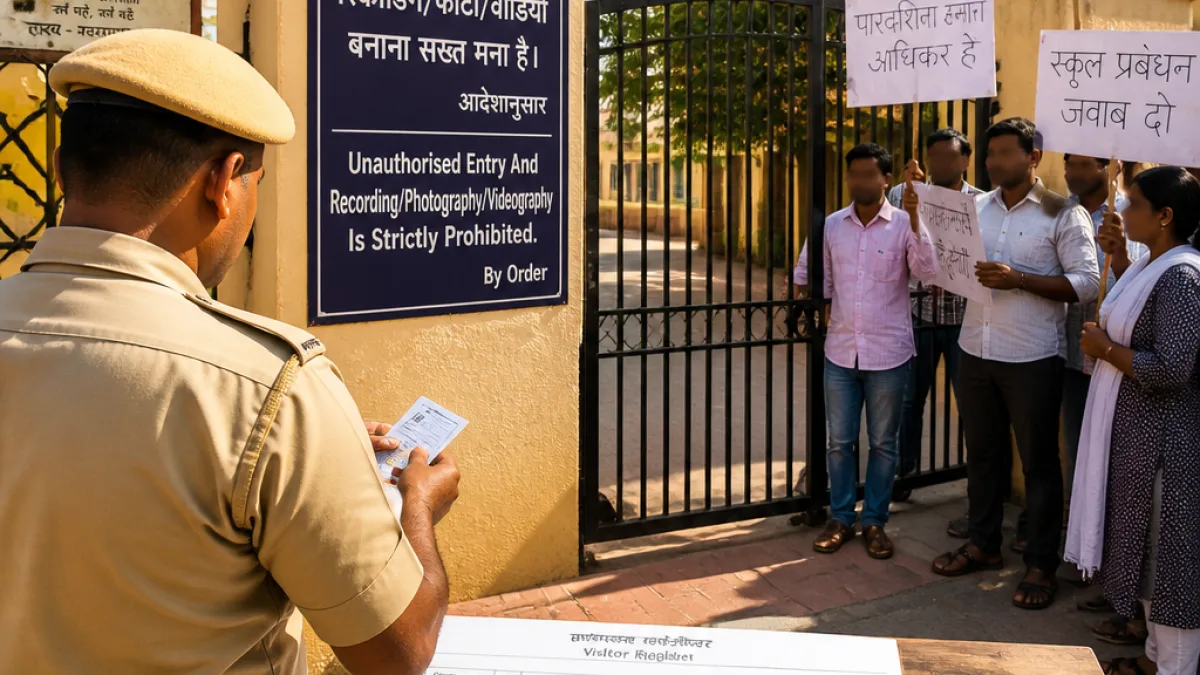
The order, issued by Lalit Kumar, Director of Secondary Education, instructs that no outsider shall enter classrooms, laboratories, libraries, hostels, playgrounds or student activity areas without the explicit permission of the principal, a teacher or an authorised school official. Photography, videography, audio recording, interviews or live streaming of students, teachers or school activities are prohibited without the principal's prior written consent, the directive states.
Under the new guidelines, every visitor must record their entry in a visitor's register before being allowed onto the school campus. Even government functionaries may access premises only when they are present to discharge official duties, according to the order reported by the Education Department.
- Visitor control: Entry only with prior permission; mandatory visitor register.
- Recording banned: No photography, videography, interviews, audio recording or live streaming without written authorisation.
- Restricted areas: Classrooms, labs, libraries, hostels, playgrounds and activity zones off‑limits to unauthorised persons.
- Enforcement: Principals to inform local police and education officials if anyone refuses to leave, attempts unauthorised recording, or disrupts school operations.
Legal remedies and escalation
The order directs school heads to report incidents of unauthorised entry or attempted recording to the local police and education authorities immediately. Depending on the situation, action may be taken under applicable statutes, including the Bharatiya Nyaya Sanhita, 2023 (BNS), the Protection of Children from Sexual Offences (POCSO) Act and the Juvenile Justice Act, the Directorate's instruction said.
| Area | Requirement / Restriction |
|---|---|
| Entry | Prior written permission; visitor register mandatory |
| Recording | Photography, videography, audio, live streaming prohibited without written consent |
| Officials | Only allowed for official duties; otherwise same permission protocol applies |
| Reporting | Inform local police and education officials for unauthorised presence or disruption |
Political reaction and concerns over transparency
The circular has provoked criticism from the state Congress, which has questioned the government's intent and warned that the directives could imperil transparency and independent oversight in schools. The party has suggested it may launch protests to press the issue, according to party sources.
Opposition leaders argued that while child safety is paramount, blanket restrictions on recording and access could limit journalistic scrutiny, civil‑society inspections and the ability of parents and advocates to document conditions in institutions. Government officials counter that the measures are intended to safeguard students' privacy, dignity and safety by preventing unauthorised publication of their images and personal information.
Operational implications for schools and parents
For school administrations in Rajasthan's towns and villages, the order will require immediate operational changes: visitor registers must be kept diligently, principals and authorised staff must be ready to evaluate and grant—or deny—permissions for entry and recordings, and liaison with local police will have to be formalised for enforcement.
Parents and community visitors who wish to enter school premises or record activities for legitimate reasons—such as classroom monitoring, alumni events or approved media coverage—will need to seek written permission from the principal in advance. The directive asks school heads to prevent any collection, publication or broadcast of students' photos, videos or personal data that could compromise a child's safety or privacy.
Context and next steps
Rajasthan has faced scrutiny in recent years over safeguarding and discipline in some government schools. The Education Department's direction frames the measures as preventive and protective steps. Implementation will be monitored by district education officers, who have been instructed to follow up on complaints and ensure compliance.
As the debate unfolds, parents, teachers and civic groups will watch how the administration balances child protection with transparency and accountability in the state's public education institutions.
Reporting from Jaipur.