
New Delhi: At the 12th BRICS Environment Ministers’ Meeting held in New Delhi, Union Minister for Environment, Forest and Climate Change Bhupender Yadav said environmental action must remain people-centric, sustainable and responsive to the development realities of the Global South, and outlined four priority areas for India’s BRICS chairship.
India frames BRICS agenda around development-sensitive climate action
The minister said India’s BRICS chairship seeks to place concerns of developing countries at the forefront and to redefine the grouping’s environmental cooperation as
"Building Resilience and Innovation for Cooperation and Sustainability". He underlined the interconnected nature of climate change, biodiversity loss, pollution and disaster risk, stressing that environmental vulnerability often overlaps with broader development challenges in developing countries.
Mr Yadav highlighted India’s approach of combining ecological restoration with human development, citing national initiatives as practical examples of public participation and community ownership. He pointed to programmes that seek to integrate local knowledge and scientific methods, arguing that solutions must be both scientifically robust and locally relevant.
Forest fire management, climate finance and local empowerment
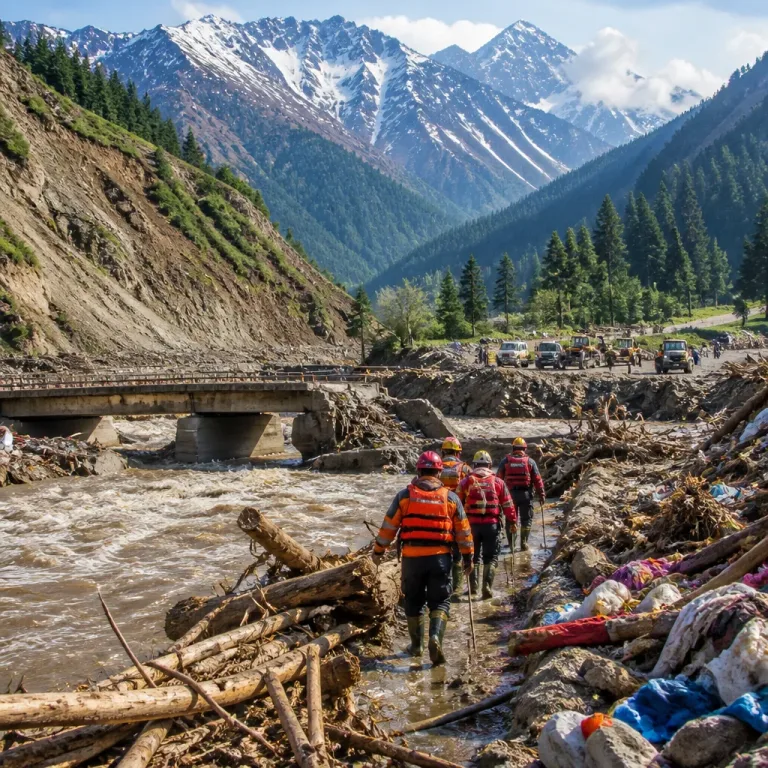
The minister called for enhanced BRICS cooperation on forest fire prevention, preparedness, early warning systems, response and post-fire recovery. He also stressed the importance of climate finance, adaptation and empowering local communities to manage climate and disaster risks.
The meeting concluded with the adoption of a Joint Ministerial Statement in which BRICS countries reaffirmed their commitment to strengthening collaboration on environmental protection and sustainable development.
- People-centred action: Policy and program design that reflects development priorities of vulnerable populations.
- Forest fire cooperation: Joint work on prevention, early warning, response and recovery.
- Climate finance and adaptation: Mobilising resources and support for adaptation measures in developing economies.
- Science plus traditional knowledge: Integrating local practices with modern science for inclusive solutions.
The minister drew attention to India’s recently updated Nationally Determined Contribution for the 2031–2035 period, saying it reflects an ambitious commitment to advance climate action while supporting inclusive development and energy security.
Policy priorities under India’s BRICS chairship
Mr Yadav set out four broad priorities for India’s tenure as BRICS chair on environmental issues. The priorities were presented as mutually reinforcing areas where cooperation could deliver tangible results for member countries and vulnerable populations.
| Priority | Focus |
|---|---|
| Promoting Sustainable Lifestyles | Encouraging behaviour change to reduce resource intensity and emissions. |
| Afforestation, Forest Fire Management and Disaster Resilience | Expanding tree cover, preventing and responding to fires, and building resilience to disasters. |
| Circular Economy | Promoting resource efficiency, waste reduction and sustainable production–consumption systems. |
| Adaptation | Strengthening measures to manage climate impacts and support vulnerable communities. |
To illustrate India’s domestic blend of restoration and livelihoods, the minister referenced national efforts that combine ecological restoration with public participation and community ownership. He recommended bringing together traditional knowledge and modern science to ensure responses are effective, equitable and socially inclusive.
Implications and next steps
The adoption of the Joint Ministerial Statement signals political convergence among BRICS members on common environmental challenges, particularly those facing developing countries. The emphasis on forest fire management and early warning systems may prompt technical cooperation, data-sharing and joint capacity building among member nations.
Climate finance and adaptation remain critical. The minister’s remarks link international cooperation to national commitments, including India’s updated NDC for 2031–2035, indicating an intent to balance mitigation ambition with development needs and energy security.
Implementation will depend on follow-up at technical and ministerial levels, allocation of finance and technology, and translating high-level priorities into country- and region-specific actions. The focus on community empowerment and the integration of traditional knowledge suggests India will press for solutions that deliver both environmental outcomes and socio-economic benefits.
The BRICS ministers’ meeting in New Delhi has set a cooperative tone, but measurable progress will require concrete project-level commitments, timelines and financing arrangements agreed in subsequent meetings and working groups.