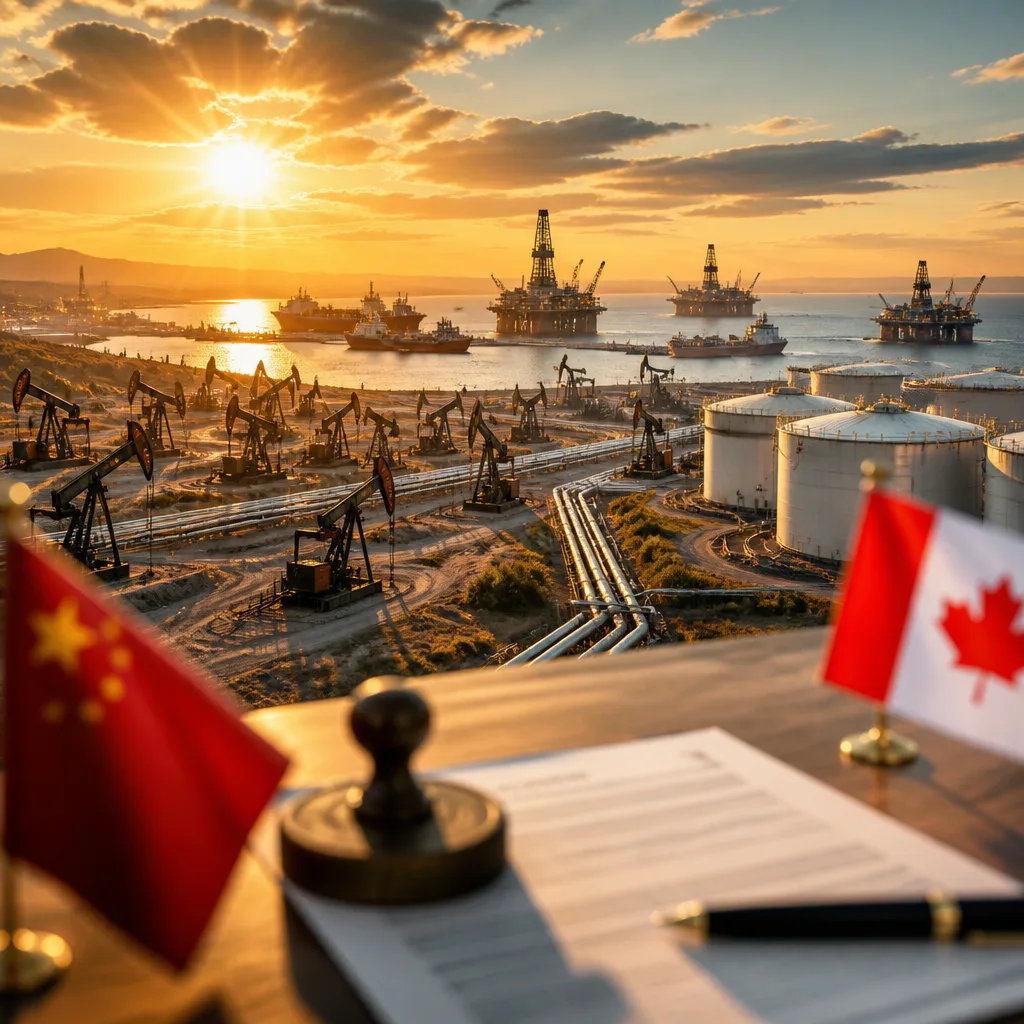
The United States has announced an agreement with Venezuela that, officials say, would give U.S. access to vast undeveloped crude reserves — some 65 billion barrels — through a new private partnership structure.
What was announced
President Donald Trump declared the accord publicly on social media, calling it “THE BIGGEST OIL DEAL IN WORLD HISTORY.” Venezuelan authorities subsequently confirmed the pact, saying it covers the development of 17 oil fields and could attract large sums of private investment to the country’s energy sector.
“The United States of America has just entered into an Agreement with the Country of Venezuela on, THE BIGGEST OIL DEAL IN WORLD HISTORY!”
Those close to the negotiations described the arrangement as an atypical hybrid involving the U.S. government, private companies and Venezuela. A U.S. official said the arrangement would not be a straightforward purchase but rather a form of equity participation and access to what is commonly known as off‑take oil — guaranteed volumes supplied at cost.
Numbers cited by participants
Venezuelan statements accompanying the announcement put financial figures on the table:
- 65 billion barrels of proven potential reserves across 17 fields;
- an estimated US$100 billion in private investment that could flow into Venezuela’s oil industry; and
- projected additional tax receipts of roughly US$209 billion for Caracas.
| Item | Figure |
|---|---|
| Proven potential reserves | 65 billion barrels |
| Number of fields covered | 17 |
| Projected private investment | US$100 billion |
| Estimated tax revenue | US$209 billion |
Unusual structure and oversight
According to a source familiar with the arrangement, the mechanism resembles a public‑private partnership in which the U.S. would hold equity in entities that operate the Venezuelan fields alongside private operators. The Pentagon’s Office of Strategic Capital — a unit that finances initiatives tied to U.S. defence objectives — was identified as the body that would oversee aspects of the arrangement.
How the partnership would work in practice, which companies would operate the fields, and the precise legal and fiscal arrangements were not disclosed. Administration voices also offered differing signals immediately after the announcement: some U.S. officials suggested the deal still required follow‑up work even as Venezuelan authorities framed the agreement as settled.
Why this matters for Canada and global markets
An accord that broadens U.S. access to Venezuelan crude would be significant for energy markets and for geopolitics in the Americas. For Canadian observers, the deal raises questions about competition for markets, potential shifts in regional oil pricing and investment flows, and how Ottawa may respond diplomatically to deeper U.S.–Venezuelan economic ties.
Key issues that remain open and that will shape consequences include:
- the legal basis for U.S. equity participation in foreign reserves;
- sanctions and compliance hurdles affecting transactions with Venezuela;
- whether private operators are named and how contracts will allocate revenues and control; and
- the timeline for field development and expected production volumes.
Next steps and outstanding questions
Administration officials indicated more discussions and documentation are expected. A U.S. official who spoke on condition of anonymity described the deal as an equity arrangement that would secure off‑take at cost, but acknowledged operational specifics still needed finalising.
Venezuelan interim President Delcy Rodríguez publicly praised the agreement, while U.S. Secretary of State Marco Rubio — named by U.S. sources as leading negotiations — framed the deal as beneficial to both countries. Until contracts, regulatory approvals and compliance with international sanctions regimes are published or clarified, many details will remain opaque.
The declaration marks a potentially transformative moment for energy diplomacy in the Western Hemisphere. Its ultimate impact on supply, prices and geopolitical alignments will depend on the resolution of legal, financial and operational questions that the initial announcements left unanswered.