
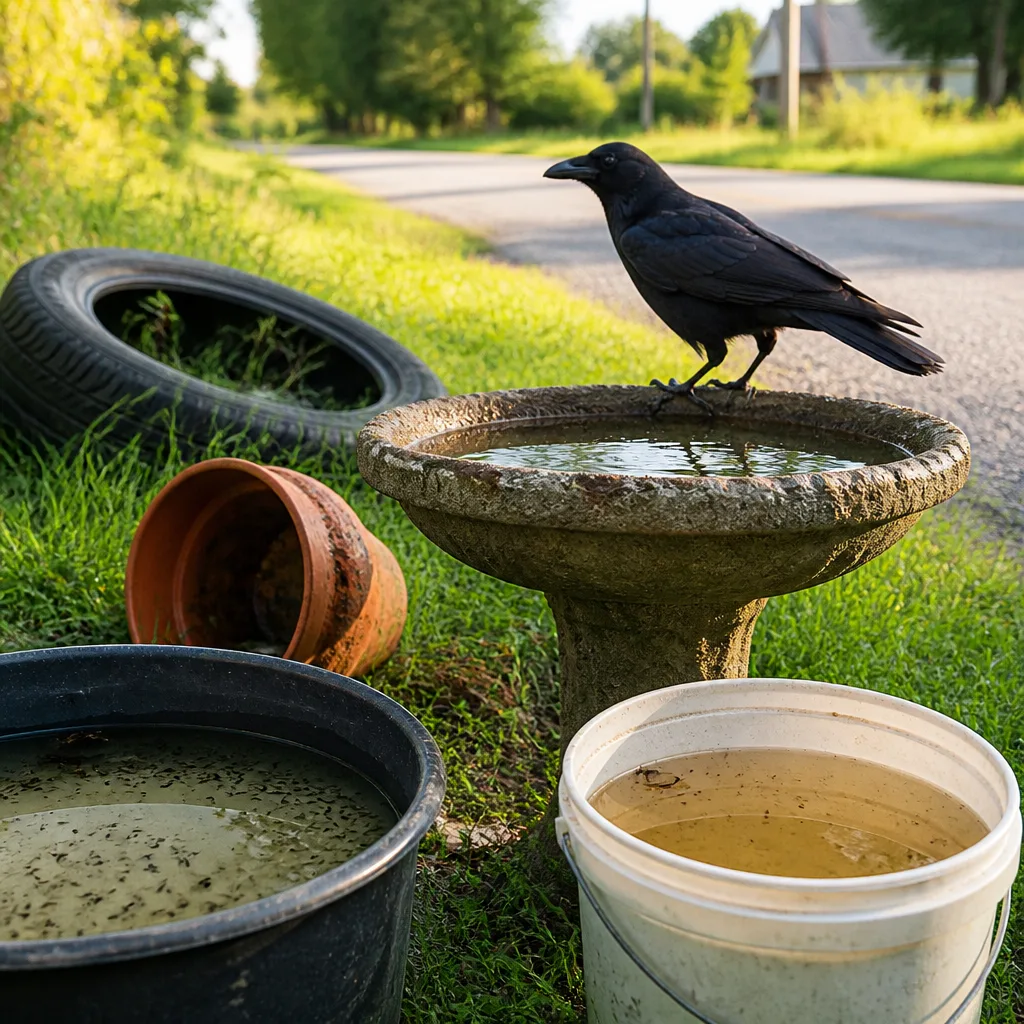
Public Health Sudbury & Districts has confirmed that an American crow in the Espanola area tested positive for West Nile virus, prompting a reminder to residents that the pathogen remains present in the region even though the risk to people is considered low.
What health officials are saying
The health unit noted that while an infected bird was detected locally last year, there have been few recent human cases. The most recent person in the area confirmed to have West Nile infection was in 2023, the unit said.
"Although the overall risk of a person becoming sick with West Nile virus is low, the virus is still present," said Jonathan Groulx, a manager with Public Health Sudbury & Districts.
Public Health officials emphasised that late summer is typically when the risk of transmission reaches its peak because mosquitoes can carry higher levels of virus and people may be less vigilant about bite prevention.
How West Nile spreads and who gets sick
West Nile virus is transmitted to people primarily through the bite of an infected mosquito. Most people infected with the virus experience no symptoms. When illness does occur, it typically presents as a mild, flu‑like syndrome, while rare cases can involve serious neurological disease.
Common, milder symptoms reported by the health unit include:
- fever
- headache
- body aches
- a mild rash
- swollen lymph glands
In very uncommon instances, the infection can progress to affect the brain and cause severe illness.
Practical steps to reduce risk
Public Health Sudbury & Districts outlined measures residents can take at home and when outdoors to reduce mosquito exposure and lower the chance of infection.
- Around the home: Repair or install screens on windows to keep mosquitoes out; remove standing water where mosquitoes breed (for example, in containers, gutters, birdbaths).
- Personal protection: Wear light‑coloured, long‑sleeved shirts and long pants, and use an approved insect repellent according to label directions. Mosquitoes are most active from dusk to dawn, and extra caution is advised during those hours.
Officials reminded the public that simple, consistent precautions are effective at reducing bite risk and therefore the likelihood of infection.
Context and public-health significance
The detection of the virus in a local crow does not mean there will be human cases, but it does confirm active viral circulation in the mosquito–bird transmission cycle. Public-health units track such findings as an early indicator of local activity and to inform public messaging on prevention.
Because most infections are asymptomatic, surveillance that includes testing of dead birds and mosquitoes plays a role in gauging local risk even when human case numbers are low.
| Item | Details |
|---|---|
| Animal testing | American crow in Espanola tested positive |
| Last local human case | 2023 |
| Peak risk period | Late summer |
Residents with concerns about West Nile virus — such as questions about symptoms or prevention — are encouraged to consult local public‑health resources for guidance specific to their area.
Takeaway: A positive bird test signals that West Nile virus remains in the environment; while the likelihood of human illness is low, straightforward steps at home and when outdoors can substantially reduce risk.