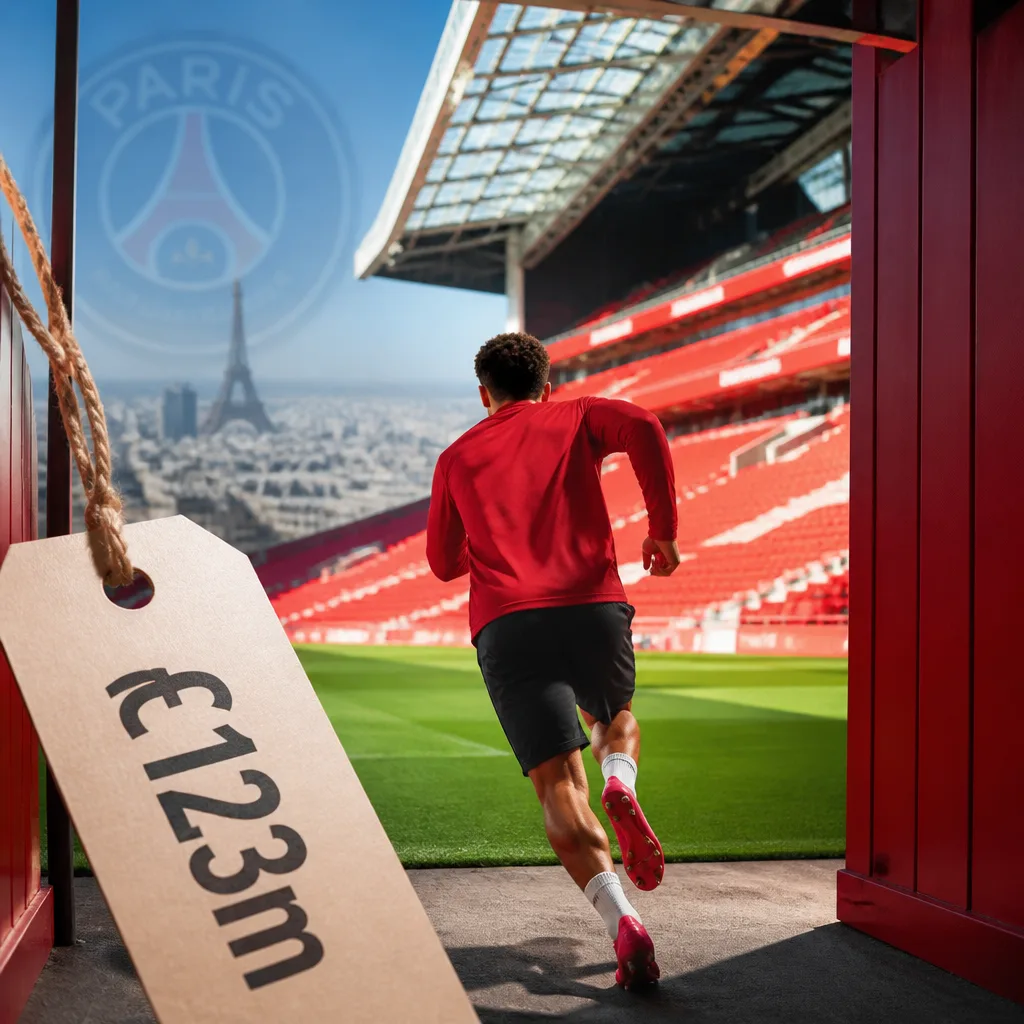
Liverpool have bolstered their forward line with the acquisition of France international winger Bradley Barcola in a deal reported to be worth £123 million. The 23-year-old arrives from Paris Saint-Germain where he developed under Luis Enrique and collected back-to-back Champions League winners’ medals, albeit largely as an impact substitute.
Profile and provenance
Barcola’s trajectory has been rapid. A product of Lyon’s system, he pushed through into top‑flight football after a spell on the fringes of the first team. His path to regular senior minutes was accelerated when circumstances at Lyon opened a spot — a moment the player’s former academy coach describes as pivotal.
“That was a turning point,” Jean‑Francois Vulliez said, describing how departures and injuries created the opportunity that thrust Barcola into first‑team action.
At PSG, Barcola collected valuable experience in a star‑studded squad. While he was not an undisputed starter — Khvicha Kvaratskhelia’s arrival from Napoli in January 2025 cemented the Georgian on the left flank — Barcola nevertheless operated in a high‑pressure environment, training and playing under a manager with European pedigree.
What he brings to Liverpool
Scouts and coaches value Barcola for a composite skill set: explosive pace, strength to hold off defenders, and a high footballing IQ that suits transitional play. Those attributes were refined inside PSG’s coaching set‑up and are the traits Liverpool will seek to plug into their front three or use as rotation depth across the wide areas.
- Age: 23
- Previous club: Paris Saint‑Germain
- Honours: Back‑to‑back Champions League winner (with limited starts in finals)
- Reported fee: £123 million
That combination of youth and experience in elite European competition is what justifies both the headline fee and the expectations that follow. Liverpool are investing in a player with immediate utility and further developmental upside.
Fit within Liverpool’s squad
Liverpool’s forward corps has been characterised in recent seasons by fluidity and rotation. Barcola’s arrival gives the Reds another outlet who can operate on either flank, stretch defences with direct runs, and press from the front — elements that align with Liverpool’s established attacking template.
But questions remain. Barcola’s minutes at PSG were intermittently limited by heavy competition for places. Although he featured in two Champions League finals, he came off the bench on both occasions, and his role there illustrates how he must now make the step from high‑quality rotational player to consistent contributor in Merseyside’s demanding schedule.
Immediate implications and the longer term
In the short term, Liverpool have added depth and a different physical profile to their wide options. Over the longer haul, the club will expect Barcola’s developmental curve to continue: the fee reflects not just past achievement but projected impact.
His story — from a near‑loan exit at Lyon to a marquee transfer to one of Europe’s biggest clubs — underlines the thin margins in elite football. A single departure or injury earlier in his career turned an uncertain future into a platform that has now taken him to Anfield.
| Attribute | Detail |
|---|---|
| Age | 23 |
| Reported transfer fee | £123 million |
| Previous honours | Two Champions League medals (used mainly as substitute) |
Liverpool supporters will hope the Frenchman’s best years are ahead. For a club that blends immediate silverware ambitions with shrewd squad planning, Barcola is both an insurance policy and a statement — one that will be measured in goals, assists and the minutes he logs at the sharp end of the Premier League.