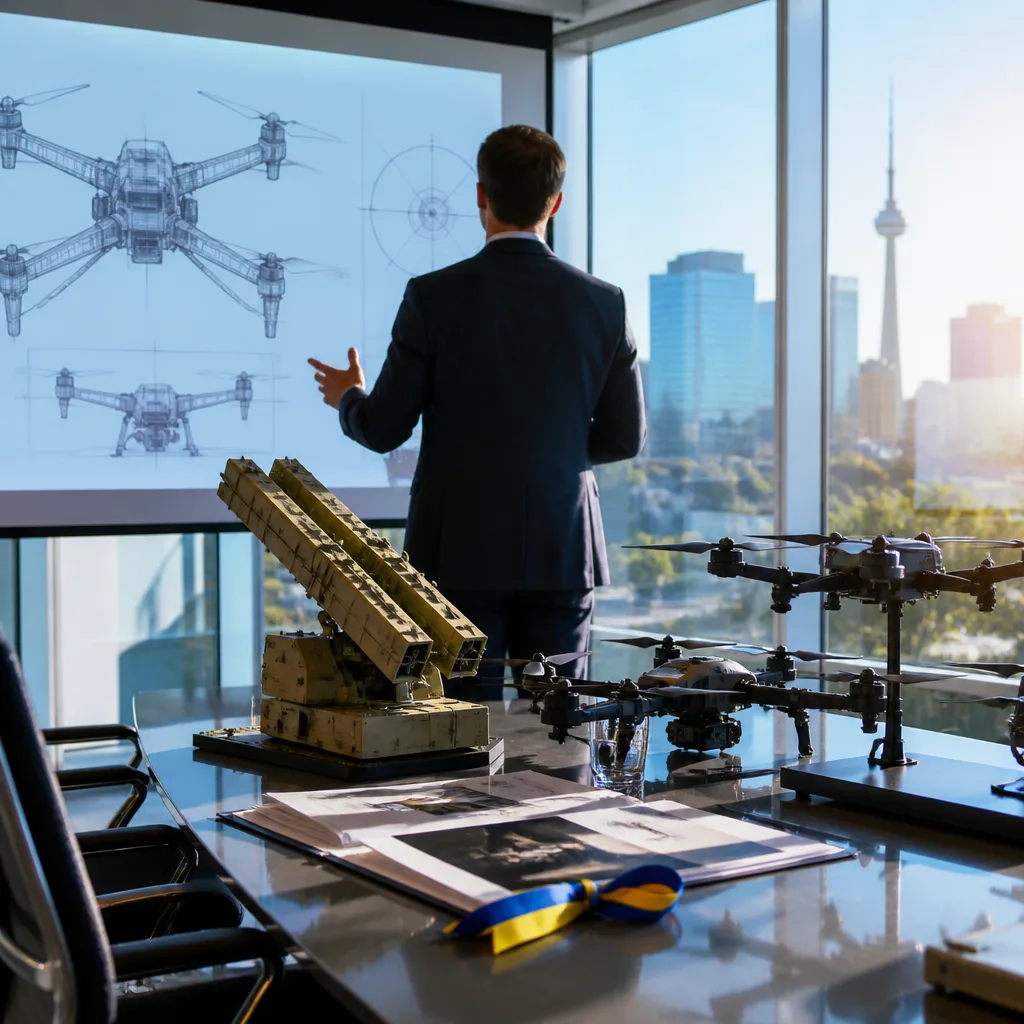
Former Ukrainian defence minister Mykhailo Fedorov is seeking U.S. backing for a new defence technology fund aimed at building companies that can deliver battlefield robotics, high‑speed interceptor drones and low‑cost missiles with artificial intelligence, he told the Financial Times in an interview published Aug. 30.
Pitch to Silicon Valley and Washington
Fedorov said he is approaching venture capitalists, private investors and U.S. technology firms to capitalise a vehicle that would invest in Ukrainian start‑ups and spin up new companies focused on technologies designed for the war with Russia. He described the proposal as departing from a standard venture fund model.
"This is not exactly a classic venture fund. We're writing a new history of the war," he told the FT.
In Washington, Fedorov went further and proposed a direct swap with U.S. defence planners: he said he would assist the United States in developing drone capabilities in return for Patriot interceptors supplied to Ukraine. The former minister framed the offer as a practical trade to shore up Ukraine’s air‑defence needs this winter, as Kyiv faces shortages of Patriot interceptors amid intensified missile and drone strikes.
"I'm ready to make that trade," Fedorov told the FT.
Technology priorities and operational aims
According to the interview, the fund’s early priorities would include:
- Battlefield robotics — unmanned systems to operate in contested areas;
- High‑speed interceptor drones — designed to counter newer jet‑powered attack drones fielded by Russia;
- Low‑cost missiles with AI — expendable munitions using artificial intelligence for guidance and targeting.
Fedorov said Ukraine has already tested some high‑speed drones intended to defeat Russia’s jet‑powered attack drones and argued that production could scale with additional capital. He stressed the need for "jet drones," "cheap missiles" and "missiles with artificial intelligence," portraying these capabilities as central to Kyiv’s ability to deter and respond to Russian attacks.
"We need more jet drones, we need cheap missiles, we need missiles with artificial intelligence," he said.
Context and immediate implications
Fedorov served as defence minister from January to July before being dismissed in a Cabinet reshuffle. His departure sparked public attention in Ukraine but he has continued an international outreach that, according to the FT interview, has included travel to Italy and the United States. The proposal links private capital, technology transfer and national security aid in a way that could reshape how Ukraine and Western partners supply and co‑develop battlefield systems.
For U.S. and allied audiences, the offer carries two practical considerations: whether private investors will accept the risks of financing early‑stage military hardware companies operating from a country at war, and whether Washington would welcome a bilateral industrial exchange that combines matériel assistance (Patriots) with access to Ukrainian drone technologies.
| Focus area | Purpose |
|---|---|
| Battlefield robotics | Operate in contested environments to supplement infantry and reduce human exposure |
| High‑speed interceptor drones | Counter jet‑powered attack drones deployed by Russia |
| Low‑cost AI missiles | Provide affordable, scalable strike and defensive options |
Fedorov framed the fund as both a means to accelerate Ukrainian defence industrialisation and to create exportable capabilities that could interest foreign partners. He suggested the initiative could herald a “new history” of wartime technology development driven by private capital and close collaboration between Kyiv and Western technology centres.
The plan raises questions that will determine whether it advances beyond proposal: will U.S. venture and defence communities embrace investment in wartime start‑ups; how will intellectual property, governance and export controls be handled; and would Washington entertain a quid pro quo exchange tying advanced interceptors to technology cooperation?
Those answers will shape whether the fund becomes a novel channel for bolstering Ukraine’s defence production or remains an exploratory idea from a high‑profile former minister seeking international partners.