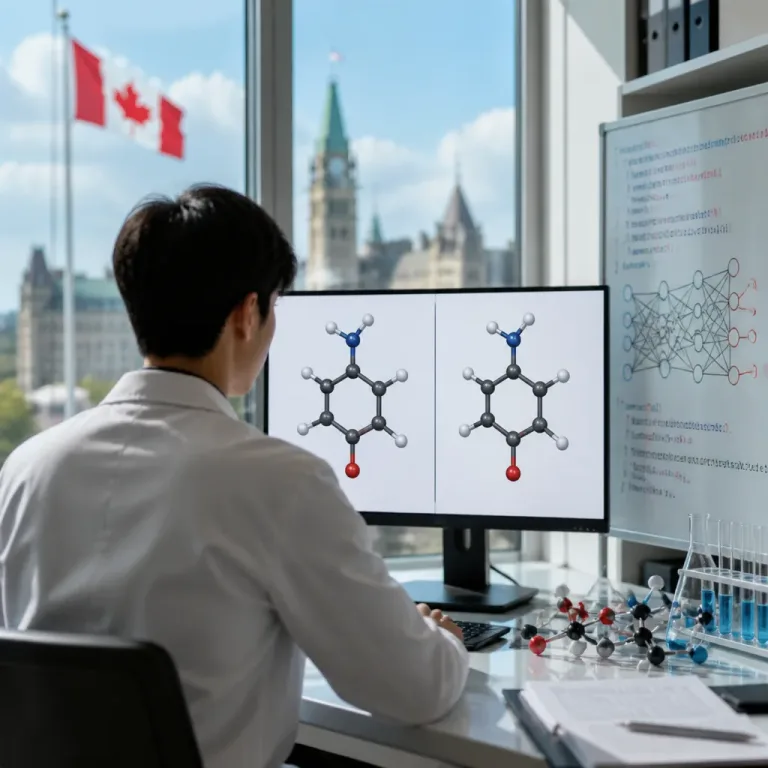

Researchers at the Massachusetts Institute of Technology report that an artificial intelligence algorithm helped them reformulate the lipid nanoparticles used to deliver mRNA vaccines so the doses can remain stable at room temperature for up to one year, or at nearly 100°F (about 38°C) for two months. When tested in mice, the reformulated COVID-19 vaccine produced immune responses comparable to a vaccine similar to Moderna's.
What the team did
The work focused on the lipid nanoparticle (LNP) shell that protects fragile RNA and transports it into cells. Using an AI-driven optimisation process, the researchers adjusted the composition and formulation surrounding LNPs to increase heat resistance without extensive experimental screening.
The paper, published in Nature Biotechnology and led by graduate student Jinbi Tian and postdoctoral researcher Khanh Tran, names Ana Jaklenec and Robert Langer as senior authors. The team says the algorithm is designed to perform well with small data sets, reducing the need for thousands of experiments that would otherwise slow development.
“The real beauty of this algorithm is that we can use it with small data sets,” says Ana Jaklenec, a principal investigator in MIT’s Koch Institute for Integrative Cancer Research. “It’s really hard to run thousands of experiments, so this algorithm allows us to more easily achieve formulations with features that we want — in this case, stability.”
Why it matters
Current RNA vaccines typically require ultracold storage — often between -20°C and -80°C — which complicates distribution, particularly to rural or resource-limited areas. If LNP formulations can be stabilised for months at ambient temperatures without losing potency, the practical barriers to wider vaccine deployment could be substantially reduced.
Key immediate implications include:
- Potentially simpler logistics and lower costs for shipping and storing RNA vaccines.
- Faster, more flexible responses to outbreaks in regions lacking cold-chain infrastructure.
- Broader applicability for mRNA platforms beyond COVID-19, including vaccines under development for other infectious diseases and cancer.
Performance data at a glance
The researchers report the following stability benchmarks for their reformulated LNP vaccines:
| Storage condition | Reported stability |
|---|---|
| Room temperature | Up to 1 year |
| ~100°F (≈38°C) | Up to 2 months |
In mouse studies, the vaccines generated immune responses that the authors say were as strong as those elicited by an mRNA vaccine similar to Moderna's. The study emphasises that stabilisation was achieved by tuning the formulation around the LNPs rather than changing the RNA payload.
Limits and next steps
The findings are preclinical: stability and immune response were measured in laboratory conditions and in mice. Translating these results into human-use vaccines will require further validation, regulatory review and scaled manufacturing studies. The research paper stresses the role of the AI algorithm in reducing experimental burden, but it does not eliminate the need for thorough testing at larger scales and in clinical trials.
For Canadian public health and biotech stakeholders, the study points to a path where AI can accelerate formulation design and help overcome real-world distribution challenges. If subsequent work confirms similar stability in human vaccines and in large-scale production, the technology could ease the operational demands that have complicated global mRNA vaccine rollouts.
For now, the MIT team’s results offer a proof of concept: an AI-assisted route to more heat-tolerant mRNA vaccines that could broaden access and simplify logistics — provided the findings withstand the long, rigorous process from bench to bedside.