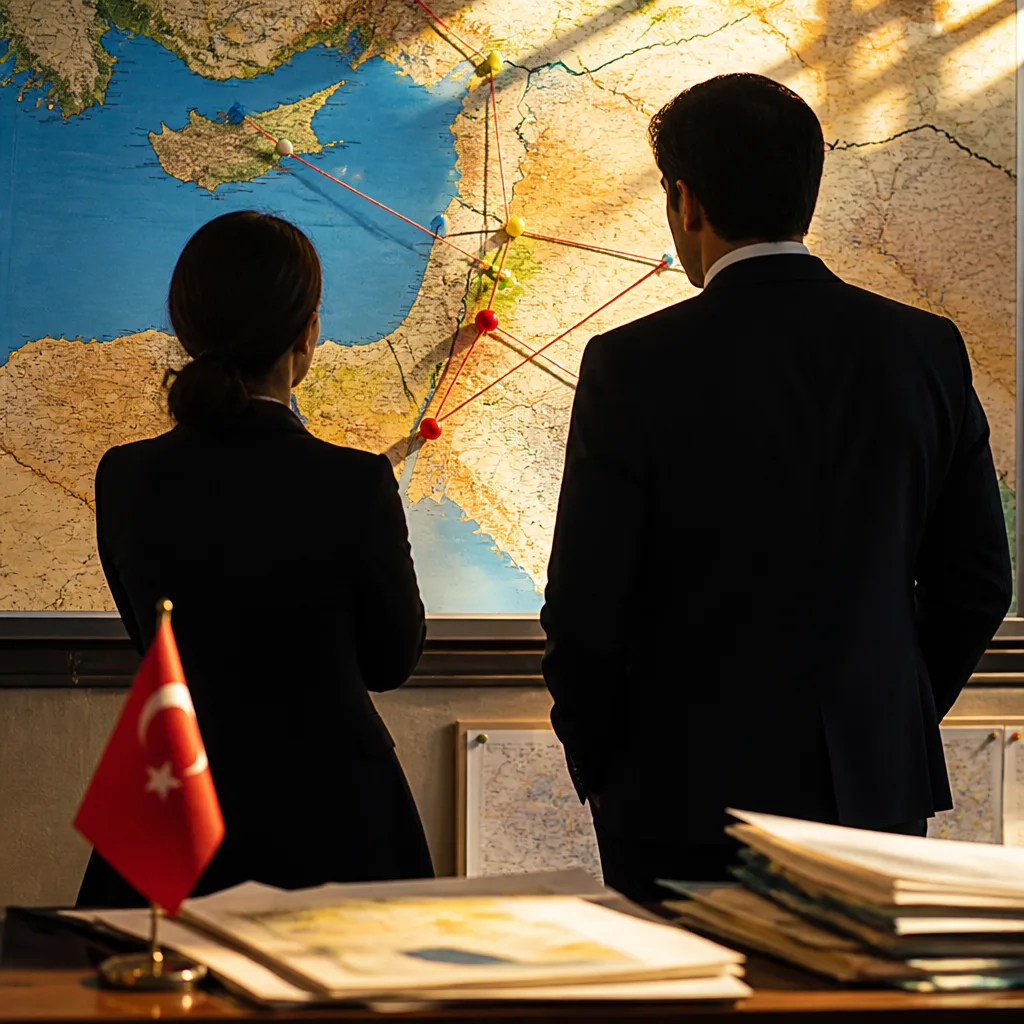
For years, Lebanon occupied only a peripheral place in Ankara’s regional priorities. That has changed with the wider Middle East realignment that followed the events beginning on 7 October 2023, prompting Türkiye to reassess how it engages with Beirut.
From cautious engagement to strategic recalibration
Türkiye long treated relations with Lebanon as a matter of basic diplomacy: steady ties, humanitarian assistance, cultural exchange and modest economic links. That approach reflected Beirut’s deep fragility — political, social and economic — and the heavy shadow cast by multiple external actors that constrained any Turkish bid for a larger role.
The landscape altered after what the source calls the Al-Aqsa Flood Operation on 7 October 2023. The campaign and the subsequent and sustained violence in Gaza, described in the source as a genocide by the occupying power, along with other regional developments, have opened space for Ankara to rethink Lebanese policy.
Several concurrent shifts are cited as drivers of the new posture:
- the intensification of the conflict in Gaza and its regional reverberations;
- the post-Assad political dynamics in Syria and an associated state-building process attributed to Ahmed al-Sharaa;
- the widening of fault lines tied to a broader U.S./Israel–Iran confrontation.
These developments, the source argues, have combined to loosen previously entrenched patterns of influence inside Lebanon, creating openings for Ankara to pursue a more meaningful strategy.
Competing influences in Lebanon
Prior to the October 2023 rupture, Lebanon’s balance of power was described as constrained by several dominant external players and local proxies.
| Actor | Role or influence |
|---|---|
| Assad regime | Persistent influence following setbacks in 2006, though weakened |
| Iran | Decisive political role in Lebanon through Hezbollah |
| Saudi Arabia | Counterbalancing Sunni political and economic elites |
| France | Efforts to maintain traditional presence, citing protection of Maronite community |
| Zionist administration | Ambitions, especially regarding southern Lebanon |
That configuration, the source contends, made long-term, expansive strategies toward Lebanon impractical for outside powers — including Türkiye — until the region’s post-October 2023 dynamics shifted the calculus.
Implications for Ankara and the region
The argument put forward is that the new regional reality gives Ankara licence to adopt a more proactive and possibly competitive stance in Lebanon. The change is attributed not to any sudden strengthening of Lebanon itself, but to the broader strategic ruptures that altered how regional players can operate on Lebanese soil.
What this means in practice is not detailed in the source material. However, the analysis underscores how external crises can reconfigure opportunity structures in fragile states: as fault lines widen elsewhere, influence that once seemed frozen in place can become contestable.
For Canadian readers, the account is a reminder that Middle East geopolitics remain dynamic and that shifts in one theatre — Gaza or Syria, for instance — can have ripple effects in neighbouring states like Lebanon. The changing tenor of Türkiye–Lebanon relations is a case study in how states recalibrate when the regional order is unsettled.
Whether Ankara’s evolving posture translates into sustained policy change or merely a temporary opening will depend on developments across the region and on Lebanon’s own capacity to absorb external engagement amid persistent fragility.