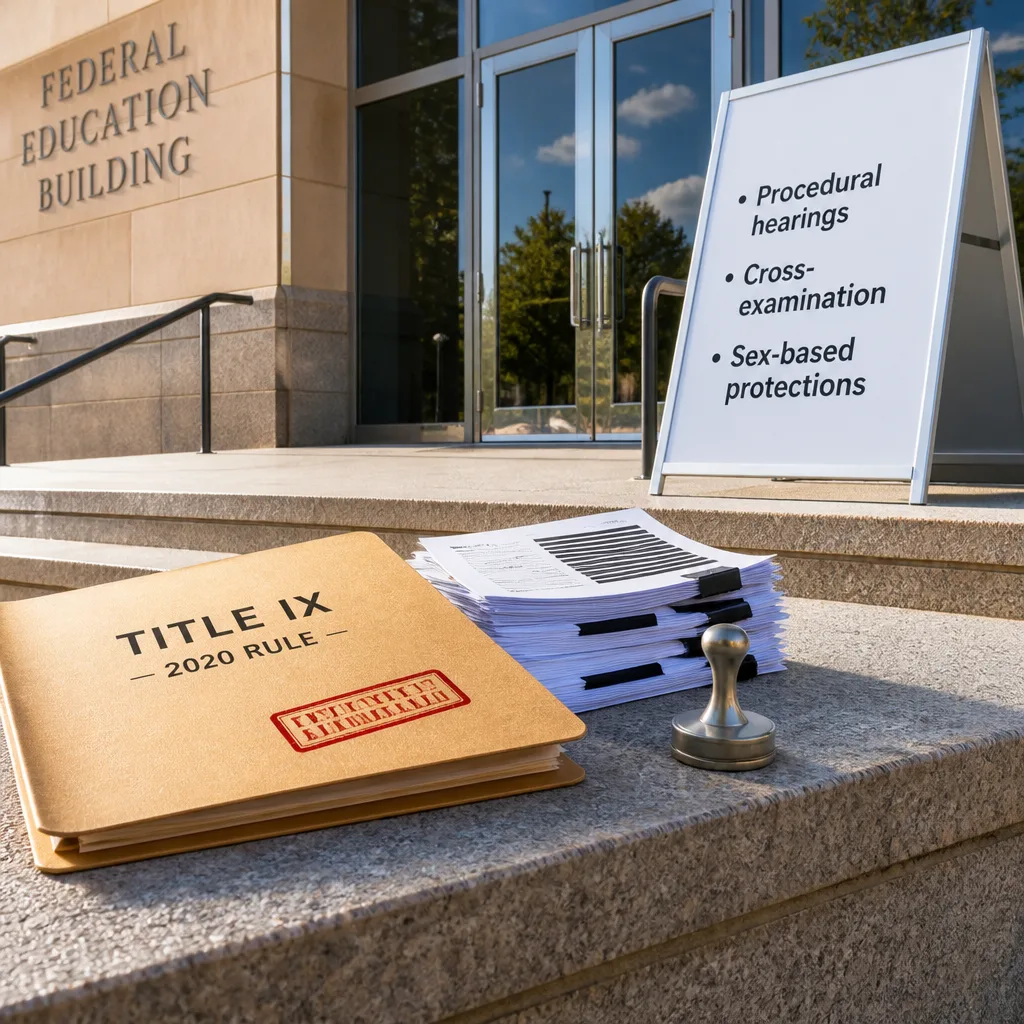
The U.S. Department of Education has moved to undo the Biden administration’s reinterpretation of Title IX, eliminating the broader protections that had been read to include gender identity and sexual orientation and restoring the regulatory framework put in place in 2020.
Policy change and what it restores
The reversal returns schools to the framework adopted under the previous administration, a package of regulatory measures that emphasised protections based on biological sex and included detailed procedures for how institutions handle complaints under Title IX.
Key elements restored under the 2020 rule include procedural requirements for investigations and adjudications of sex-discrimination and sexual-misconduct allegations, such as the use of live hearings with cross-examination and advance disclosure of allegations and evidence to the accused.
Administration rationale and response
Education Department officials framed the move as a clarification, arguing that Title IX should protect on the basis of sex as traditionally defined and that the prior reinterpretation produced uncertainties for students, families and school administrators.
"Commonsense language has been restored to Title IX, reducing confusion for parents, students, and schools," Education Secretary Linda McMahon said in a Monday statement.
Officials also said the department will continue to pursue enforcement where it determines schools have violated the rights, privacy or athletic opportunities of biological females. The department has collaborated with the Justice Department to stand up a dedicated Title IX Investigations Team to pursue potential violations.
Implications for schools, students and ongoing cases
The reversal is likely to affect how school boards, administrators and post-secondary institutions handle issues ranging from access to sex-segregated facilities and sports teams to the conduct of Title IX investigations. Observers have noted that the change may alter complaint thresholds and procedural protections used in campus processes.
Under the Biden-era reinterpretation, guidance had been read to prohibit discrimination on the basis of gender identity and sexual orientation. Critics of that approach had warned that it could broaden the scope of Title IX investigations to include disputes over pronoun usage or expressions of belief; supporters argued it extended civil-rights protections to LGBTQ+ students.
- Restores 2020 Title IX regulations emphasising biological sex-based protections.
- Reinstates procedural requirements such as live hearings and cross-examination in campus processes.
- Establishes a Title IX Investigations Team within the federal government to pursue probes.
Enforcement activity and public debate
The department has already opened a significant number of Title IX probes into educational institutions since implementing the reversal, signalling an intent to actively enforce the reinstated standards.
The policy shift arrives amid a broader national debate about the rights and status of transgender students in schools and athletics, and follows years of litigation and federal scrutiny in several states. Proponents of the rollback say it provides clarity and protects female students’ opportunities; opponents contend it narrows protections for transgender and LGBTQ+ youth and may lead to discriminatory outcomes.
| Policy era | Definition emphasised | Notable procedural feature |
|---|---|---|
| 2024 (Biden-era) | Included gender identity and sexual orientation | Broader anti-discrimination interpretation |
| 2020 (restored) | Protections based on biological sex | Live hearings and cross-examination |
How the change will play out in the courts and in day-to-day school operations remains to be seen. Several legal challenges and investigations that hinge on the scope of Title IX protections are ongoing. The department’s reversal will likely be a central point of argument in those cases as they continue to move through the judicial system.
For students, families and educators, the policy shift will require renewed attention from school boards and administrators to ensure institutional procedures align with the federal expectations now back in place. The debate over the balance between sex-based protections and inclusion of gender identity under civil-rights law continues to shape education policy at both local and national levels.