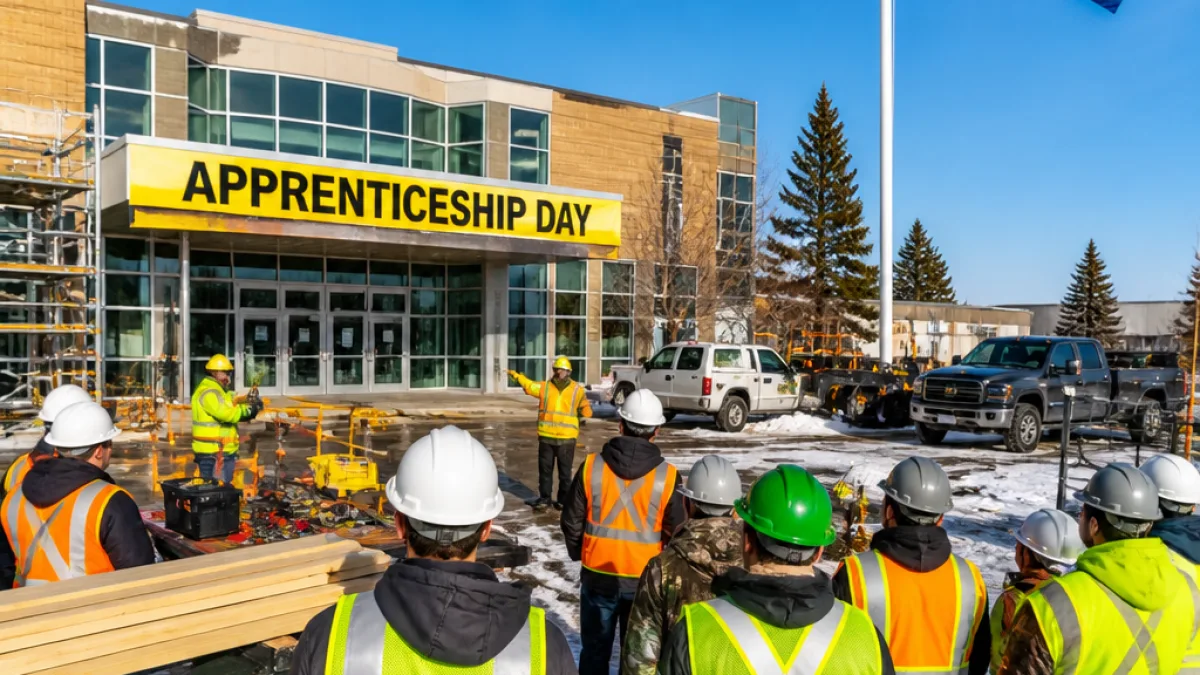
College highlights local role in building skilled trades workforce
Medicine Hat College marked Apprenticeship Day by stressing the direct connection between trades training and the regional economy, with the institution’s president describing the event as a celebration of relationships among students, instructors and industry.
Kevin Shufflebotham, president and CEO of Medicine Hat College, said the day was intended to draw attention to trades programs and the partnerships that place students into work. "It celebrates trades; it celebrates the relationships our students have with faculty and the relationships that we have with industry," he said. "It’s just a great day to celebrate."
Programs tied to paid workplace experience
Medicine Hat College offers a range of trades and pre-employment programs designed to combine technical education with paid workplace experience. The college noted that its apprenticeship pathways allow students to develop practical skills while meeting employer demand in the region.
| Program | Focus |
|---|---|
| Automotive service technician | Vehicle repair and maintenance |
| Carpentry | Construction framing and finishing |
| Electrical | Residential and commercial wiring |
| Heavy equipment technician | Maintenance of large machinery |
| Plumbing, steamfitting and pipefitting | Fluid systems and piping work |
| Welding | Metal joining and fabrication |
College instructors were singled out for playing an important role in preparing students for careers, while local employers supply workplace placements and connections to long-term employment.
Local impact and provincial context
Shufflebotham pointed to the tangible local benefits of the college’s programs. "Everything that gets built in Medicine Hat in our region is built or fixed or serviced by the graduates of our program," he said, adding that students return value to the community through their work.
“These students that come here contribute back to our region, and that’s what’s absolutely critical.”
At the provincial level, the Alberta government reports a record-high number of registered apprentices — more than 81,000 — and has earmarked financial support for apprenticeship training. Advanced Education Minister Myles McDougall said the province invested $100 million in apprenticeship training for the 2026-27 fiscal year and that funding for apprenticeship seats at post-secondary institutions has doubled over the past four years.
The government also noted the first-year performance of its Union Apprenticeship Grant program, which supported eight union training centres and provided more than 1,600 apprenticeship seats in high-demand trades.
Why the spotlight matters
Bringing attention to apprenticeships serves several policy and economic purposes locally. It raises awareness of trades as viable career options, reinforces links between education and industry, and helps channel skilled workers into sectors that underpin construction, maintenance and service industries across the Medicine Hat region.
- Awareness: Spotlighting trades can attract new entrants to high-demand occupations.
- Workforce alignment: Apprenticeship models combine classroom training and paid work to fill employer needs.
- Regional retention: Graduates often remain in the area, supporting local projects and services.
Medicine Hat College’s Apprenticeship Day serves as a reminder that post-secondary institutions and industry partnerships are central to sustaining the city’s trades capacity. For employers, the college provides a steady pipeline of people trained in the specific skills required for local projects. For students, the combination of technical instruction and workplace experience offers a direct path into well-paying, in-demand jobs.
The provincial investments underscore a broader commitment to scaling apprenticeship seats across Alberta, while the college event highlighted how that funding and training translate to work that keeps the region running.
As Medicine Hat continues to grow and maintain its infrastructure, the emphasis on practical training and employer links will remain a key factor in keeping trades skills local and available when employers need them.