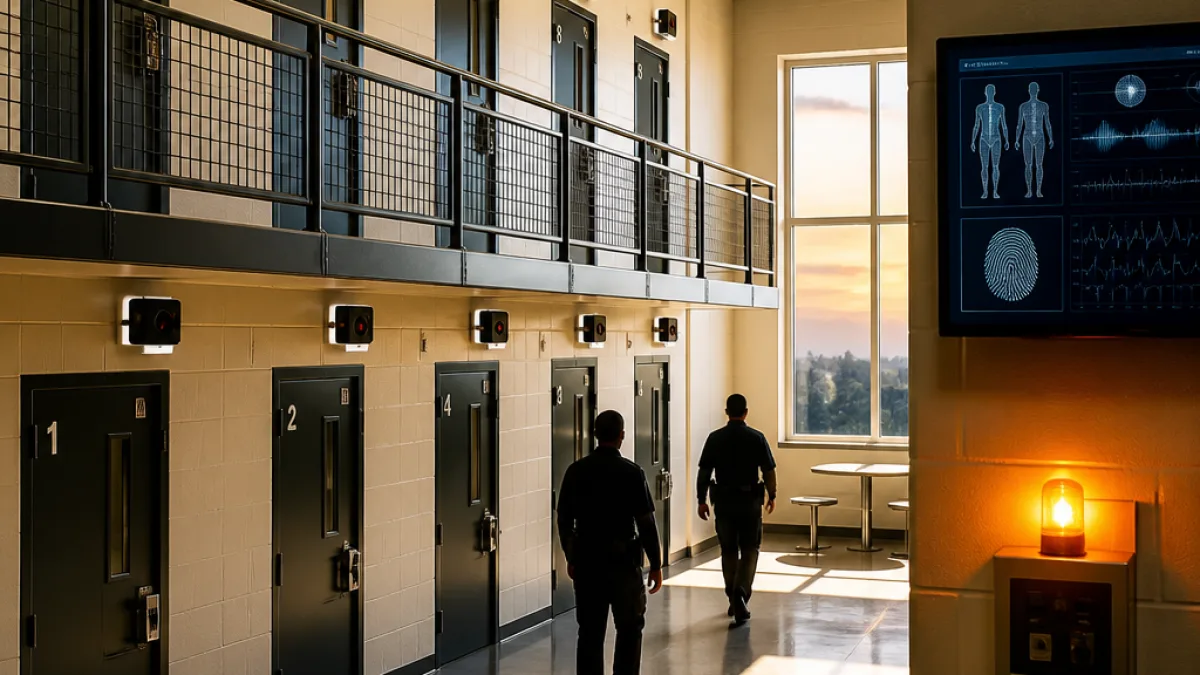
The Grande Prairie Police Service is installing contactless biometric monitoring equipment in eight holding cells as it prepares to take over policing responsibilities from the RCMP on Oct. 21, officials confirmed.
What the system will do
The sensors, described by the service as similar in appearance to a camera, are designed to monitor detainees’ respiration rates, temperature and general physical movement. The technology will generate alarms for staff if it detects “drastic” or concerning changes in those measurements.
“Just any potential signs of distress and if any drastic changes are detected, or any concerning changes are detected, it generates alarms for our staff,”
said GPPS Chief Dwayne Lakusta, explaining the monitoring will sit in the cell block and act as a supplemental detection tool.
Context and purpose
Chief Lakusta framed the technology as particularly important in the context of the ongoing opioid crisis, noting the sensors are intended to pick up slowing and depressed breathing commonly associated with opioid use. He emphasised the equipment is not meant to replace staffing or current procedures, but to enhance them.
Health-care support will be integrated with monitoring. Paramedics will be stationed in the same block to assess people entering custody for signs of medical distress and to respond when alarms trigger.
- Coverage: Eight holding cells will receive sensors.
- Monitored metrics: Respiration, temperature and movement.
- Response: Alarms will alert staff; paramedics will be onsite in the block.
What residents should know
The installation comes as the newly formed police service prepares to become the police of jurisdiction for Grande Prairie. Officials say the monitoring is a tool to prevent death and serious injury in custody by catching early signs of medical distress.
Photos provided from another Canadian force show a small box-like device that picks up heart and breathing rates and feeds the data to a monitoring computer. GPPS has indicated the device in Grande Prairie will operate on similar principles, focusing on non-contact detection of vital sign changes.
| Metric | Primary purpose |
|---|---|
| Respiration rate | Detect slowing or depressed breathing linked to opioid overdose |
| Temperature | Identify abnormal body temperature indicative of medical issues |
| Movement | Spot lack of movement or unusual activity suggesting distress |
Operational limits and oversight
Chief Lakusta stressed the sensors are an adjunct — a monitoring tool rather than a substitute for human judgement or care. The service said monitoring will be paired with health assessments by paramedics to ensure medical needs are identified and treated promptly.
For Grande Prairie residents and civil-rights observers, the announcement will likely raise questions about surveillance, privacy and safeguards around data use and retention. The police service has not released full operational policies or data-handling procedures in the material provided, only that alarms will notify staff about physiological changes.
As the transition date approaches, the community can expect further details from GPPS about how the technology will be integrated into custody procedures and what oversight will be in place to protect detainees’ rights while addressing medical risks associated with substance use and other health emergencies.