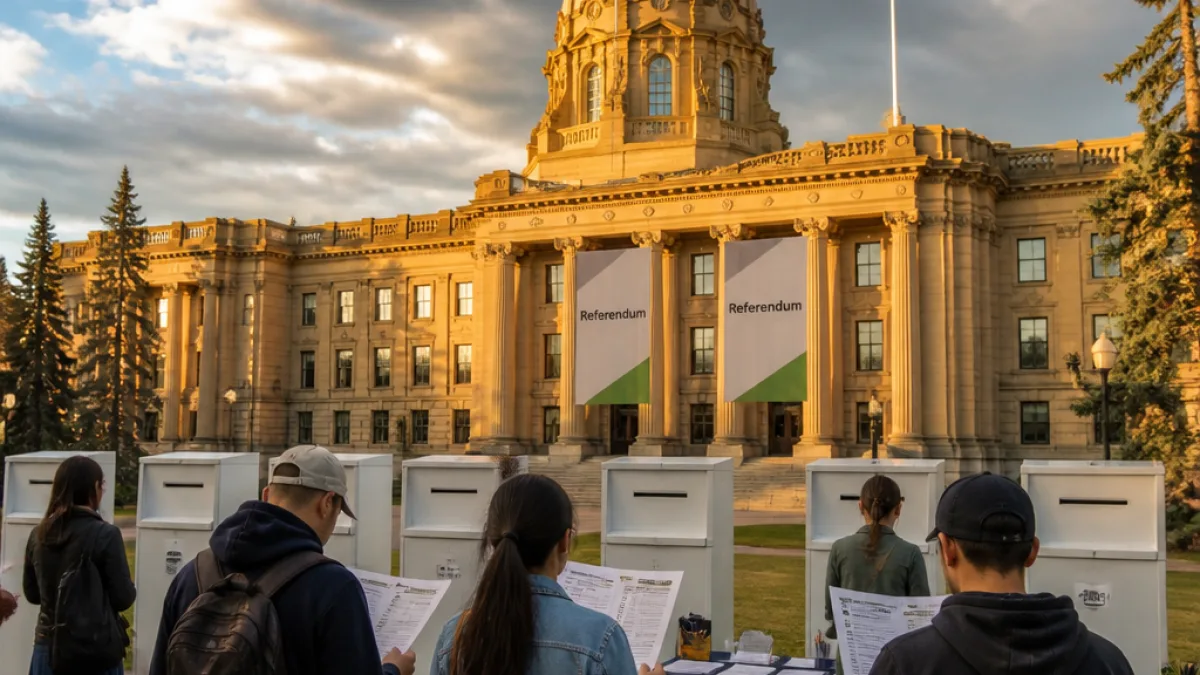
Albertans will go to the polls on Oct. 19 to decide a wide-ranging set of questions that include whether the province should remain part of Canada and a string of proposals aimed at changing how newcomers are admitted and access core services.
What voters will be asked
The ballot will ask voters to weigh 10 separate questions. One asks whether Alberta should stay in Confederation or pursue a second binding referendum on leaving Canada. Five of the questions focus specifically on immigration controls, including whether the province should take greater authority over who can arrive and whether some newcomers should face fees or waiting periods before accessing services such as health care and education.
| Topic | Number of questions |
|---|---|
| Confederation | 1 |
| Immigration | 5 |
| Other referendum questions | 4 |
Unanswered practical questions
Despite detailed wording on the ballot, the immigration proposals have prompted numerous questions about how the government would implement changes if voters approve them. Key unknowns include what form greater provincial control would take, what limits or fees might be imposed, and whether any new rules would be applied retroactively to people already living in Alberta.
Premier Danielle Smith and Finance Minister Jason Nixon have indicated that details about applicability to existing residents will need to be decided by cabinet only if voters give the government a mandate on Oct. 19. On the question of retroactivity, Smith said the matter requires internal discussion.
"We have to talk about that as a cabinet. I want to see if we even have a mandate to do it."
Political fallout and public debate
The immigration questions grew out of a series of town halls Premier Smith held across the province last summer. Those meetings were designed to explore ways to shield Alberta from what the government calls federal overreach, but they also included heated exchanges about immigration policy. One town hall in Lloydminster drew vocal calls for large-scale removals of newcomers.
Opposition NDP Leader Naheed Nenshi argued the referendum questions are less about fiscal policy and more about assigning blame to newcomers. He said the government lacks clarity on the meaning and consequences of the questions on the ballot.
"The government doesn’t know what these questions mean."
Claims and counterclaims on costs and access
Premier Smith has framed the immigration proposals in fiscal terms, arguing the province must balance welcoming newcomers with the rising costs of social services. Critics have characterised some proposed measures — including charging premiums to access education and health care for certain categories of newcomers — as discriminatory and akin to a head tax.
Smith has defended the approach by noting that other jurisdictions charge temporary residents premiums for public health care. However, concrete details on who would be affected, what amounts might be charged, and how the province would enact such fees remain unspecified in public statements to date.
What to expect next
- Oct. 19: Voters across Alberta cast ballots on 10 referendum questions, including the Confederation question and five immigration items.
- If the immigration questions pass: Cabinet will need to determine specifics, including whether new rules apply retroactively and how any fees or waiting periods would be structured.
- Legal and administrative steps: Implementation would likely require additional legislation or regulatory changes, the precise nature of which has not been outlined by government officials.
As Albertans prepare to vote, the central uncertainty remains practical implementation. A mandate at the ballot box would not automatically create new immigration powers; it would instead authorise the government to pursue those changes, leaving Cabinet and the bureaucracy to work out the legal and operational details.
The outcome of next month’s vote could reshape provincial-federal relations and provincial policy toward newcomers, but exactly how depends on choices yet to be made inside government and on questions that remain open to public debate and legal scrutiny.