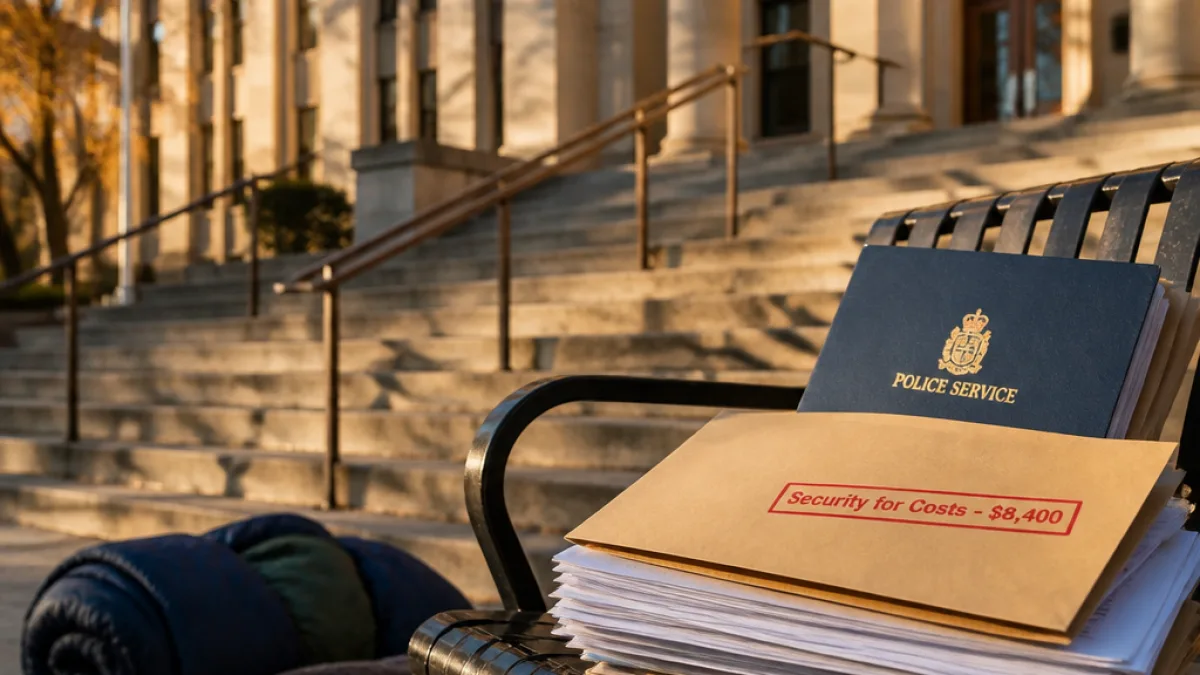
The Edmonton Police Service has asked a court to compel a man experiencing homelessness to post $8,400 as security for costs before his civil claim against the city and police can proceed, according to court documents and reporting.
What the application says
The application relates to a lawsuit brought by Dwayne Cardinal, who alleges he was subjected to excessive force, false arrest and other wrongs during an encampment cleanup on July 15, 2024. The legal move by the police is to have Cardinal provide a financial guarantee to cover potential legal costs if his claim is unsuccessful.
Security for costs is a legal mechanism commonly used by defendants who fear a plaintiff may be unable to pay court-ordered costs at the conclusion of litigation. In its materials, the Edmonton Police Service says it has estimated legal expenses associated with defending the chief and officers named in the claim, including fees tied to the examination of witnesses.
Plaintiff’s circumstances and EPS arguments
Court filings indicate Cardinal has been experiencing homelessness for about a decade and receives less than $600 per month in income support. The police argue those facts make it unlikely he could satisfy a future costs award if he lost the case, which is the standard basis for seeking security for costs.
The lawsuit names the then-police chief, the EPS and two constables as defendants. The allegations include battery, false arrest, false imprisonment, negligence and breaches of Charter rights. Those allegations have not been tested in court.
- Security requested: $8,400
- Plaintiff’s reported monthly income: under $600
- Claims made by plaintiff: battery, false arrest, false imprisonment, negligence, Charter breaches
"My client receives less than $600 a month from income support," Cardinal's lawyer said, adding it was "diabolical" for EPS to ask the court for the order.
Access to justice concerns
Requiring security for costs can present a practical barrier for low-income litigants. Legal experts and advocates have long warned such orders risk denying access to the civil justice system to people who lack the means to post sums up front, even where their claims raise serious questions about public authority and potential misconduct.
EPS has declined to comment about the application itself, noting the matter is before the courts. The department's filings set out why it believes a security order is justified based on Cardinal's financial circumstances and the potential costs of defending the claim.
Procedural next steps and implications
The court will decide whether to grant the police's request. If the order is approved and Cardinal cannot raise the funds, his lawsuit could be delayed or effectively halted. If the order is refused, the action can proceed without that upfront financial requirement.
| Item | Amount / detail |
|---|---|
| Security sought by EPS | $8,400 |
| Cardinal's reported monthly income | Less than $600 |
The case highlights tensions between two policy goals: ensuring public bodies can seek protection against abusive or unmeritorious lawsuits that could impose heavy legal bills, and preserving meaningful access to justice for vulnerable people who allege rights violations by state actors.
As the matter proceeds through the courts, Edmontonians will be watching both for the outcome on the security motion and for the underlying questions about police conduct during encampment enforcement. The city and the EPS will be defending the actions of officers; Cardinal and his counsel will be pressing for accountability and redress.
How the court balances the competing interests of cost protection and access to justice will shape not only this file but potentially other cases involving people with limited financial means who bring claims against public institutions.