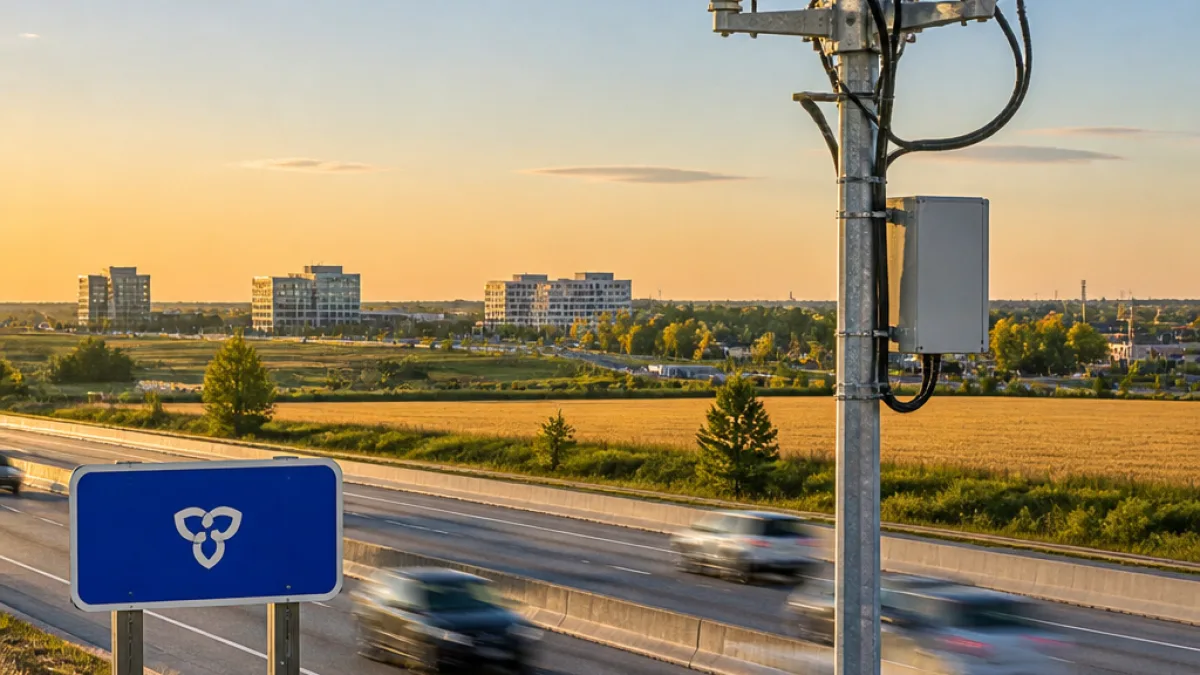
New surveillance rollout aims to curb cross-border organised crime
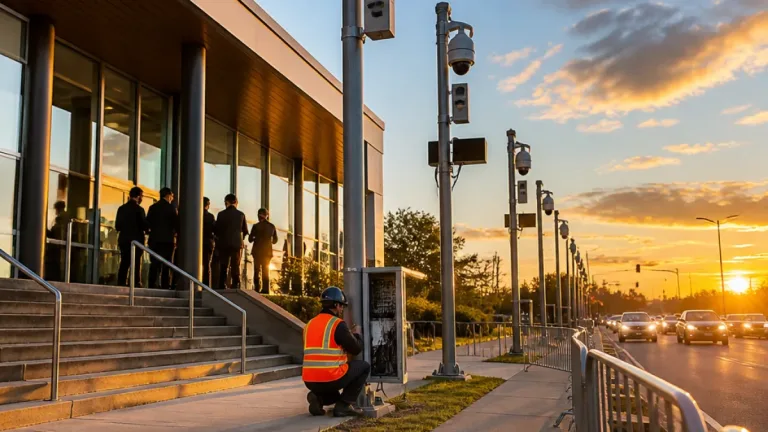
The Waterloo Regional Police Service and the Ontario Ministry of Transportation have reached a first-of-its-kind agreement to install closed-circuit television cameras with automated licence plate recognition (ALPR) on provincial highways that run through Waterloo Region.
Police and provincial officials announced the program on Sept. 23, saying the move is designed to help disrupt criminal activity that originates outside the region but uses the Highway 401 corridor to travel here. The agencies did not disclose the exact locations or the total number of highway cameras; police said those specifics "will be publicly available once the cameras are operational."
"The exact number and locations of cameras on provincial highways have not yet been determined and will be publicly available once the cameras are operational,"
The announcement comes after the region already put CCTV cameras into service in urban and township locations. As of the Sept. 23 update, 15 cameras were active across Kitchener, Cambridge, Waterloo and North Dumfries Township. Municipal talks are ongoing in other jurisdictions:
- Wellesley Township staff are discussing a camera on Line 86 with police.
- Woolwich Council has not yet decided on participating.
- Wilmot Council declined to use township infrastructure for the program.
Police point to results from licence-plate recognition
Regional police highlighted results from their in-cruiser licence plate recognition program to justify expansion. So far this year, ALPR alerts flagged more than 7,700 licence plates of interest. Those alerts led to 94 arrests, 77 charges and the recovery of "over 70 vehicles" to their rightful owners, according to police figures released with the announcement.
Police also say the existing CCTV cameras in Kitchener, Cambridge and North Dumfries have assisted investigations this summer. They were used in 19 investigations, including inquiries into sexual assaults and an abduction, and in at least one instance helped establish that a serious crime did not occur.
Local councils weigh infrastructure and oversight
The program’s expansion onto provincial highways brings new questions for municipal and township councils about hosting equipment and maintaining public oversight. Waterloo Region residents have seen cameras placed at municipal intersections; police noted a unit on King Street North at University Avenue West as one of those deployments.
Funding for the CCTV program has already been provided by the province. Last year the province awarded the Waterloo Regional Police Service $100,000 toward establishing the program.
| Item | Figure |
|---|---|
| Active CCTV cameras (Kitchener, Cambridge, Waterloo, North Dumfries) | 15 |
| ALPR alerts this year | 7,700+ |
| Arrests from ALPR alerts | 94 |
| Charges laid | 77 |
| Vehicles recovered | 70+ |
Questions about transparency and civil liberties remain
While police frame the technology as a tool to combat organised crime and recover stolen property, the expansion of ALPR-equipped CCTV onto provincial highways raises concerns for some councillors, privacy advocates and residents. The region’s patchwork of municipal decisions — with some townships still debating participation and one council declining — highlights the balance local governments must weigh between safety and infrastructure stewardship.
Police said conversations with the province about how to make the technology more efficient are ongoing, and the chief of police has described the technology as central to discussions about the future of policing in the region. For residents, the coming months should clarify where cameras will be placed, what data will be collected and how long information will be retained.
Until then, police are pointing to concrete outcomes from existing ALPR use as evidence the system provides operational benefits, and the province’s earlier funding has already established a framework for growth.
Waterloo Region is situated along major provincial corridors and, as police observed, is affected by criminal networks that cross municipal and regional boundaries. The highway camera program intends to extend those lines of sight beyond municipal limits and into the provincial network that serves the region.