Paramedics flag crisis amid staffing losses and limited mental-health support
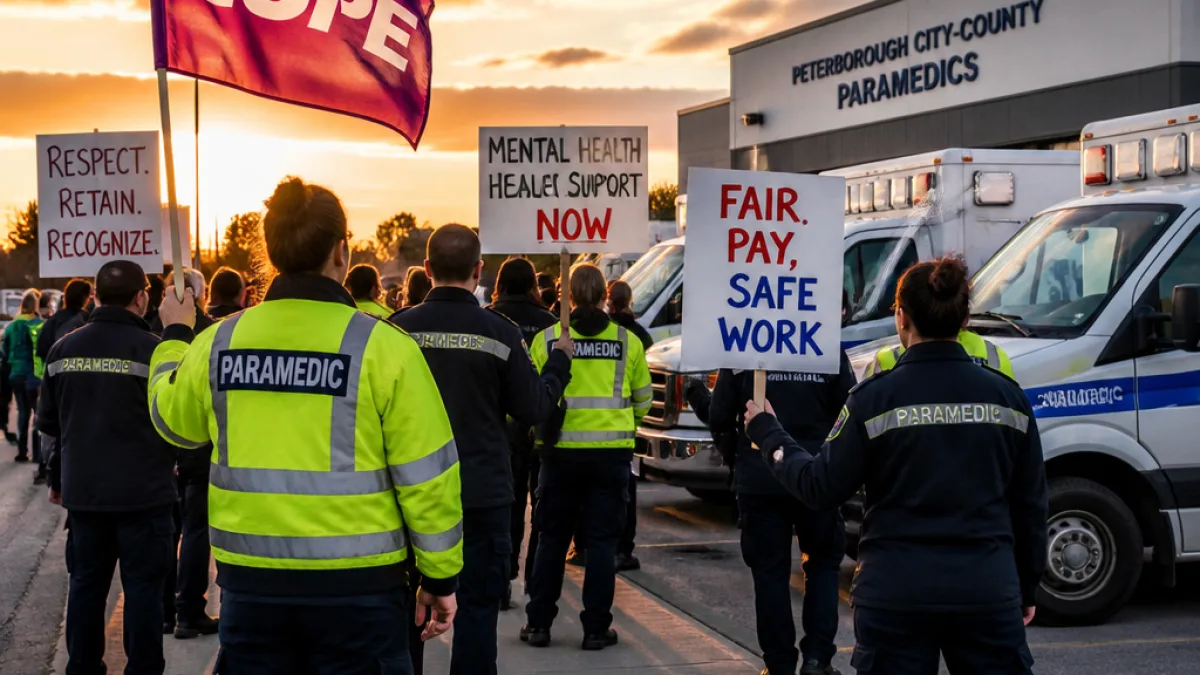
Paramedics serving the City and County of Peterborough have delivered a near-unanimous strike mandate, signalling deep frustration with what they describe as inadequate mental-health coverage, unequal pay compared with other first responders and insufficient protections for workplace injuries.
The vote, announced on Thursday by the local chapter of the Canadian Union of Public Employees, saw 187 of 193 bargaining unit members participate, with a recorded result of 185 in favour and 2 opposed to authorizing strike action. The size of the mandate — roughly 99 per cent of voters — underscores the strength of feeling among paramedics in the service.
| Metric | Figure |
|---|---|
| Bargaining unit members | 193 |
| Voters participating | 187 |
| Strike mandate | 185–2 |
Key demands focus on mental health, pay equity and injury safeguards
Negotiations began in March. According to CUPE Local 4911, members put forward proposals intended to tackle recruitment and retention issues, expand mental-health supports for workers exposed to frequent trauma, and secure pay that reflects the danger and life-saving work paramedics perform.
The union says existing mental-health benefits are limited and exclude part-time staff. CUPE reports paramedics currently have only $500 of annual mental-health coverage, which the union says funds roughly three therapy sessions each year, and that part-time employees are not eligible for the benefit.
“Paramedics don’t want to strike. We want to do our jobs, taking care of patients while we build our career in Peterborough,”
Those words, attributed to CUPE 4911 president Jordan Lean, were part of the union’s public explanation for the strike mandate. Lean also warned members are leaving the service in growing numbers and that management has not shown sufficient urgency to address the problems.
- Attrition: CUPE says 54 full-time and part-time paramedics left the service over the last three years.
- Mental-health gap: $500 annual coverage, limited to a few sessions; part-time staff excluded.
- Pay equity: Members seek compensation comparable to other first responders.
Local consequences and the broader context
A strike vote of this magnitude raises immediate questions about emergency response capacity, especially in a community that relies on paramedics for front-line health care and time-sensitive emergencies. CUPE alleges departures are driven by increased call volumes, insufficient workplace support and more attractive pay and benefits elsewhere — factors that together erode the depth of experienced staff available to respond to critical incidents.
Municipal officials and paramedic service management have not been quoted in the union’s news release included in Wednesday’s announcement. Local elected leaders and health administrators will be watching these negotiations closely; any disruption to ambulance services would require contingency planning with neighbouring services and health partners to maintain patient care.
Next steps for bargaining and the public
The vote authorizes the union to call a strike if negotiations do not yield acceptable improvements. CUPE’s statements suggest bargaining will continue, with an emphasis on mental-health coverage expansion, inclusion of part-time workers, stronger workplace injury protections and pay adjustments. For residents, the outcome of talks will shape the stability of emergency medical services in the months ahead.
As talks proceed, Peterborough’s urban and rural communities will experience the practical effects of any staffing shortfalls differently: rural calls often require longer travel times and fewer backup resources, while urban areas face higher call volumes. Both settings rely on a workforce that the union says is strained and shrinking.
Further updates will follow as the union and management exchange proposals or issue new public statements. The strike mandate marks a pivotal moment for the region’s emergency responders and the municipal services that depend on them.