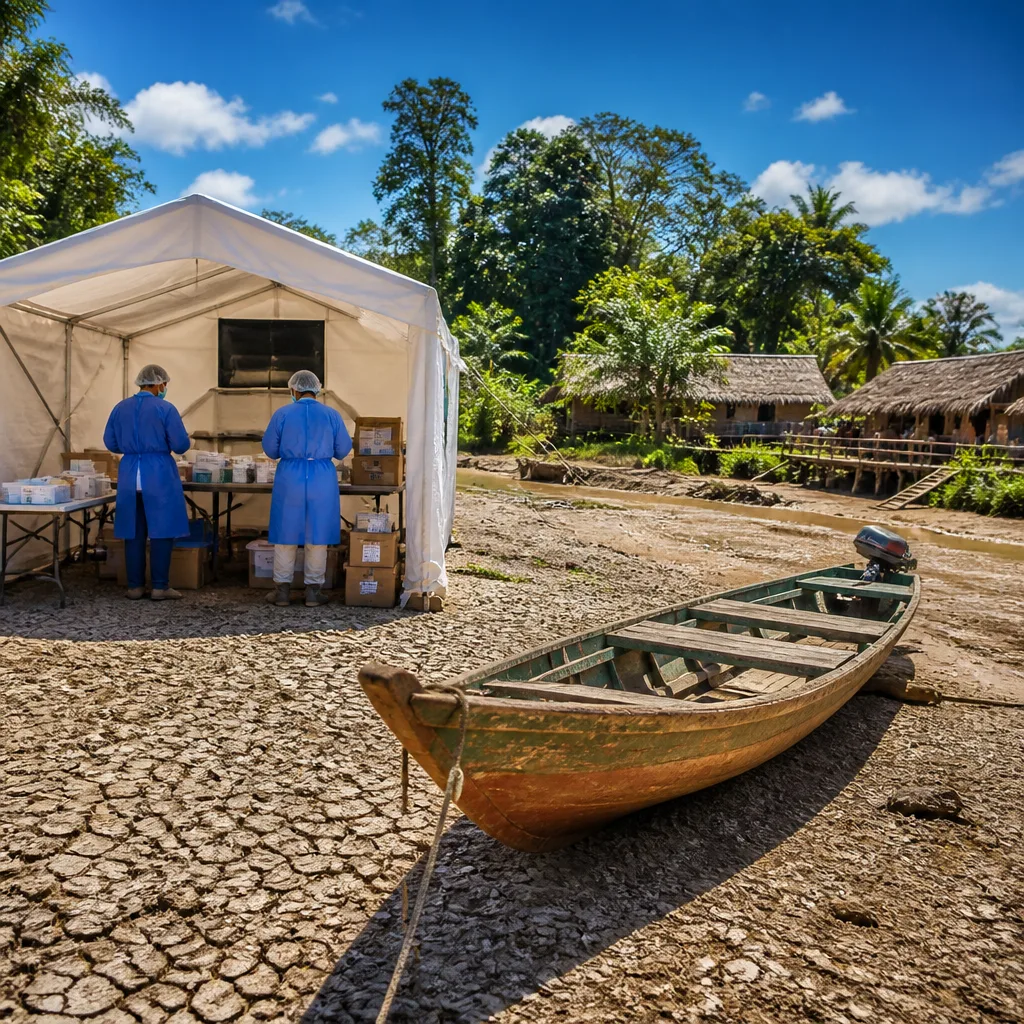
The Matsés people of the Peruvian Amazon are facing a deepening health emergency driven by a combination of worsening drought, outbreaks of infectious disease and what local leaders describe as insufficient state response. A recent field investigation by Mongabay reveals that communities living in roadless forest territory are struggling to access basic care while illnesses such as malaria and hepatitis B spread.
Access cut off by climate and geography
Low river levels this year — a consequence of prolonged dry conditions in parts of the Amazon — have sharply reduced the ability of health teams to reach remote villages or for sick residents to travel to clinics by boat, the region’s main transport route. That isolation has amplified the impact of disease in areas already vulnerable because of limited prior exposure to common pathogens.
Evangelical missionaries, contacted by the Matsés in 1969 amid violence from loggers, rubber tappers and military attacks, introduced formal contact with the wider Peruvian society. That contact also brought infectious agents to which the Matsés had little or no immunological experience, a long‑standing vulnerability that public‑health experts say can lead to severe outcomes when new infections arrive in an isolated population.
Outbreaks and scant testing
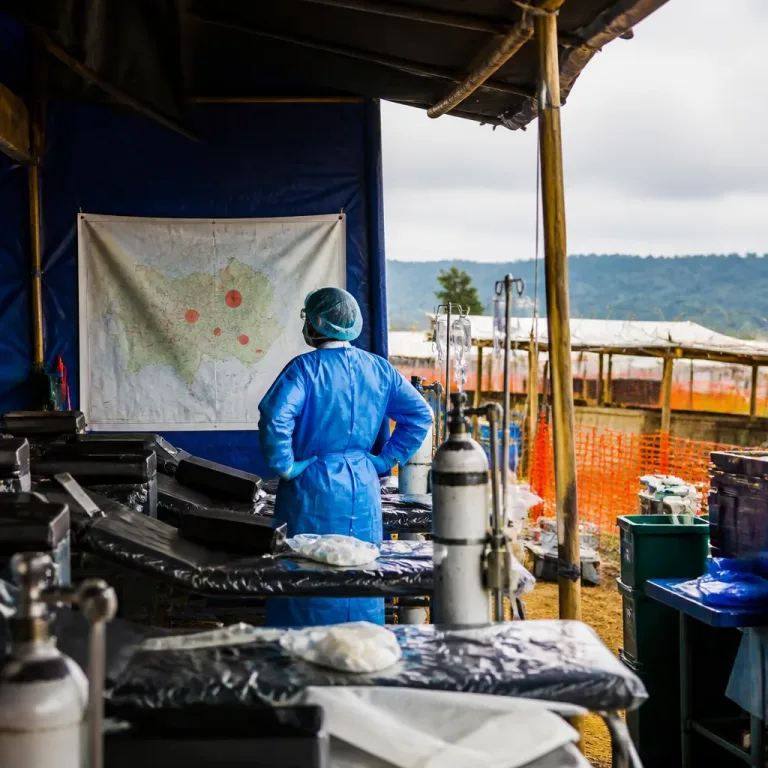
Field reporting documents active outbreaks of malaria and hepatitis B in Matsés territory. Chief Leo Chuma Teca Beso has travelled to regional and national capitals seeking government action, saying sick people are dying in public spaces from advanced complications linked to hepatitis B, including cirrhosis.
“When I arrived, interview after interview, I was asking questions about environmental threats, and people were like, ‘Well, people are dying on the streets’.”
“They don’t have the immunological defenses to be able to fight these diseases that maybe, for us, we are constantly exposed to,”
Peru’s Ministry of Health (MINSA) has reported zero recorded hepatitis B deaths among the Matsés, but civil society screening to date has reached only a fraction of the population, and ministry figures appear to be limited by testing coverage. Health brigades organised by non‑state actors have so far tested roughly 20 per cent of community members and identified 17 cases of hepatitis B, according to reporting.
| Indicator | Reported figure |
|---|---|
| Portion of Matsés screened by civil society brigades | ~20% |
| Hepatitis B cases identified by those brigades | 17 cases |
| MINSA reported hepatitis B deaths among Matsés | 0 (official figure) |
Compounding risks and gaps in response
Public‑health experts note that reduced navigation on Amazon rivers not only blocks access for clinical teams but also impedes routine vaccination, surveillance and supply deliveries — all essential to control outbreaks. In a context where many villages lack regular epidemiological monitoring, reported numbers likely understate the true burden of disease.
The convergence of environmental stressors and infectious disease among the Matsés has broader implications. Isolated Indigenous populations frequently experience more severe consequences from pathogens that are endemic in urban or more connected areas. That heightened risk is compounded when state health systems cannot maintain contact or provide consistent screening and treatment.
- Climate impacts: Drought and lower river levels are a major barrier to health access.
- Infectious disease: Active outbreaks of malaria and hepatitis B have been reported.
- Surveillance shortfalls: Limited testing means official counts may not reflect reality.
Local leaders’ appeals for help underline the urgency. Without expanded testing, treatment and logistical support — including alternatives to river transport when waters are low — outbreaks may worsen and produce preventable deaths. The discrepancy between community reports and official death counts highlights how surveillance gaps can mask public‑health emergencies, undermining timely intervention.
This situation underscores the need for targeted, culturally sensitive public‑health strategies for Indigenous communities, along with emergency measures to overcome climate‑related access barriers. International and national health agencies, working with Indigenous organisations and civil society, will need to coordinate rapid responses that prioritise diagnostic coverage, vaccination where appropriate, and treatment access to prevent further loss of life.
The unfolding crisis among the Matsés is an acute example of how climate change, social marginalisation and infectious disease can combine to create a humanitarian and health emergency in remote Indigenous territories.