The Democratic Republic of Congo is facing a severe shortage of health workers to run Ebola treatment centres even as the World Health Organization records mixed trends across provinces in the country’s fastest-growing Ebola outbreak.
WHO: treatment capacity outpaced by need
The WHO said the outbreak has spread across seven provinces and recorded a total of 7,773 confirmed cases and 3,759 deaths, based on the latest government figures. The agency warned that, particularly in the eastern province of North Kivu, cases have soared by 73 per cent over a three-week period.
While the epidemic shows signs of easing in some areas — including a reported 26 per cent fall in cases in Ituri province and a 15 per cent decline in Haut-Uele between Aug. 31 and Sept. 20 — the WHO cautioned that transmission remains uncontrolled overall because patterns vary widely across the country.
“While cases and deaths are declining in some provinces, they continue to rise in others,”
The WHO’s regional emergency director for Africa, Marie Roseline Belizaire, made the comment as the organization outlined compounding challenges: armed insecurity, population displacement, active strikes by some health workers and intense movement of people that are undermining containment efforts.
Human resources gap is a critical constraint
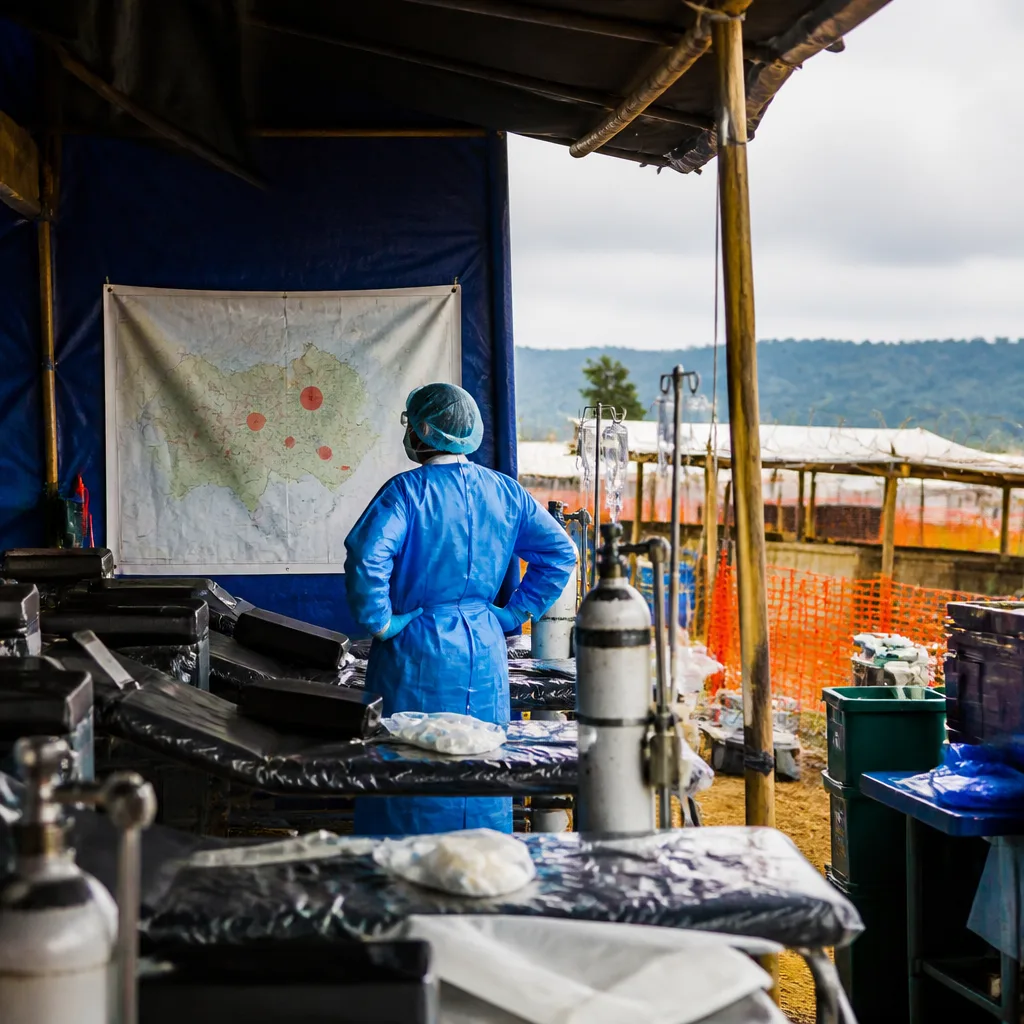
WHO incident manager for Ebola response Catherine Smallwood said that although treatment capacity is being expanded with beds added daily, many centres cannot open or operate effectively because there are not enough trained staff or partner organisations to run them. The agency described the shortage of human resources as one of the largest gaps in the response.
That staffing shortfall is occurring even while global health authorities accelerate vaccination efforts; images from vaccination centres in Bunia, Ituri province, show health workers administering doses of the Ervebo vaccine. But vaccines and beds alone cannot stop transmission without sufficient clinical teams to treat patients, trace contacts and carry out infection prevention measures.
Scale and trajectory compared with past outbreaks
The WHO has warned that the outbreak is on course to surpass the 2014–2016 West Africa Ebola epidemic, which was the deadliest on record and resulted in more than 11,000 deaths primarily in Guinea, Liberia and Sierra Leone. Officials say the current situation could reach that scale unless resources and personnel are mobilized rapidly and security conditions permit sustained access to affected communities.
| Indicator | Figure |
|---|---|
| Confirmed cases (national) | 7,773 |
| Deaths (national) | 3,759 |
| North Kivu recent change | +73% over three weeks |
| Ituri recent change | -26% between Aug. 31 and Sept. 20 |
| Haut-Uele recent change | -15% between Aug. 31 and Sept. 20 |
Operational and humanitarian barriers
WHO officials highlighted that insecurity and population displacement severely limit access for treatment teams and public-health workers. In some areas, health worker strikes have further reduced capacity. The combined effects of violence, mobility of populations and workforce shortages make it harder to maintain contact tracing, isolation of cases and safe burials — all critical components of Ebola control.
The WHO has been expanding response activities and adding treatment beds where possible, but partner organisations and trained clinical staff are required to staff new facilities and to implement surveillance and vaccination campaigns at scale. The shortage of human resources undermines those plans and prolongs the risk of spread across a wide geographic area.
- Outbreak size: 7,773 confirmed cases and 3,759 deaths reported nationally.
- Geographic spread: Seven provinces affected; trends vary sharply by province.
- Key constraint: Insufficient numbers of trained health workers to operate new and existing treatment centres.
Global and regional health authorities will need to scale staff deployments, ensure security for frontline teams and coordinate with local partners to stabilise the response. Without rapid improvements in staffing and access, the WHO says the outbreak may continue to grow and could overtake past records in terms of impact.
Reporting on this story relies on official government case totals and statements from WHO regional officials delivered Sept. 23.