
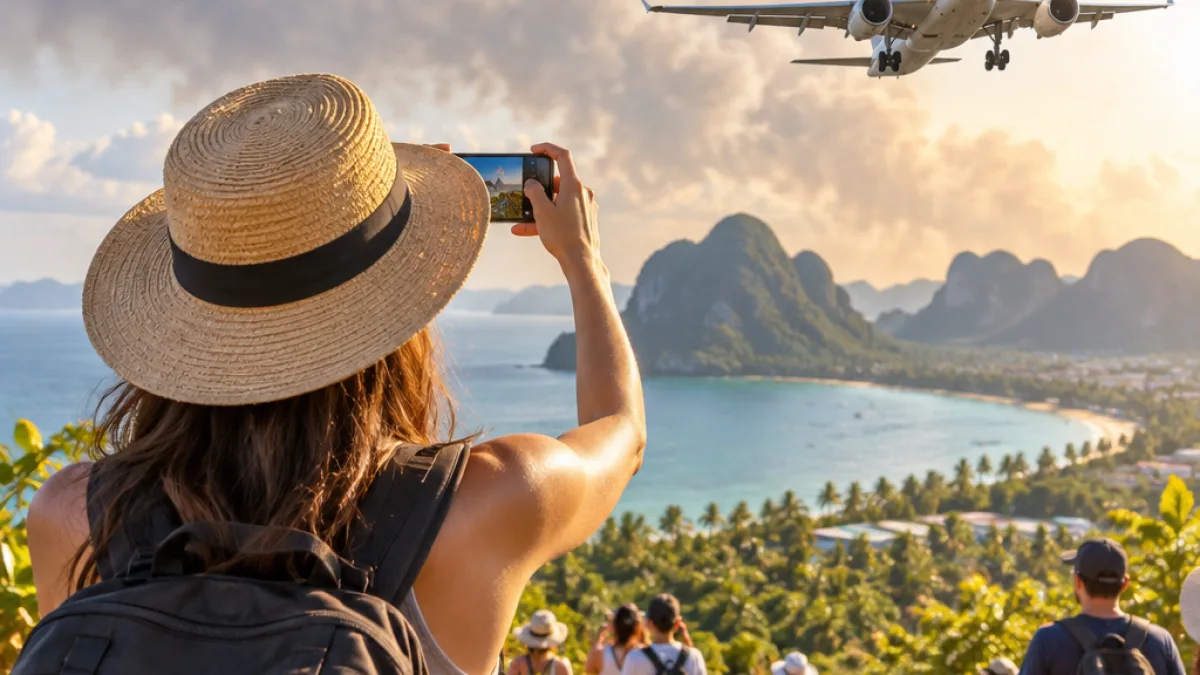
Travel influencers are helping airlines sell an increasingly high-carbon holiday lifestyle, while sponsored posts can make commercial promotions look like ordinary personal recommendations, according to a new report from Berlin-based transportation think tank T3.
The report, released Thursday, says a steady stream of polished images from far-flung destinations is influencing where people want to travel. That content can encourage longer flights, increase demand for air travel and add pressure to places already dealing with overtourism. It also raises questions about whether consumers are being given enough information to recognize when a seemingly spontaneous trip is actually part of an airline marketing campaign.
When advertising looks like a holiday diary
Airlines are increasingly relying on online creators as part of their public-relations strategies. Instead of presenting a conventional advertisement, a company can have travel content appear in a user’s social-media feed alongside posts from friends, creators and other accounts they follow. The report describes this approach as a form of “disguised advertising”.
That distinction matters because influencer content often emphasizes attractive locations and aspirational experiences. A post may focus on scenery, accommodation or the excitement of reaching a new destination, while giving little attention to the flight required to get there or the wider effects of frequent air travel. The report says airline promotions are not always clearly identified as paid partnerships, leaving viewers to decide whether they are looking at an independent recommendation or marketing.
“Consumers often do not realise that they are being targeted by marketing and rarely given a balanced picture of the environmental cost.”
That concern was raised by Patrycja Gautier, head of consumer rights at the European consumer organization BEUC. Aiza Rodrigues Akhtar, an aviation campaigner with the European Federation for Transport and Environment, said the pattern was helping create and normalize an expectation of frequent, long-distance flying.
The scale behind the glossy posts
The report compares the travel habits of content creators with those of average European leisure travellers. It says creators take an average of 16 flights a year, visit four times as many destinations and have a climate impact 16.7 times higher than the average European’s four leisure round trips annually.
| Measure | Figure in the report |
|---|---|
| Average flights taken by content creators | 16 per year |
| Average European leisure travel | Four round trips per year |
| Creators’ reported climate impact compared with that average | 16.7 times higher |
| Airline digital advertising spent on social media in 2025 | About one-third |
The findings also point to the growing financial importance of social platforms for airlines. About one-third of airline digital advertising budgets was spent on social media in 2025, the report estimates. Low-cost carrier EasyJet topped the figures cited, with €10 million directed to social-media advertising.
What travellers can look for
The report’s findings offer a useful checklist for anyone scrolling through travel recommendations. Before treating a post as independent advice, look for clear wording that identifies a paid partnership, a sponsored relationship or another commercial connection. If that information is missing, the post may still be promotional even when it is written in a personal or conversational style.
- Check whether the creator identifies an airline or other commercial partner.
- Consider whether the post presents only the pleasurable side of a trip, without discussing the flight or its environmental cost.
- Be cautious of content that turns repeated long-haul travel into an ordinary expectation.
- Compare influencer recommendations with information from sources that are not selling the trip.
For consumers, transparency is not simply a matter of labelling. Clear disclosure helps people understand why a destination or airline is appearing in their feed and gives them a better chance to weigh the appeal of a journey against its broader consequences. It also separates genuine travel inspiration from advertising designed to blend into everyday online life.
The report does not suggest that travel content alone determines how people behave. Its warning is about the cumulative effect of constant exposure: repeated images of distant places can make frequent flying appear routine, desirable and socially expected. At the same time, the environmental cost and pressure on popular destinations can remain largely outside the frame.
For travellers planning a getaway, the practical lesson is to pause before booking from a post that feels effortless or personal. Ask who benefits from the recommendation, whether the commercial relationship is disclosed and what information may have been left out. A more complete view can help consumers make decisions based on their own priorities rather than an airline-funded version of the perfect lifestyle.