Vivek Shraya’s new novel places sexual violence, institutional failure and the privilege of silence at the centre of a dystopian thought experiment about how far women might be pushed before men take misogyny seriously.
The Hystericals, released by McClelland & Stewart in 2026, follows Sarah, a university student who is sexually assaulted on campus. She reports the attack, but the complaint does not lead to her attacker being expelled or arrested. The decision becomes the book’s central fracture: a formal process exists, yet the outcome leaves the underlying power structure intact.
Shraya’s speculative fiction then takes a stark and disturbing turn. Sarah dies by suicide in an attempt to “free” herself, and her death gives rise to a radical movement of women who adopt what the novel calls “Sarah’s Call” — a campaign of suicide that transforms one student’s experience into a collective confrontation with male violence.
A question about distance and responsibility
The novel’s premise is intentionally extreme, but its questions are familiar. Shraya asks what threshold of harm would finally compel men and institutions to treat misogyny as an urgent social problem. The book also challenges the idea that responsibility belongs only to the person who commits an assault, rather than to the broader systems and bystanders that can permit consequences to disappear.
“My hope is men read this book as a way to think through misogyny. Who gets to look away? Who has the privilege of saying nothing?”
Those questions give The Hystericals its wider resonance. The story is set in a post-#MeToo world, a period shaped by public disclosures of sexual misconduct and demands for institutions to respond more forcefully. Yet Shraya’s fictional university still presents a familiar pattern: a complaint is made, the harm is documented, and the response fails to match the seriousness of the allegation.
Fiction beside a real university case
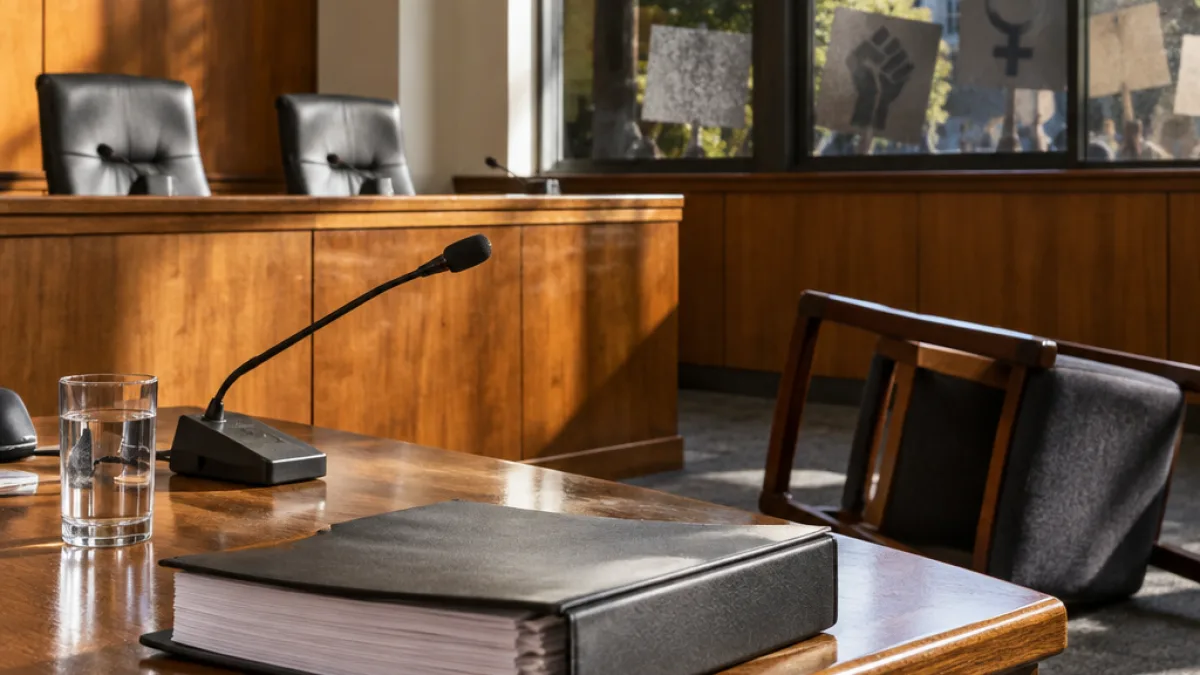
The book appeared just days after the Cornell 7 case became public this fall, creating a disturbing parallel between Shraya’s imagined campus and an actual legal dispute in the United States. A former Cornell University student, identified as Jane Doe in court documents, alleged that she was drugged and raped by seven Chi Phi fraternity members. Her lawsuit named the university, the seven men, the fraternity, Moonies Bar & Nightclub and others.
According to the allegations described in the source material, Doe was pressured to snort ketamine, while men also snorted the drug from her naked body. One fraternity member allegedly sent a Snapchat message inviting others to join them. The case, as reported, placed questions about peer culture and institutional accountability alongside the criminal and civil allegations.
| Work or case | Central issue |
|---|---|
| The Hystericals | A fictional university assault and a radical movement responding to institutional failure |
| Cornell 7 | Allegations involving a former student, fraternity members and the university |
The consequences reported in the Cornell case also underscored the uneven nature of institutional discipline. Some of the seven men were expelled or barred from campus for three years, while two were ordered to write “reflection papers” for their involvement, according to reporting cited in the source material. The contrast between the allegations and the differing sanctions became part of the broader conversation surrounding the case.
An unsettling intervention
Shraya’s novel does not offer a practical policy solution, and its depiction of suicide and self-harm is deliberately unsettling. Instead, it uses an extreme fictional consequence to force readers to consider the accumulated cost of inaction. The movement in the book is not presented as a model to follow; it is a measure of the desperation produced when institutions appear unable or unwilling to protect complainants.
That approach may be especially challenging for readers who expect fiction about sexual violence to provide reassurance or resolution. The Hystericals offers neither. Its intervention is to make the question of complicity impossible to keep at a comfortable distance: not only who caused the harm, but who had the authority to respond, who declined to act and who was able to remain silent.
The novel was also part of Shraya’s public engagement with readers. Her book tour included a stop at the Vancouver Writers Fest last month, as readers encountered the fictional story while the Cornell case unfolded in real time. That overlap gave the book’s questions an immediate, unsettling context: the distance between speculative fiction and current events can narrow quickly when institutional responses become the story.
- Author: Vivek Shraya
- Title: The Hystericals: A Novel
- Publisher: McClelland & Stewart
- Publication year: 2026