A different way to teach a familiar process
Researchers at Brock University are developing an Indigenous-informed lesson on photosynthesis for Indigenous high school students, bringing chemistry and Indigenous perspectives into the same educational project.
The year-long initiative, called Relational Light: Co-Creating an Indigenous-Informed Photosynthesis Lesson through Etuaptmumk/Two-Eyed Seeing, combines the expertise of Assistant Professor of Women’s and Gender Studies Lyn Trudeau and Associate Professor of Chemistry Divya Matta Kaur. The project is supported through Brock’s Indigenous Research Grant, created by the university in 2021.
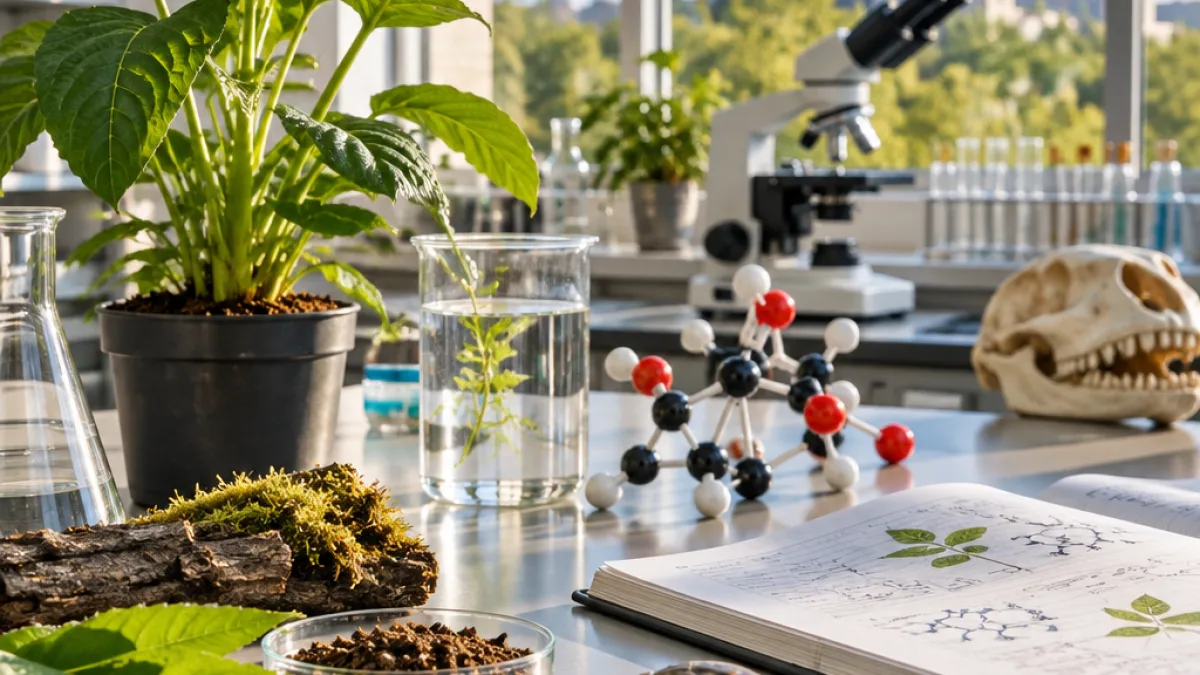
At the centre of the work is a familiar scientific process. Through photosynthesis, plants use sunlight to produce energy and release oxygen, a process that supports life for people, plants and animals. Kaur studies that process at the molecular level, while Trudeau brings an Indigenous perspective shaped by her connection to Sagamok Anishinawbek First Nation and the Eagle Clan.
From a conversation to a research project
The collaboration began with an informal conversation in Trudeau’s office. Kaur was describing the complexity and beauty of photosynthesis, including the way plants capture light and convert it into energy. For Trudeau, that explanation connected with teachings about the sun, growth and relationships with the land.
“Science is actually beautiful and amazing; it needs storytelling.”
Trudeau said those stories begin with relationships to the land and include connections that help explain life in the world around us. The exchange prompted the researchers to consider how a science lesson could present photosynthesis not only as a set of chemical reactions, but also as part of a broader relationship among sunlight, plants, oxygen, land and life.
Kaur said conventional classroom instruction often relies on chemical equations to explain the process. While those equations are important, she said, they can leave out the deeper connections involved in the subject.
“We show the chemical equations in classrooms about how photosynthesis works, but we often overlook how there is a deeper relationship connecting sunlight, plant, oxygen, land and life itself.”
Two forms of knowledge in one lesson
The researchers describe their approach through Etuaptmumk, also known as Two-Eyed Seeing. The project will draw on their different areas of expertise rather than treating scientific and Indigenous knowledge as separate subjects.
- Chemistry: examining photosynthesis at the molecular level, including how chlorophyll captures light and changes it into energy.
- Indigenous perspectives: connecting learning about sunlight and plant growth with relationships to land, life and community.
- Education: co-creating a lesson intended for Indigenous high school students.
That structure reflects the project’s interdisciplinary character. Trudeau works in Women’s and Gender Studies, while Kaur is a computational chemist whose research focuses on photosynthesis. Their partnership began with a shared interest in how scientific ideas are explained and understood, but it has developed into an education project with a specific audience and purpose.
Why the project matters
The researchers’ work is part of Brock’s series profiling recipients of the university’s 2026 Indigenous Research Grant. The grant program provides the institutional setting for a project that joins scientific research with questions about culture, teaching and relationships to the natural world.
The planned lesson is still being developed, and the source material does not describe its final format or report results from classroom testing. Its immediate goal is to create an Indigenous-informed way of teaching photosynthesis. The researchers’ starting point is that students may gain a fuller understanding when the science is connected to the land and to the relationships that make the process meaningful.
For Kaur, the molecular details remain essential: sunlight is captured, energy is transformed and oxygen is produced. For Trudeau, those details can be taught alongside stories and concepts that place the process within a living world. Together, the researchers are asking what science education can look like when accuracy, curiosity and Indigenous ways of understanding are allowed to inform one another.