
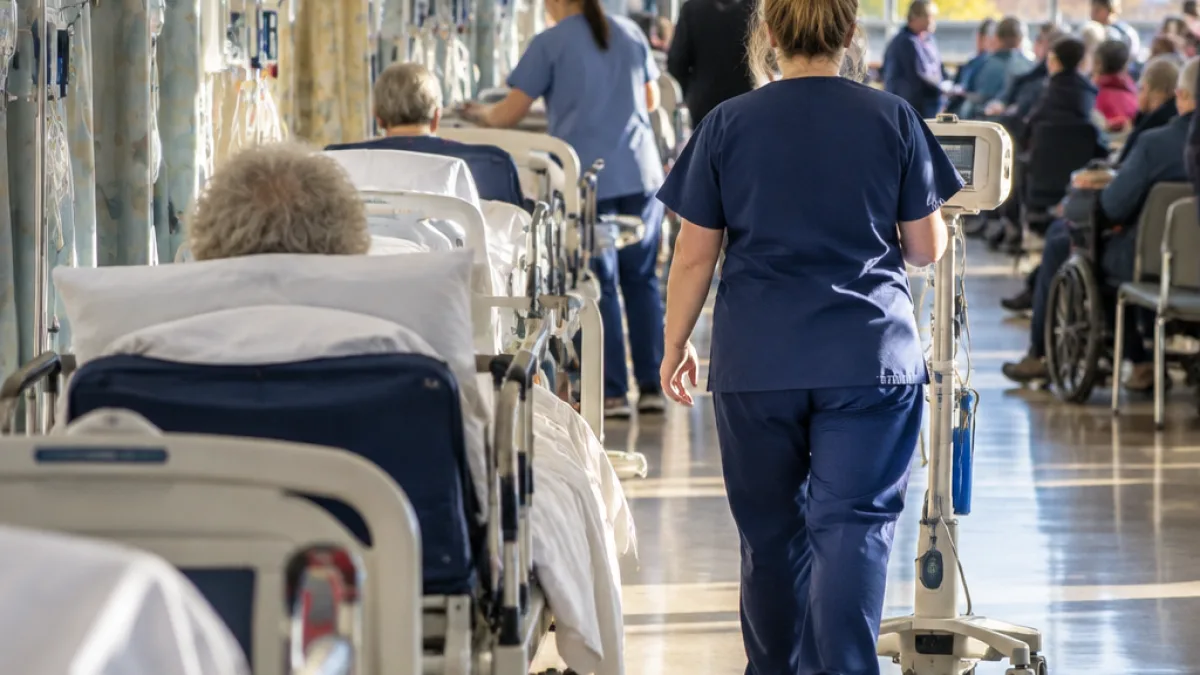
Emergency department pushed beyond intended capacity
The emergency department at Fredericton’s Dr. Everett Chalmers Regional Hospital is facing what one physician describes as a crisis, with demand for beds and staff far exceeding the unit’s planned capacity.
Dr. Yogi Sehgal, who works in the emergency department, said the unit is designed to accommodate approximately 25 to 30 admitted patients at a time. In recent weeks, however, it has regularly been operating at between 200 and 300 per cent of that level. The department recently reached a peak of about 400 per cent capacity, he said.
Those figures mean that as many as roughly 75 patients have been left in the waiting room or placed in hallway beds, according to Sehgal. At the same time, staff are required to care for a much larger number of patients than the department was intended to handle, creating pressure on the emergency-care system and on the people working within it.
| Reported measure | Figure |
|---|---|
| Intended number of admitted patients | 25 to 30 |
| Recent operating range | 200 to 300 per cent |
| Recent peak | About 400 per cent |
| Patients waiting or in hallways | As many as about 75 |
Long-term-care delays identified as key pressure
Sehgal said the overcrowding is being driven largely by delays in moving patients who have been discharged from hospital into long-term-care facilities. These patients may no longer need acute hospital treatment, but they remain in hospital while an appropriate placement is unavailable. The situation is also described in terms of an alternate level of care backlog.
When patients cannot be transferred, beds remain occupied even though the emergency department continues to receive people requiring assessment and treatment. The resulting congestion affects where patients can be cared for and leaves fewer available spaces for new arrivals. The source material does not identify how many patients are waiting for long-term-care placement, but Sehgal linked the delays directly to the worsening conditions at Chalmers.
- Patients may wait in the emergency department after being discharged from acute care.
- Limited space can result in patients being cared for in hallways or remaining in the waiting room.
- Staff must continue providing care while managing demand well above the department’s planned level.
Physician calls for urgent action
Sehgal said the use of hallways and waiting-room spaces can be an emergency measure when a hospital faces a sudden mass-casualty event. He argued that it is not an acceptable long-term arrangement for routine hospital operations.
“I think this is a crisis moment that we need to solve, like soon.”
He said the current conditions have effectively become the ongoing arrangement because there is nowhere else to place patients until the long-term-care or alternate-level-care problem is addressed. His comments point to a pressure extending beyond the emergency department itself: the availability of long-term-care spaces affects the flow of patients through the hospital and the ability of the emergency department to respond to new demand.
The report identifies Horizon Health Network as the regional health authority but notes that it does not publish emergency-department occupancy figures. As a result, the capacity levels cited in this report come from Sehgal’s account of conditions at the Fredericton hospital. The information provided does not include a response from Horizon about the figures, a timeline for reducing the backlog or specific measures being taken.
For Fredericton residents, the issue concerns both emergency access and the wider transition between hospital care and long-term care. Sehgal’s account suggests that relieving the pressure will require more than managing patients inside the emergency department. It will also require resolving the delays that keep discharged patients in hospital beds, allowing those spaces to become available for people who need acute care.