A voluntary municipal option
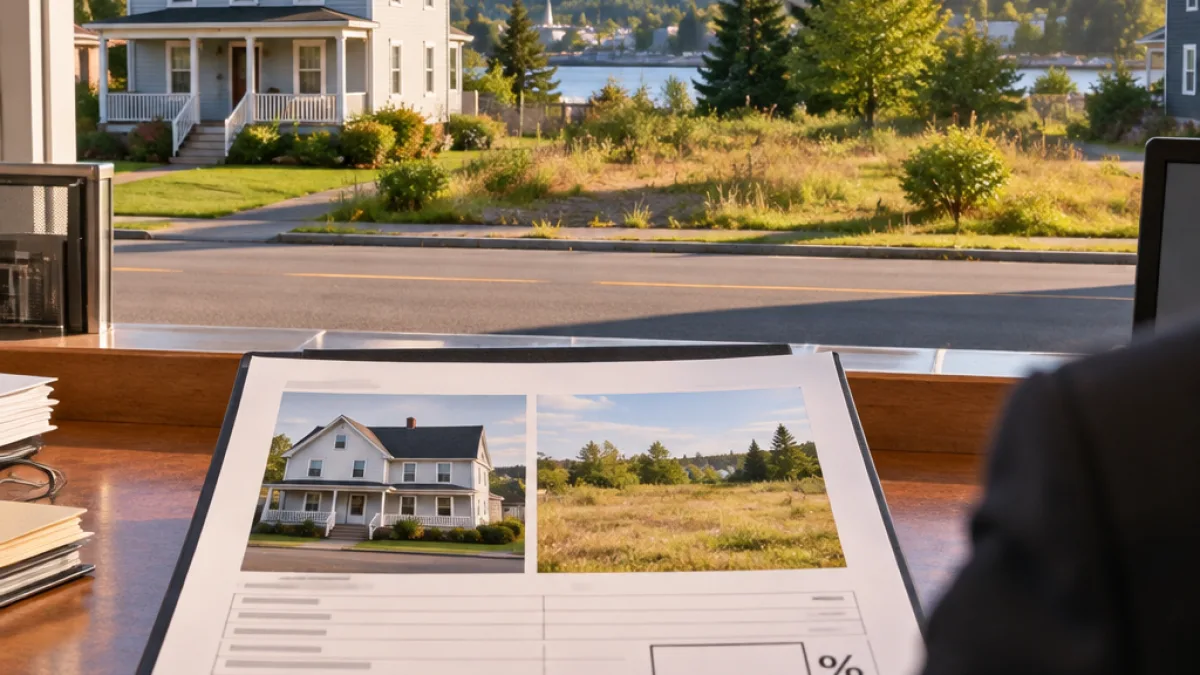
New Brunswick municipalities could gain a new way to encourage owners to put empty properties to use under legislation introduced by Local Government Minister Aaron Kennedy. The proposed amendment to the Local Governance Act would allow municipalities to impose a levy on vacant properties, making the measure available as a local choice rather than a provincewide requirement.
Kennedy said municipalities have been asking for this authority for some time. The government’s stated objective is to support the creation of housing by giving local governments another mechanism to address properties that are sitting unused, whether they contain buildings or consist only of land.
The proposal would apply to the province’s 77 local governments. It would not extend to New Brunswick’s 12 rural districts, according to the information available with the bill. That distinction means the potential policy would not operate uniformly across every part of the province if municipalities choose to use it.
“Not every municipality wants to do it, and since it’s voluntary, they don’t have to.”
Kennedy said the levy would be optional because local circumstances and political priorities differ from one community to another. Municipal councils would therefore have to decide whether a vacant-property charge suited their housing needs and local conditions.
Details still to be determined
The legislation sets out the proposed authority but does not specify several details that would shape its practical effect. In particular, the bill does not include a limit on the rate a municipality could charge. It also does not provide, in the material available, a provincewide schedule for when a property would be considered vacant or how exemptions would be handled.
Those unanswered questions would be central to any municipal debate. A levy could have a different impact depending on whether it applied to an empty house, a deteriorating building, an undeveloped lot or another unused property. The definition supplied with the proposal is broad, covering property that is unoccupied or unused, including both structures and land.
The lack of a specified rate also leaves the financial consequences open. Municipalities interested in using the power would need to determine how the levy fits with their broader approach to property regulation and housing development. The source material does not indicate what rates municipalities may eventually choose or when a levy could begin.
Support from a Saint John housing advocate
Brent Harris, a former Saint John councillor, supports the proposed amendment. Harris co-founded Vacant 2 Vibrant, a non-profit organization that works to acquire empty and often run-down residential properties and return them to productive use.
His organization’s work reflects the problem the government says the bill is intended to address: residential properties that remain vacant while communities face pressure to create or preserve housing. The proposal could give municipalities an additional option when dealing with properties that are not contributing to the local housing supply.
However, the legislation itself is described as an encouragement rather than a punishment. Kennedy said the levy is not intended to be punitive. Instead, the government sees it as a way to prompt property owners or developers to reconsider whether unused properties could serve a more useful purpose in their communities.
A tool, not a complete housing policy
The minister’s description places the proposed charge within a wider municipal toolbox. A levy alone would not determine whether a vacant property becomes a home, is renovated or is brought to market. Its effect would depend on decisions by individual owners, developers and municipal councils, as well as the specific rules eventually adopted by participating local governments.
The bill’s supporters are presenting it as a starting point rather than a complete answer to New Brunswick’s housing pressures. Its immediate significance is that it could give municipalities authority they currently do not have, while leaving them discretion over whether and how to use it.
| Element | What the proposal says |
|---|---|
| Who could use the levy | The 77 local governments |
| Who is excluded | The 12 rural districts |
| Whether it is mandatory | No; municipalities could choose whether to adopt it |
| Maximum rate | Not specified in the bill |
The next stage will be important for municipalities, property owners and housing organizations watching the legislation. Until further rules are established, the proposal provides authorization in principle but not a finished levy system.
For now, New Brunswick’s local governments would have to weigh the potential housing benefit against the administrative and political choices that would follow. The bill would not require a municipality to charge vacant-property owners, but it could allow communities that want such a policy to pursue one through their own local decisions.